
STORIES / EXPERIENCES / LESSONS
a life with
dogs
The story behind Smart Dogs Academy.
Dogs have been a part of my life for as long as I can remember. This is the story of how that passion turned into a lifelong journey – the people, places, dogs, lessons, and experiences that shaped who I am today and why I do what I do.
A LIFETIME OF EXPERIENCE
Real stories from the real world
A GLOBAL JOURNEY
Lessons from around the world
A LIFETIME OF EXPERIENCE
What I’ve learned along the way
A LIFETIME OF EXPERIENCE
Helping dogs and people live better lives
EXPLORE THE SERIES
The Chapters
A lifetime with dogs. Dive into the stories, experiences, and lessons that shaped my journey.
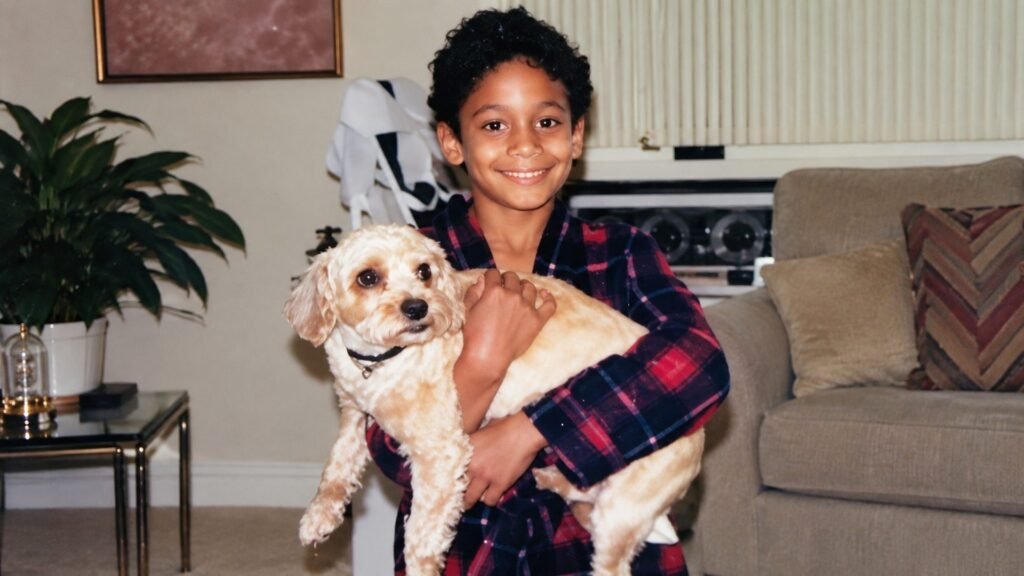
CHApter 01
Where it all
began
What made you fall in love with dogs in the first place?
This is a pic of me with my very 1st dog Pepe. & here’s the truth. I loved him! We didn’t have a fenced yard at the house I grew up at and one day he wandered off and about a block away got hit by a car.
I was crushed! From what I can remember it was my 1st experience with any kind of death. That is what sparked my interest in training. I never wanted to have a dog wander off and knew that training was the answer. So from there I started my journey to learning about dog training

CHApter 02
The Beginning of the Journey
How Did You Get Started in the Dog Industry?
My journey with dogs started when I was about 14 years old, long before I ever thought of dog training as a career.
It began simply enough: I started walking dogs for my neighbors. I loved being around dogs, but I quickly became fascinated by something beyond just taking them for a walk. I wanted to understand them. Why did one dog respond differently than another? Why were some confident while others were fearful? What made a dog want to work with you?
That curiosity led me to volunteer at veterinary clinics and animal shelters throughout Los Angeles.
I was exposed to dogs of all breeds, ages, temperaments, and backgrounds, including dogs with significant behavioral challenges. Those experiences taught me an important lesson very early in my life: Every dog is an individual, and understanding the dog is just as important as training the dog.
I was also fortunate to have two half-brothers who had a major influence on my career. My brother Michael owned and operated a professional dog-training business in Cleveland, Ohio, while another half-brother was a military dog handler in the U.S. Army.
I became Michael’s understudy and began learning professional dog training from someone who was already making a living doing it. That was really my first introduction to dog training as a profession. Throughout college, I continued to own dogs, train them, and learn everything I could. My path then took an unexpected turn. After college, I played professional basketball in Europe and eventually lived in Germany and France. While living in Stuttgart, Germany, I discovered that one of the top police-dog trainers in the area had a training facility nearby. Once again, I found myself drawn to the dogs. I became an understudy and spent my time learning everything I could about advanced canine training.
My experience expanded into areas including advanced obedience, protection, agility, scent discrimination, bomb and explosive detection, search and seizure, and security applications. Working with highly trained working dogs gave me an entirely different perspective on canine ability, motivation, communication, and drive.
Eventually, my basketball career came to an end and I returned to Los Angeles. Michael also moved to Los Angeles, and together we started a dog training company called Success Dogs.
That was a major turning point. What had started years earlier with walking neighborhood dogs and volunteering at shelters and veterinary clinics had evolved into a profession.
I later was presented an opportunity to become the Training Coordinator at California K-9 Academy in Burbank, one of the larger professional dog-training facilities in Los Angeles at the time, with locations in Burbank and Gardena. That position exposed me to an enormous variety of dogs, trainers, handlers, and training situations and helped shape the practical approach I still use today.
I also became deeply involved in working-dog sports and advanced training, including Schutzhund. I competed at a high level internationally and had the opportunity to work as a decoy with some exceptional working dogs, including decoying the dog that won the 1994 U.S. Schutzhund Championship.
Looking back, I think that unconventional path is one of the things that has made me a better trainer. I didn’t start with a business plan or decide one day that I was going to become a dog trainer. I started with a genuine fascination with dogs—and I kept following that fascination wherever it led me.
From walking neighborhood dogs, to volunteering in shelters and veterinary clinics, to learning from my brother, working with professional K-9 teams, training in Europe, competing internationally, and eventually working with thousands of family and companion dogs, every experience added another piece to the puzzle.
And after all these years, the question that continues to drive me is essentially the same one I had when I was 14:
Why does this dog behave the way it does—and what can we do to help the dog and the owner succeed?
That’s really where Smart Dogs began.

CHApter 03
the Dogs that
Taught me
What Was One of the First Dogs That Taught You an Important Lesson
One of the dogs I remember most from my early twenties was a Pit Bull mix named Bruno.
Bruno belonged to an older woman who was having a very difficult time managing him. He was extremely protective of her and, as far as he was concerned, just about everyone outside of her was a potential threat. He was aggressive, suspicious, and intimidating. People couldn’t simply walk up to him, and even normal interactions around his owner could trigger a reaction.
At first, Bruno wasn’t interested in being trained. In fact, he wasn’t particularly interested in me.
And I wasn’t going to force it.
Instead, I started by simply spending time around him. I watched him. I paid attention to his body language and tried to understand what he was communicating. I didn’t challenge him just to prove that I could. I wanted him to figure out that I wasn’t there to threaten him or take anything away from him.
Little by little, I started to earn his trust.
There was a point when his attitude toward me began to change. He started allowing me closer. Then he started looking to me differently. Eventually, I could interact with him without getting the defensive response I had seen in the beginning.
That’s when the training could actually begin.
Once Bruno trusted me, I could communicate with him. I could introduce structure and expectations, and he became willing to work with me. The dog that initially seemed determined to keep everyone away eventually became a dog I could train and handle successfully.
Bruno taught me one of the most important lessons of my career:
You can’t always train a dog until you understand the dog.
Trust doesn’t mean letting a dog do whatever it wants. Quite the opposite. Once a dog trusts you, you can establish boundaries, introduce expectations, and teach the dog what you want it to do.
But if all the dog sees is pressure, confrontation, or someone trying to overpower him, you’re often fighting the dog instead of training the dog.
Bruno also taught me that behavior has a reason. What looked like a “mean” dog on the surface was a dog with a tremendous amount of protective behavior and a very limited ability to trust people outside his inner circle.
That experience stayed with me.
Today, when I evaluate a dog displaying aggression, fear, or reactivity, I’m not interested in simply labeling the dog aggressive or bad. I want to understand why the dog is behaving that way, what the dog is communicating, and what it will take to change the behavior safely.
Bruno was one of the first dogs to really drive that lesson home for me. And honestly, he probably taught me something else that has served me well for decades:
Sometimes the first step in training a dog isn’t teaching it anything at all. It’s convincing the dog that you’re worth listening to.
CHApter 04
Learning the
Hard Way
What Did You Learn From Your Early Years Working?
One of the biggest lessons I learned early in my career is something that seems obvious now, but it took years of working with thousands of dogs to truly understand:
Every dog is different.
When I was starting out, I naturally wanted to find the things that worked and repeat them. But dogs quickly taught me that there is no universal formula. Two dogs can be the same breed, the same age, and even live in the same house—and respond completely differently to the exact same training.
I remember working with dogs that seemed almost impossible to motivate with food. You could have the best treat in your hand, and they would look at you as if you were holding a piece of cardboard. Then you pulled out a tennis ball and suddenly you had their complete attention.
Another dog might completely ignore the ball but would do anything for a piece of chicken.
And then there were dogs whose greatest reward wasn’t food or a toy at all. It was praise. A “good dog,” a pat on the chest, getting to interact with their handler, or simply knowing they had done something right could be incredibly motivating.
That taught me an important principle:
A reward is only a reward if the dog actually values it.
We sometimes assume that because something is rewarding to us—or because we’ve been told it should be rewarding to a dog—it automatically has value to that particular dog. It doesn’t.
Motivation is individual.
Some dogs are highly food motivated. Some are ball crazy. Some are motivated by movement, play, attention, praise, access to something they want, or simply the opportunity to engage with their handler.
The trainer’s job is to figure out what makes that particular dog want to work.
Learning to Read the Dog
That realization changed the way I approached training.
Instead of asking, “What do I want to teach this dog?” I began asking:
“What motivates this dog, and how can I use that motivation to teach?”
That requires paying attention.
You have to watch the dog—not just the behavior you’re trying to change. You learn to recognize when a dog is engaged, frustrated, confused, excited, nervous, overstimulated, or simply bored.
Those observations became just as important to me as the commands themselves.
I also learned that sometimes what looks like stubbornness isn’t stubbornness at all. A dog may not understand what you’re asking. The reward may not be valuable enough. The environment may be too distracting. The dog may be overwhelmed. Or the trainer may simply be communicating poorly.
That’s an important lesson for any trainer: when the dog isn’t getting it, don’t automatically blame the dog. Look at your own approach first.
My Early Mistakes Were Teachers Too
I made mistakes. Every trainer does.
Early in my career, there were times when I thought the answer was simply to be more persistent—to keep asking, keep correcting, or keep pushing until the dog complied.
Experience taught me that persistence and communication aren’t the same thing.
Sometimes pushing harder gets you compliance. But compliance isn’t necessarily understanding, and it certainly doesn’t always create a dog that wants to work with you.
The best training happens when the dog understands what you’re asking and has a reason to participate.
That doesn’t mean every dog gets to make the rules. Quite the opposite. Dogs need structure, boundaries, consistency, and clear expectations. But the best trainers learn how to establish those things while also understanding the individual dog standing in front of them.
My Mentors Reinforced That Lesson
My early experiences with other trainers and working dogs reinforced this idea.
I was fortunate to learn from people with very different backgrounds—from my brother Michael, who operated a professional training business in Cleveland, to experienced working-dog trainers in Europe and professionals involved in police and protection work.
Working around highly trained dogs showed me just how different motivation, temperament, drive, and learning ability could be from one dog to another.
It also taught me not to become overly attached to any single training philosophy.
The dog should determine how you communicate—not the other way around.
What I Eventually Came to Understand
After years of working with dogs, I realized that dog training is really a combination of science, observation, timing, communication, and experience.
You can learn techniques from a book. You can learn commands. You can learn equipment.
But you have to learn to read the dog.
And that’s something you develop by spending thousands of hours with dogs.
Today, when I meet a new dog, I don’t start by assuming what will motivate it. I start by observing it.
What gets its attention?
What does it naturally gravitate toward?
What makes it excited?
What makes it uncomfortable?
How does it respond to pressure?
How does it respond to praise?
Does it want food? A ball? A toy? Interaction? Movement? Access to something it wants?
Once you understand those things, you have the beginnings of a training strategy.
That’s one of the biggest lessons my early years with dogs taught me:
There is no such thing as “the dog.” There is only the dog in front of you.
And if you learn to understand that individual dog—what motivates it, what concerns it, how it learns, and how it communicates—you have a much better chance of becoming the kind of trainer that dog actually needs.