
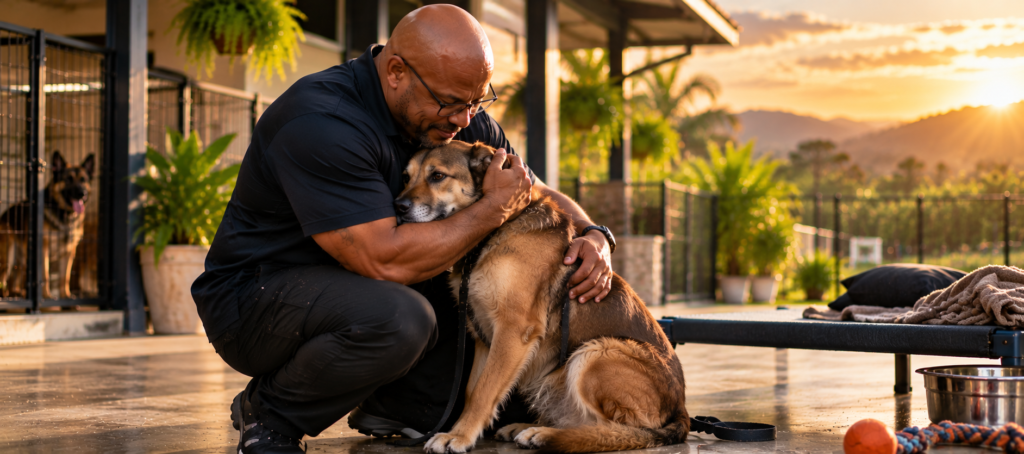
Why Empathy Matters as Much as Experience
I’ve had people come to me for dog training who were carrying far more than a leash and a list of behavioral problems. Sometimes, you can see the frustration on their faces before they even explain what’s happening. They may be exhausted from sleepless nights, embarrassed by their dog’s behavior, worried about their children’s safety, or afraid they might eventually have to give up a dog they love. In that moment, they don’t just need a dog trainer. They need someone willing to listen.
After years of working with dogs and families, I’ve learned that experience alone isn’t enough. As Jeff Todd, I have to understand the person standing in front of me just as much as the dog beside them. A problem that might seem straightforward to an outsider can feel overwhelming to the family living with it every day.
Understanding the Person Behind the Problem
At Smart Dogs Training Academy, I try not to judge people when they come to me for help. Some have tried everything they know and still feel stuck. Others are dealing with personal struggles that have nothing to do with their dogs, and the behavior problems at home have simply added to the pressure. I may not know their whole story, but I can listen, ask questions, and help them find a practical way forward.
My Christian faith has a lot to do with how I approach those situations. I often ask myself, “What would Jesus do?” For me, that means treating people with compassion, patience, and dignity, especially when they’re struggling. You never really know what someone is carrying behind closed doors, so I try to meet people with understanding rather than criticism.
Sometimes people need clear instructions and a plan. Other times, they need someone to listen without making them feel worse. And sometimes, a little humor can make a difficult situation feel more manageable. Dog training can involve serious issues, especially when safety is at stake, but that doesn’t mean every moment has to feel heavy. A well-timed laugh can help someone relax and become more open to learning.
Knowing When to Listen and When to Be Direct
Empathy doesn’t mean telling people only what they want to hear. Sometimes, caring about someone means being honest about what needs to change. An owner may need to recognize that a habit is making a behavior worse, that everyone in the household needs to follow the same plan, or that a dog’s safety requires additional management. My responsibility is to explain those things clearly while helping the person understand that a difficult situation doesn’t automatically mean there is no hope.
Even small gestures can matter. Sometimes a few reassuring words, a moment of patience, or simply giving someone the space to explain themselves can make a difference. I try to be respectful of each person’s comfort and boundaries, but I never want someone to leave feeling that they’ve been judged for asking for help.
Recognizing the Small Victories
The emotional weight of this work is real because so much can depend on a dog’s behavior. It can affect whether a family feels safe, whether people can enjoy everyday activities, and sometimes whether a dog can remain in the home it knows. I can’t promise that every problem will have an easy solution, but I can bring my experience, assess the situation honestly, and work toward the best possible outcome for the dog and its family.
Some of the most meaningful moments are not dramatic transformations. They might be a dog that can finally walk calmly past another dog, a family that begins working together instead of arguing over how to handle their pet, or an owner who realizes they can manage a situation that once felt impossible. Those small victories build confidence, and over time, they can change everyday life.
I’ve also learned that I may not always know how much a particular interaction means to someone. I might think I’m simply explaining a training technique, but the owner may remember that conversation years later because it helped them see their dog differently. When people reach out long afterward to tell me how much things have improved, it reminds me that the connection we build during training can last long after the sessions end.
More Than a Dog Training Business
That’s one reason I see Smart Dogs Training Academy as more than a business. The dogs may bring us together, but the opportunity to help people is a meaningful part of the work. As Jeff Todd, I want to use what I’ve learned throughout my career to make a positive difference, whether that means helping a dog overcome a behavioral challenge or helping an owner regain the confidence to move forward.
My faith reminds me that I don’t have to solve every problem in someone’s life to make a difference. Sometimes, I can help by listening. Sometimes, I can offer a practical solution or encourage someone who has started to lose hope. I may not be able to change their entire situation, but I can do my best to make that moment a little easier and help them see a path forward.
“My job is to help the dog, but my responsibility doesn’t stop there. I also have to care about the person who loves that dog and give them the understanding, guidance, and hope to move forward.”
— Jeff Todd, Smart Dogs Training Academy
At the end of the day, I believe good dog training requires knowledge, patience, and the willingness to understand both ends of the leash. My faith encourages me to approach that responsibility with humility and compassion. If I can help a dog make progress while also helping its owner feel heard, supported, and more confident, then I’ve accomplished something that goes well beyond teaching commands.