
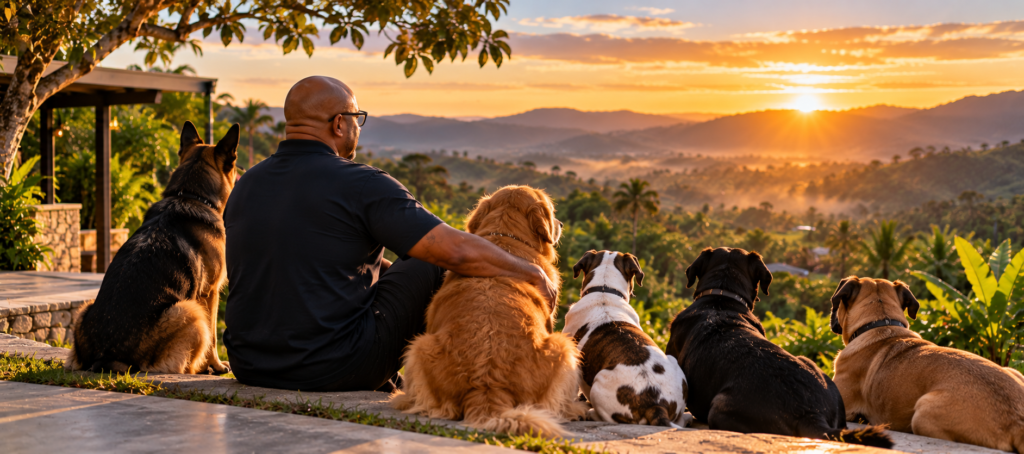
What I Want Every Dog Owner to Understand
If I could have the attention of every dog owner in the world for one minute, I’d tell them something simple: love your dog, but love your dog with balance. And make the effort to train your dog so you can communicate with each other.
I’m Jeff Todd, and after decades of working with dogs and personally training more than 25,000 of them, I’ve learned that one of the biggest misunderstandings people have is believing that love alone will make a dog listen. It won’t. Love is essential, but dogs also need guidance, structure, and clear communication.
And I don’t say that as someone who only works with other people’s dogs. Dogs have been part of my life for as long as I can remember. I’ve lived with them, trained them, traveled with them, loved them, and eventually had to say goodbye to them. I still have the ashes of three of my dogs in urns at home. They all lived full lives and reached their senior years. My most recent dog, Scarlett, lived to be 19.
I wish I could have had her forever, but she had a good, full life. That’s what I want for every dog: a life filled with love, care, and the skills needed to navigate the world safely.
Love Isn’t the Same as Communication
Dogs deserve affection. They should be cared for, included in the family, and given a good life. But loving a dog and communicating effectively with a dog are two different things.
You can love your dog more than anything and still have a dog that won’t come when you call. You can feed it, let it sleep beside you, and give it affection all day, yet still struggle with pulling on the leash, jumping on visitors, or ignoring you when something more exciting catches its attention.
That doesn’t mean you don’t love your dog enough. It means love by itself doesn’t teach a dog what you expect.
Dogs don’t automatically understand what we mean when we say “come,” “stay,” or “leave it.” They need to learn what those words mean, what behavior we’re asking for, and how to respond in different situations.
That’s a central part of the work we do at Smart Dogs Training Academy. As Jeff Todd, I want to help establish communication between dogs and their owners. The dog needs to understand what the owner is asking, and the owner needs to learn how to give clear direction and reinforce the behavior consistently.
Loyalty and Dependency Are Not the Same
Another thing I wish more dog owners understood is the difference between a strong bond and unhealthy dependency.
Some dogs follow their owners from room to room, struggle to settle when left alone, or become distressed whenever their person leaves. They may bark, whine, pace, scratch at doors, or destroy things when separated.
Not every dog that wants to be close to its owner has a problem, of course. But when a dog cannot relax or cope with ordinary separation, it may need help learning to feel comfortable on its own.
A healthy relationship allows a dog to be attached to its owner while also feeling secure when that person isn’t right beside it. Your dog can be excited to see you, enjoy spending time with you, and still be able to settle down when you leave the house.
I want owners to understand that a dog’s inability to be apart from them isn’t necessarily proof of greater loyalty. The goal is a relationship built on trust, confidence, and balance.
Training Can Help Keep Your Dog Safe
Training isn’t just about having a well-behaved dog. It can also help protect your dog from dangerous situations.
A reliable recall may help bring your dog back before it runs toward a road. A well-practiced “stay” or “place” command can help you manage your dog around visitors or other distractions. Teaching “leave it” can help you redirect your dog away from something potentially dangerous.
Training cannot prevent every accident, and no dog will respond perfectly in every situation. But good training, thoughtful management, and consistent supervision can reduce risks and give you more ways to guide your dog when it matters.
After a lifetime of living with dogs, I’ve learned that giving a dog a good life involves more than food, affection, and veterinary care. It also means helping that dog learn how to live safely alongside people and navigate everyday situations.
To me, that’s part of responsible dog ownership, and it’s one of the reasons I care so deeply about the work we do at Smart Dogs Training Academy.
Give Your Dog Structure and Direction
Dogs benefit from knowing what’s expected of them. That’s why I believe in leadership, but I don’t mean being harsh, intimidating, or unkind.
Leadership means providing direction, setting consistent boundaries, and helping your dog understand what to do. It means being patient enough to teach, clear enough to communicate, and consistent enough to build reliable habits.
When a dog understands the expectations and can rely on its owner for guidance, everyday life can become more predictable and less stressful for both of them.
That’s one of the reasons I’ve always believed in this simple philosophy:
“A trained dog is a happy dog. Training gives dogs clarity and owners the tools to communicate.”
— Jeff Todd, Smart Dogs Training Academy
Don’t Just Get Your Dog Trained—Learn the Training
There’s another message I’d share with every dog owner: you have to take responsibility for the relationship with your dog.
You can read books, watch videos, attend classes, take private lessons, or work with a professional trainer. All of those things can be valuable. But eventually, you have to pick up the leash, practice what you’ve learned, and become an active part of the training process.
At Smart Dogs Training Academy, we can help establish the foundation, teach your dog new skills, and coach you through the techniques. But maintaining that progress takes your involvement, too.
I often compare it to learning to ride a horse. Someone can teach you how to get on, hold the reins, and communicate with the animal. But eventually, you have to ride. The more you practice, the more confident and capable you become.
Dog training works in much the same way. Practice builds habits, and consistent habits help make behavior more reliable. Your dog doesn’t become a remote-controlled appliance that will behave perfectly forever just because it completed a training program. Dogs have individual personalities, experiences, motivations, and needs. Owners must continue to learn and reinforce what their dogs have been taught.
As I often explain through my work as Jeff Todd, a trainer can teach your dog and give you the tools, but you have to use those tools in everyday life. That’s how training becomes part of your relationship rather than something that only works during a lesson.
Love Them, Train Them, and Create Balance
If I had one minute with every dog owner in the world, I’d tell them to love their dogs, give them affection, care for their health, play with them, and enjoy their companionship.
But I’d also tell them to provide structure. Teach their dogs how to behave, how to respond to direction, and how to feel comfortable in everyday situations. Give them opportunities to learn independence while building a relationship based on trust and clear communication.
The goal isn’t simply to have a dog that loves you. It’s to build a relationship in which your dog understands you, trusts your guidance, responds to what you’ve taught, and enjoys being part of your life.
That’s what I want for every dog and every family who comes to Smart Dogs Training Academy. I want owners to feel capable rather than overwhelmed. I want families to enjoy their dogs without constant frustration. And I want dogs to have the structure and understanding they need to thrive.
After personally training more than 25,000 dogs, I still believe the most important part of this work is helping people enjoy the relationship they have with their dogs. I don’t want people simply to own dogs. I want them to understand them, communicate with them, and enjoy their lives together.
When that relationship works, everybody benefits. The dog has clearer guidance, the owner has greater confidence, and the family has a better chance to enjoy life together.
“Love your dog. Train your dog. Build the relationship. Then go enjoy your dog.”
— Jeff Todd, Smart Dogs Training Academy