
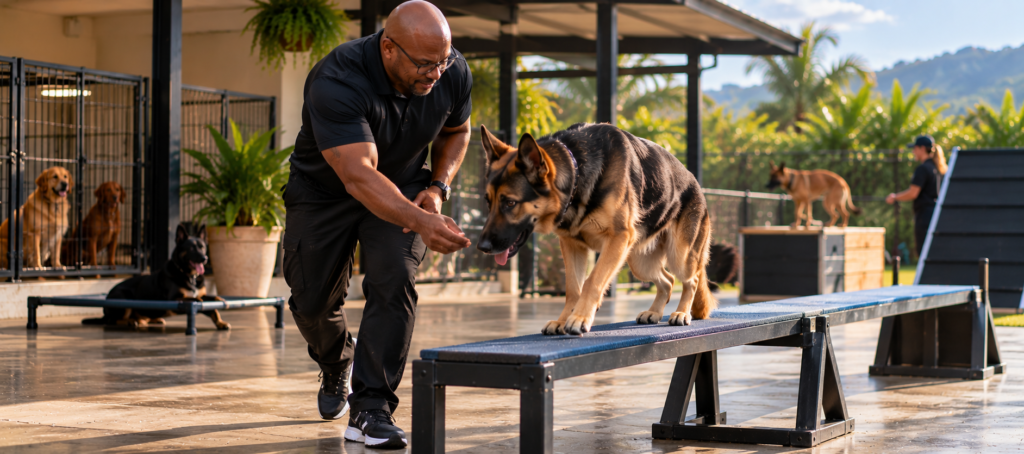
What People Don’t Realize About Being a Professional Dog Trainer
I think one of the biggest misconceptions about being a professional dog trainer is that the job is simply about teaching dogs commands. After years of working with more than 25,000 dogs, I’ve learned that the real skill is understanding what makes each dog tick, figuring out what’s causing a problem, and helping the owner become part of the solution. Every dog is different. You can have two dogs of the same breed, age, and even the same litter, yet one might be confident and motivated by a ball while the other is nervous and responds better to food or calm encouragement. If you use exactly the same approach with both, you may get completely different results. You have to observe, adapt, and understand the individual dog in front of you.Sometimes, the Hardest Part Isn’t the Dog
Here’s something that surprises people: sometimes, the dog isn’t the hardest part of the job. It’s helping the human understand what needs to change. People come to Smart Dogs Training Academy because they love their dogs and want things to improve. But good intentions don’t always lead to good habits. An owner might unintentionally reward barking by giving a dog attention, allow jumping because it seems cute at first, or expect a puppy to behave like a fully mature dog. If one family member follows the training plan and another ignores it, the dog receives mixed messages. My responsibility is to explain what’s happening and show people how to respond differently. Some need a detailed explanation; others need to see the technique demonstrated. I adjust how I communicate because teaching the owner is just as important as working with the dog.What This Looks Like in Real Life
Imagine a dog that explodes with excitement every time the doorbell rings. It barks, rushes toward the entrance, jumps on visitors, and seems impossible to settle down. The family may believe the dog is being stubborn or deliberately misbehaving. But the real work starts by looking at the whole situation. Is the dog overwhelmed by excitement? Has rushing to the door become a rewarding habit? Does the family accidentally reinforce the behavior by shouting, chasing the dog, or greeting it while it’s jumping? Instead of simply repeating the command “sit,” I would assess the dog’s behavior, identify what is reinforcing the reaction, and build a plan the family can practice. That might involve managing the doorway, teaching the dog to go to a designated place, rewarding calm behavior, and practicing gradually before expecting success when real visitors arrive. Everyone in the household needs to respond consistently. The goal isn’t just to get through one training session. It’s to help the family handle the next visitor, and the visitor after that, with greater confidence. That’s the difference between teaching a command and helping change a daily problem.Patience, Safety, and Responsibility
Progress doesn’t always happen in a straight line. A dog may do beautifully in a quiet training environment and struggle when distractions are introduced. You have to recognize the small victories, stay calm through setbacks, and adjust the plan rather than expect every dog to learn at the same pace. When serious behavioral concerns are involved, the responsibility becomes even greater. Reactivity, aggression, and behavior that is difficult to control can create real safety risks. You have to consider the dog, the owner, children in the household, visitors, and other animals. That means managing risk, setting realistic expectations, and being honest about what the dog can reliably handle and what still needs work.The Work Goes Beyond the Training Session
What matters most to me isn’t simply finishing a session or teaching a dog to respond to a command. I want families to understand their dogs, maintain the progress we’ve made, and enjoy living together with less stress. Some of the most rewarding moments happen when a client reaches out months or even years later to tell me how much their life with their dog has improved. That’s why I see Smart Dogs Training Academy as more than a dog training business. As Jeff Todd, I have the opportunity to use my experience to help people as well as dogs. The dog may be the reason we first meet, but the positive changes can reach the entire family.After all these years, that’s still what I bring to every dog and every family I work with. It takes observation, patience, problem-solving, communication, and a willingness to adapt. You’re not just teaching an animal to obey. You’re building understanding, earning trust, and giving people the tools to create a better life with their dogs.“The real skill isn’t just teaching a dog what to do. It’s understanding the dog, teaching the owner, and creating a change that lasts long after the training session ends.”
— Jeff Todd, Smart Dogs Training Academy