
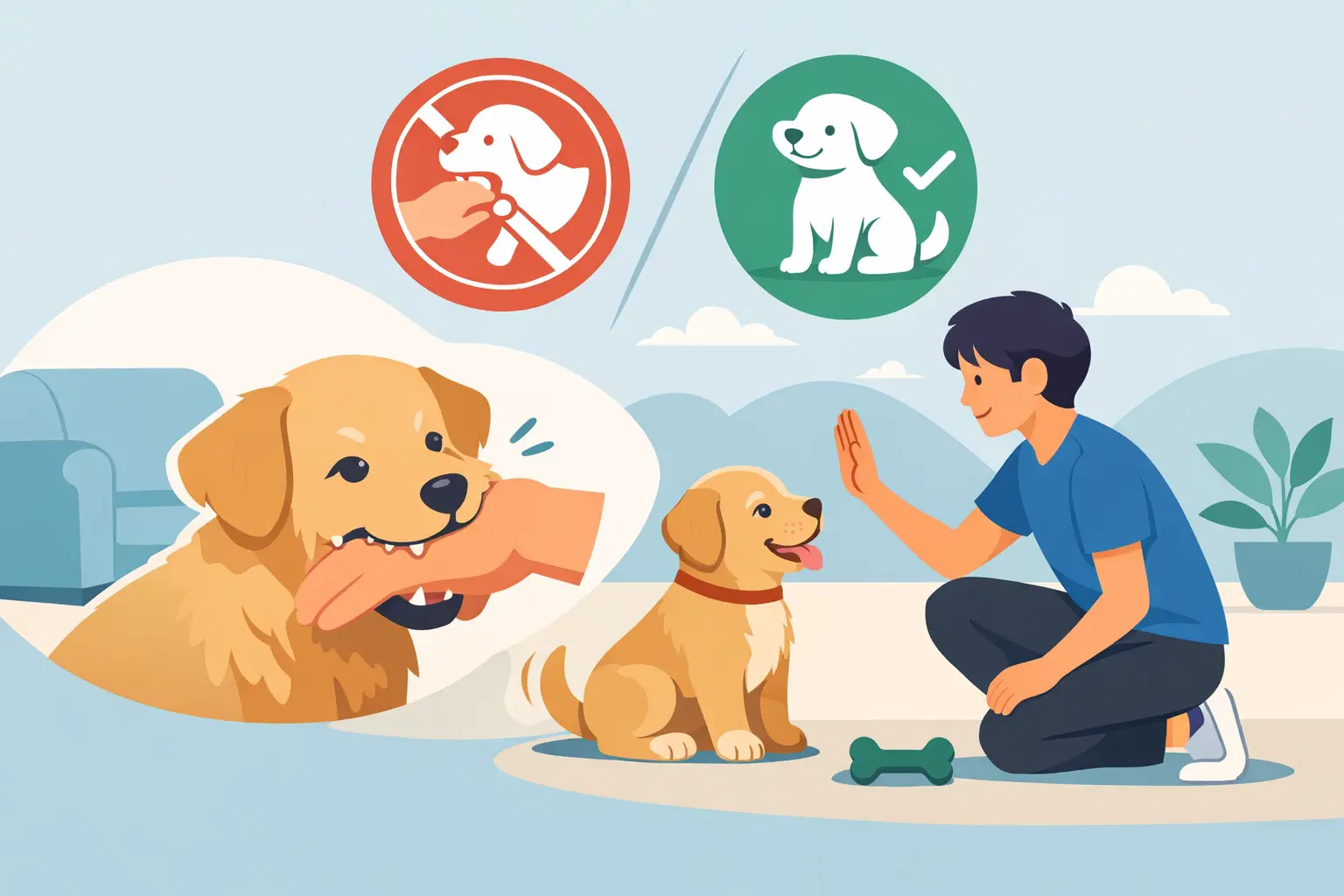
A puppy clamps down on your sleeve while you are making coffee, grabs a child’s hand during play, or turns every greeting into a wrestling match. It is common behavior, but that does not mean you should simply wait it out. To stop puppy mouthing habits, you need a clear response your puppy can understand, practiced the same way by everyone in the home.
Puppies use their mouths to explore, play, relieve teething discomfort, and get attention. They are not trying to be difficult or aggressive. Still, a puppy that repeatedly learns people are appropriate chew toys can carry that habit into adolescence, when the same behavior is stronger, more painful, and harder to manage. Early structure gives your puppy a better option and gives your family a calmer home.
Why Puppies Mouth in the First Place
Mouthing is a normal stage of puppy development. Young dogs learn about their environment through their mouths, much as toddlers use their hands. They also learn how hard is too hard during play with littermates. When one puppy bites too forcefully, the other puppy usually yelps or ends the game. That social feedback teaches bite inhibition.
Once your puppy comes home, your family becomes part of that lesson. The challenge is that people often send mixed messages. A puppy may be encouraged to chase hands during a playful moment, then scolded for doing the same thing when someone is tired or carrying groceries. From the puppy’s perspective, mouthing sometimes works. It gets movement, noise, attention, and interaction.
Teething can increase the behavior, especially between about 12 weeks and 6 months of age. A sore mouth creates a real need to chew. Your goal is not to stop all chewing. It is to teach your puppy what belongs in their mouth and what does not.
The Proven Way to Stop Puppy Mouthing Habits
The most effective approach is calm, immediate, and consistent. Do not rely on yelling, physical corrections, or rough play to make your point. Those responses can make some puppies more excited, fearful, or defensive. Instead, remove the reward for mouthing and promptly show your puppy what earns attention instead.
Make teeth on skin end the fun
The instant your puppy’s teeth touch your skin, clothing, or hair with pressure, freeze. Calmly say a short marker such as “too bad” or “nope,” then remove your attention for a brief moment. Stand up, turn away, or step behind a door or baby gate for 10 to 20 seconds if needed.
This is not punishment in the emotional sense. It is a clear consequence: teeth on people make the game stop. Keep your voice neutral. High-pitched squealing excites some puppies and can accidentally turn the situation into a more exciting game.
When you return, offer a toy and restart only if your puppy is calm enough to engage appropriately. If the puppy mouths again, repeat the process. The lesson works because it is predictable, not because it is dramatic.
Redirect before your puppy makes the wrong choice
Keep appropriate chew and tug toys within reach in the rooms where your puppy spends time. If you see the familiar signs – bouncing toward hands, grabbing at pant legs, or becoming wild during play – place a toy in the puppy’s path before teeth find skin.
Use movement to your advantage. Drag a toy lightly across the floor, begin a short tug game, or toss a toy a few feet away. Praise your puppy when they choose it. The message is simple: toys make play continue; hands make play disappear.
Avoid using old socks, slippers, or gloves as dog toys. Puppies do not understand the difference between the approved old shoe and the shoe you need for work. Give them items that clearly look, smell, and feel like dog toys.
Teach a replacement behavior
A puppy needs more than a correction. They need a job that is incompatible with jumping and grabbing. “Sit” is a practical starting point because it is easy to use before greetings, meals, leash clipping, and play.
Ask for a sit before you pet your puppy or throw a toy. Reward the sit with praise, a small treat, access to the toy, or the attention they wanted. Over time, your puppy learns that calm behavior opens doors, starts games, and brings people closer.
For families with children, this matters even more. Teach children to stand still like a tree when the puppy gets mouthy, then call an adult to redirect the puppy. Children should not push the puppy away, flap their arms, or run screaming. Those reactions often intensify the chase-and-grab cycle.
Manage the Moments When Mouthing Gets Worse
Many owners notice that their puppy is reasonable in the morning and turns into a tiny shark in the late afternoon. That pattern is common. Overtired puppies often lose self-control, just like overtired children.
Before assuming your training has failed, look at the routine. Has your puppy had enough sleep? Young puppies often need 18 to 20 hours of rest across a day. Have they had a bathroom break, a meal, mental activity, and a chance to chew? A puppy with too much stimulation or too little rest is far more likely to mouth.
Use short training sessions and brief play periods rather than trying to wear your puppy out with nonstop activity. A few minutes of sit, down, come, and leash practice can provide valuable mental work. Follow active periods with a quiet rest in a crate, pen, or puppy-safe area. Proper rest is not a shortcut. It is part of a well-managed training plan.
Chewing also needs an outlet. Offer safe, puppy-appropriate chews under supervision and rotate toys so they stay interesting. If your puppy is especially uncomfortable while teething, ask your veterinarian for guidance on appropriate relief options. Do not give bones, hard objects, or household items that could crack teeth or create a choking hazard.
What Not to Do
Rough hand wrestling is one of the fastest ways to build a mouthing habit. Even if the puppy seems gentle today, the game teaches them that hands are part of play. Save physical affection for calm petting and use toys for active games.
Do not hold your puppy’s mouth shut, tap their nose, alpha roll them, or use harsh verbal intimidation. These methods do not clearly teach the right behavior, and they can damage trust. A confident puppy may become more confrontational; a sensitive puppy may become fearful. Neither outcome supports a reliable family dog.
Consistency also matters more than perfection. If one family member allows sleeve biting while another tries to stop it, your puppy will continue testing the rule. Agree on the same response: pause the interaction, redirect to a toy, and reward calm behavior.
When Puppy Mouthing Needs Professional Help
Normal mouthing is loose, bouncy, and easy to interrupt with a toy or a brief pause. Seek professional guidance promptly if you see any of these signs:
- Your puppy stiffens, freezes, growls over handling, food, toys, or space.
- Bites regularly break skin or become more intense despite consistent training.
- Your puppy cannot settle and repeatedly redirects onto people after exercise and rest.
- You feel nervous handling your puppy, or children in the home are being hurt or frightened.
A qualified trainer can watch the behavior in context and build a plan around your puppy’s temperament, daily routine, and home environment. Early support is especially valuable when a family needs practical skills they can use around busy schedules, visitors, and children. Smart Dogs works from proven, motivation-based systems designed for the real moments that happen at home, not just perfect practice sessions.
Give Your Puppy a Clear Path to Success
Stopping mouthing does not require endless corrections. It requires teaching your puppy that calm choices get rewarded and biting people makes the interaction pause. Keep toys nearby, protect nap time, practice simple obedience, and respond the same way every time.
Your puppy is learning how to live in your household with every game, greeting, and quiet evening on the couch. Patient structure now helps create the dog you want later: responsive, manageable, and happy to be part of family life.
