
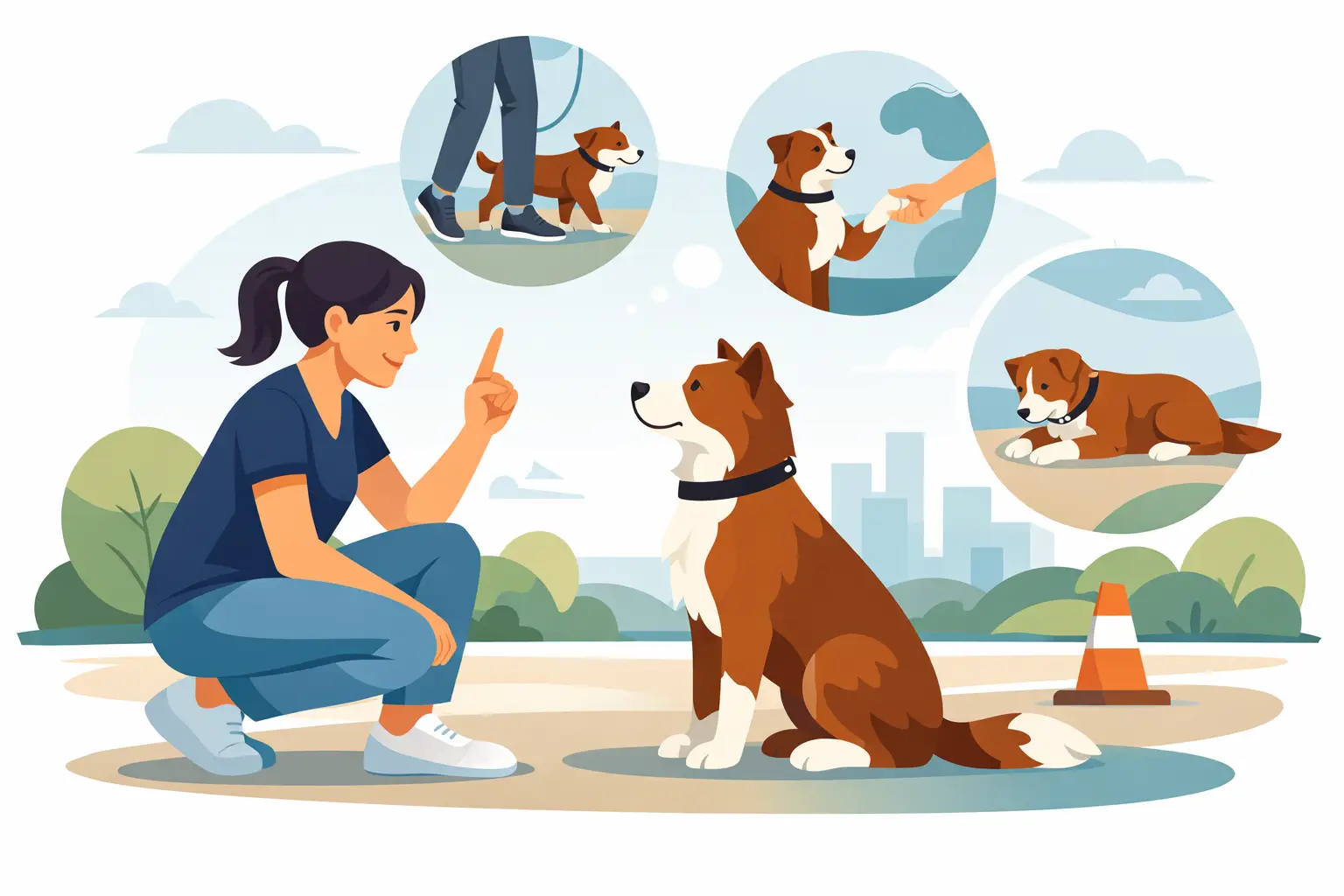
The real test of dog obedience commands is not whether your dog can sit for a treat in the kitchen. It is whether they can respond when the delivery person knocks, another dog passes on the sidewalk, or your child drops food at dinner. For busy Los Angeles families, reliable obedience means a calmer home, safer outings, and a dog that can be included in daily life rather than managed around it.
A trained dog is a happy dog because clear expectations reduce confusion. The goal is not to make your dog robotic or suppress their personality. It is to teach practical skills that give you control when it matters and help your dog understand exactly how to earn what they want.
The Dog Obedience Commands Every Dog Should Know
Not every command carries the same value. Tricks can be fun, but foundational obedience should solve common real-life problems: pulling, jumping, bolting through doors, ignoring you outdoors, and grabbing unsafe items. Start with the commands that make the biggest difference in your routine.
Sit: The starting point for self-control
Sit is simple, but it is far more useful than a photo-ready pose. A dog that sits on cue can pause before greeting visitors, wait while a leash is clipped on, and settle briefly before crossing a street.
Teach it by holding a reward close to your dog’s nose and moving it slowly up and back. As their head follows the food, their rear will naturally lower. The moment it touches the ground, mark the behavior with a clear word such as “yes,” then reward. Once the movement is predictable, say “sit” once just before you guide them.
Do not repeat the command five times. “Sit, sit, sit” teaches your dog that the first few words do not matter. Give one clear cue, help if needed, and reward the correct response.
Down: A calmer position for busy environments
Down is especially useful in homes with children, at outdoor cafes, during a vet visit, or when guests are present. It generally encourages a lower-energy state than sitting, though every dog is different.
From a sit, guide a treat from your dog’s nose straight down to the floor and slightly forward. Reward when their elbows touch the ground. Keep early repetitions short. Asking a young or energetic dog for a long down before they understand the exercise often creates frustration instead of progress.
Stay: The command that requires proofing
Stay asks your dog to hold a position despite movement, distance, or distractions. It can prevent a dog from rushing an open front door, jumping out of a car, or crowding a guest at the entryway.
Build duration before distance. Ask for a sit or down, say “stay,” wait one second, then reward while your dog is still in position. Gradually add time. Next, take one step away and return to reward. Only after your dog succeeds at those easier stages should you add more distance, a turning back, or real distractions.
Always use a release word such as “free” or “okay.” Without one, many dogs learn that they can decide when the exercise is over.
Come: The safety command
A reliable recall can be lifesaving. “Come” should mean moving promptly all the way to you, not merely looking in your direction from across the park.
Begin indoors or in a fenced, low-distraction space. Say your dog’s name followed by “come” in a warm, upbeat voice. Move backward as they approach, then reward generously when they reach you. High-value rewards, praise, and a brief game can make coming to you worthwhile.
Never call your dog to punish them, end every bit of fun, or immediately put them in a crate. If recall always predicts disappointment, it will weaken. At times, call your dog, reward them, and release them back to play. This teaches that coming to you does not always end the good part.
Place: The overlooked command for home life
Place sends your dog to a designated bed, mat, or raised cot and asks them to remain there until released. For many households, it is one of the most practical dog obedience commands because it creates a clear answer to common moments of chaos.
Use place while carrying groceries inside, eating dinner, opening the door for a contractor, or helping kids get ready for school. Start by rewarding your dog for stepping onto the bed, then reward for staying there briefly. Add the verbal cue once your dog understands the destination.
Place is not a punishment. Done correctly, it becomes a comfortable station where your dog can relax while the household continues around them.
Leave it and drop it: Two commands with different jobs
These commands are often treated as interchangeable, but they solve different problems. “Leave it” means do not touch that item. “Drop it” means release what is already in your mouth.
For leave it, show your dog a low-value treat in a closed hand. When they stop trying to get it, mark and reward with a different treat from your other hand. Progress to an item on the floor only when your dog can reliably disengage from the closed hand.
For drop it, offer a safe toy and trade for something more valuable. Say “drop it” as your dog releases the toy, then reward. Avoid chasing a dog that has grabbed an item. Chasing can turn a dangerous situation into an exciting game and may increase guarding behavior.
How to Teach Commands So They Hold Up Outside
Dogs do not automatically understand that “sit” in the quiet living room also means “sit” beside a busy street. Training must move from easy to difficult environments. This process is called proofing, and it is where reliable behavior is built.
Start where your dog can succeed. Use rewards your dog truly values, keep sessions short, and train one skill at a time. A focused five-minute session before breakfast is often more productive than a distracted half-hour after a long workday.
Then change one variable at a time. Add a little distance, a few more seconds of duration, a mild distraction, or a new location. If your dog stops responding, the task is likely too difficult for their current level. Reduce the challenge, help them succeed, and build back up. This is not lowering standards. It is how clear, lasting training works.
Consistency matters across the household. If one person allows jumping, another rewards it with attention, and a third corrects it, the dog receives mixed information. Agree on the command word, the expected behavior, and the release word before you expect reliable results.
What to Do When Your Dog Ignores a Command
An ignored cue is usually information, not defiance. Your dog may be distracted, unsure what the word means in that setting, insufficiently motivated, or unable to perform the behavior because the environment is too stimulating.
First, avoid getting louder or repeating the cue. Instead, ask whether you have trained that behavior at this level of difficulty. A dog that comes reliably from ten feet away indoors has not yet earned off-leash freedom around squirrels, traffic, or other dogs.
Second, make the right choice easier and more rewarding. Use a leash or long line for safety, create distance from the distraction, and reward the response you want. Management is not a failure. It prevents your dog from rehearsing pulling, barking, running off, or ignoring you while training catches up.
Finally, consider the behavior behind the behavior. A dog that cannot settle may need more structured exercise and rest. A dog that guards items, reacts aggressively, panics when left alone, or has a sudden change in responsiveness may need experienced professional guidance and, in some cases, veterinary support.
The Difference Between Knowing a Command and Being Trained
Many dogs can perform commands when treats are visible. A trained dog responds when the reward is not obvious, when life is busy, and when their owner needs an answer the first time. That reliability comes from repetition, fair expectations, proper timing, and gradually working around real distractions.
Smart Dogs uses motivation-based training and proven structure to help dogs fit smoothly into everyday family life. The right program depends on your dog’s age, temperament, history, and the challenges your household faces. A new puppy needs foundations and housebreaking routines. A strong adult dog that pulls on walks may need clearer leash work and impulse control. A rescue dog may need time and thoughtful confidence-building before more demanding obedience work.
Start with one command you need most this week. Practice it briefly when nothing is urgent, reward the response you want, and raise the challenge slowly. Those small, consistent wins are how a dog learns that listening to you is both clear and worthwhile.
