
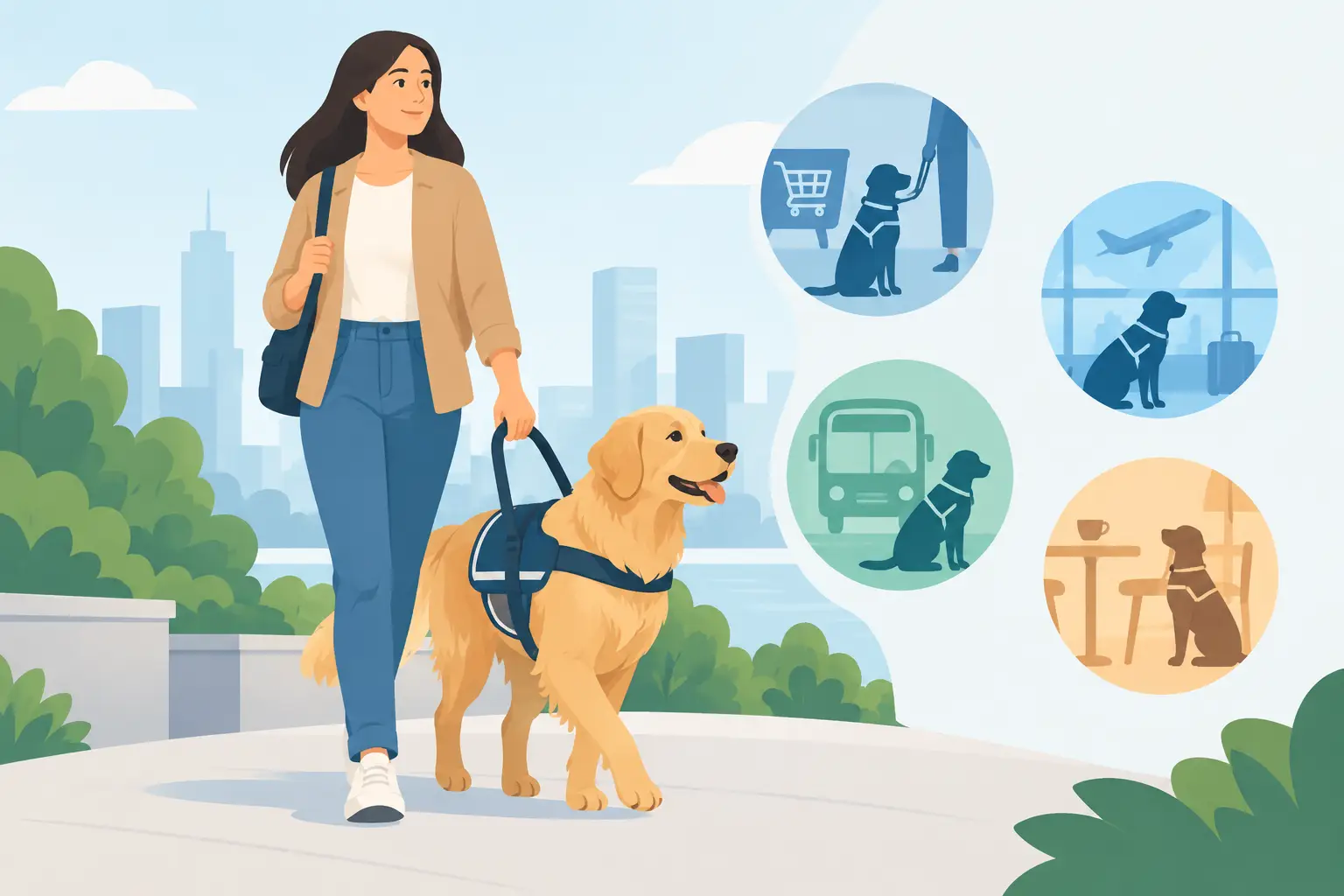
A service dog is not a pet with excellent manners or a dog that makes someone feel better simply by being nearby. It is a working dog trained to perform specific tasks that help a person manage a disability. This service dog eligibility guide explains what that standard means in real life, where training fits in, and how to make a sound decision before committing to the work.
For many owners, the goal is straightforward: greater independence, safer routines, and a dog that can perform reliably in public and at home. But service dog work is demanding. The dog must have the right temperament, the handler needs a disability-related need for task assistance, and both need training that holds up around the distractions of everyday life.
What Makes Someone Eligible for a Service Dog?
Under the Americans with Disabilities Act, a person may qualify for a service dog when they have a physical, sensory, psychiatric, intellectual, or other mental disability that substantially limits one or more major life activities. Major life activities can include walking, seeing, hearing, communicating, caring for oneself, concentrating, regulating certain medical conditions, or performing essential daily tasks.
The central question is not whether a diagnosis sounds serious to someone else. The question is whether the condition creates a substantial limitation and whether a trained dog can perform work or tasks that directly reduce that limitation.
For example, a dog may guide a handler with low vision, alert a deaf handler to a door knock or alarm, retrieve dropped items for a person with mobility limitations, interrupt harmful psychiatric behaviors, or alert to certain medical changes. The task must be connected to the person’s disability and trained to occur reliably.
A doctor’s letter is not generally required for public access under the ADA. Still, medical guidance can be valuable when you are deciding whether a service dog is the right support tool. A qualified healthcare provider understands your condition, your daily limitations, and whether a dog’s tasks would meaningfully improve your safety or independence.
The Difference Between Service Dogs and Emotional Support Animals
This distinction causes a great deal of confusion, especially for renters and travelers. Emotional support animals can provide genuine comfort, companionship, and stability. Those benefits matter. However, comfort alone does not make a dog a service dog under the ADA.
A service dog is individually trained to take a specific action when needed. A dog that responds to an oncoming panic attack by nudging the handler, leading them to an exit, or retrieving medication may be performing trained tasks. A dog whose presence is calming but has not been trained to take a disability-related action is an emotional support animal.
Therapy dogs are different as well. They are typically trained to behave well around people and may visit schools, hospitals, or care facilities with their handlers. Their job is to provide comfort to others, not task-based assistance to one person with a disability.
The legal rules also vary by setting. Public-access rules, housing rules, airline policies, and workplace accommodations are not identical. Do not assume that an online registration, certificate, vest, or identification card creates legal service dog status. It does not. The dog’s trained work, behavior, and the handler’s disability-related need are what matter.
A Service Dog Eligibility Guide Starts With Tasks
Before selecting a dog or beginning formal training, write down the situations where you need help. Be specific. “I need support in public” is a starting point, but it is not yet a task plan. “I need a dog to interrupt skin-picking, then guide me toward my coping kit” is far more actionable.
A strong task plan answers three questions: What disability-related challenge occurs? What action will the dog take? How does that action help you function more safely or independently?
Common service dog tasks include:
- Guiding a person around obstacles or through busy environments
- Alerting to sounds, medical changes, or the presence of another person
- Retrieving a phone, medication, mobility aid, or other needed item
- Providing trained mobility support when medically appropriate
- Interrupting dissociation, repetitive behaviors, nightmares, or escalating anxiety
- Creating space around a handler or guiding them to an exit during psychiatric distress
Not every task is appropriate for every dog or handler. Mobility work, for example, requires careful professional evaluation because an improperly matched dog can be injured. Medical alert work can be highly valuable, but it takes thoughtful assessment, consistent training, and realistic expectations. No responsible trainer should promise that every dog can detect every medical event.
The Dog Must Be Stable Enough for the Job
A dog can be affectionate, smart, and well loved yet still be a poor candidate for service work. Public access requires more than obedience. The dog must remain under control around traffic, crowds, food, unfamiliar dogs, children, carts, noises, and unexpected changes in routine.
A suitable prospect generally shows confidence without recklessness, social neutrality, sound recovery after a surprise, and a willingness to work with its handler. The dog should be able to settle quietly, accept handling, and learn without becoming overwhelmed. Reactivity, intense fear, aggression, or an inability to recover from stress can make public service work unsafe for the dog and the public.
Breed alone does not determine suitability. Individual temperament, health, structure, drive, and trainability matter more. Age matters, too. A young puppy may have potential, but no one can guarantee service-dog readiness before the dog matures. An adult dog with a known history can sometimes offer a clearer picture, although it still needs a thorough evaluation.
This is where honest professional assessment saves owners time, money, and disappointment. A proven training system should evaluate the dog in real situations, not just in a quiet room where every dog looks successful.
Training for Public Access Is a Serious Standard
A service dog needs a foundation of dependable obedience before advanced tasks can hold up in daily life. The dog should respond promptly to cues, walk without pulling, ignore common distractions, settle when nothing is happening, and stay focused on the handler without being constantly managed.
Then comes task training. A task is not complete because the dog performed it once at home. The dog needs repetition in different environments, around distractions, and at the level of reliability the handler needs. Training also includes teaching the handler how to give clear cues, reinforce correct behavior, read stress signals, and maintain skills over time.
Public-access training adds another layer. A working dog should be housebroken, controlled, and non-disruptive. It should not bark repeatedly, solicit attention, jump on strangers, invade other people’s space, eat from displays, or create a safety concern. A trained dog is a happy dog, and a calm, prepared dog is also much easier for a handler to rely on.
Owner-training can be an option under federal law, but it is not the easy route. It requires consistency, sound judgment, and the willingness to pause or change plans if the dog is not thriving. Working with an experienced trainer can provide structured evaluations, practical coaching, and proven results based on real-world standards rather than wishful thinking.
Questions Businesses May Ask and What Handlers Should Expect
When a disability is not obvious, staff in places open to the public may generally ask two questions: Is the dog required because of a disability? What work or task has the dog been trained to perform?
They cannot demand medical records, require a demonstration, ask about the diagnosis, or insist on certification paperwork. Handlers, however, are still responsible for keeping their dog under control and following ordinary rules that apply to everyone else, such as leash laws when appropriate.
A business may ask a dog to leave if it is out of control and the handler does not take effective action, or if the dog is not housebroken. The person must still be offered the opportunity to receive goods or services without the dog present. Good public access is not about winning an argument. It is about protecting the credibility of working dogs through calm, responsible handling.
Start With an Honest Assessment
If you believe a service dog may help, begin with the daily problem you need solved, not the dog you hope to bring everywhere. Talk with your healthcare provider when appropriate, identify potential tasks, and have a qualified trainer assess any dog you are considering. Be prepared for the possibility that another accommodation, a different support animal role, or a different dog may be the better fit.
Service dog training is a significant investment of time, consistency, and care. When the match is right and the training is done well, the result is more than a well-behaved companion. It is a dependable partner that can help make everyday life safer, calmer, and more manageable.
