
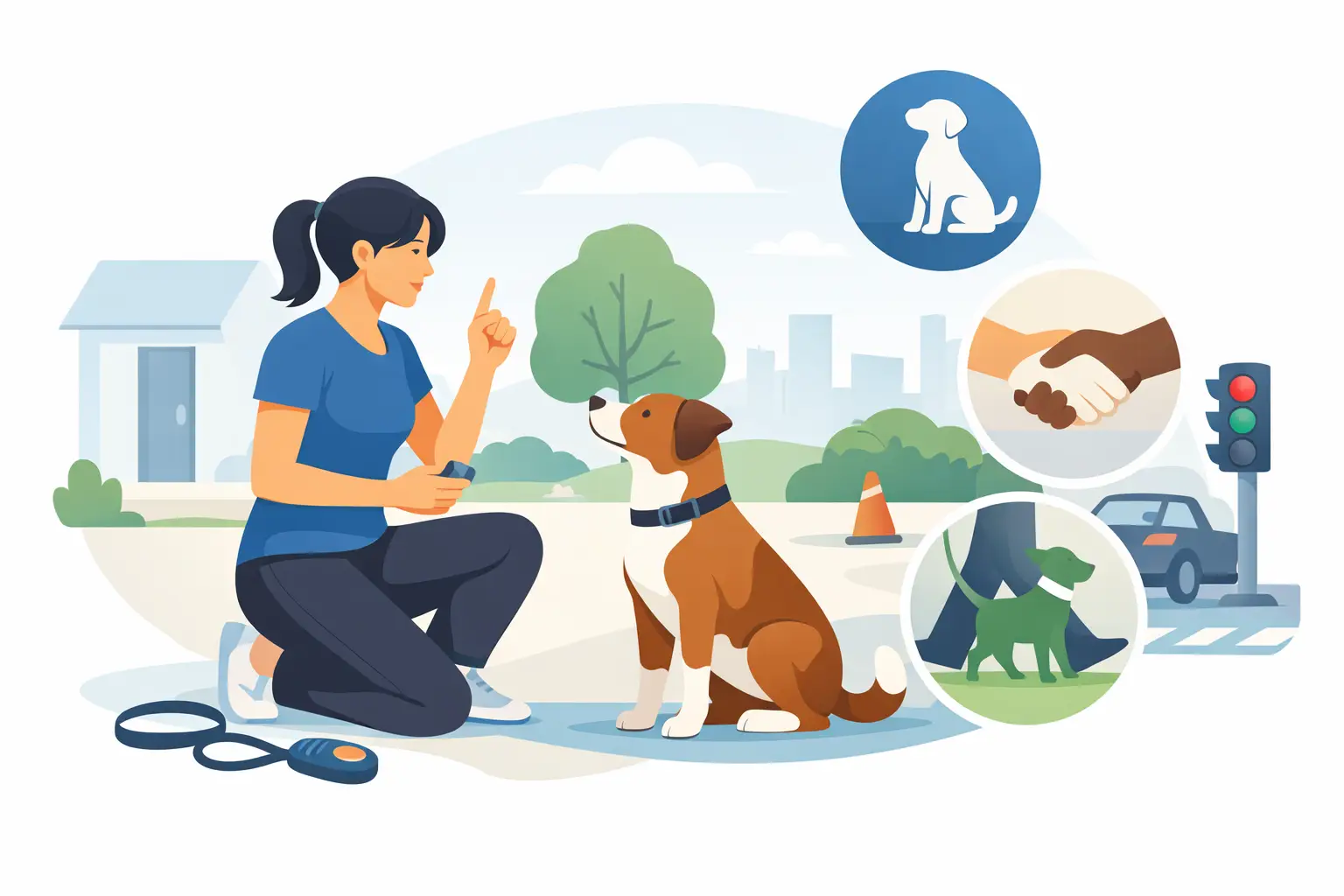
A dog that knows “sit” in the kitchen but ignores you at the front door is not being stubborn. He has learned that the command only matters in one setting. This dog obedience training guide is built for real life: visitors at the door, walks through busy neighborhoods, children moving through the house, and the everyday moments when you need your dog to respond the first time.
Obedience is not about making a dog quiet or robotic. It is about giving your dog clear expectations and giving yourself a reliable way to communicate. A trained dog is a happy dog because he understands what earns rewards, what behavior is expected, and how to settle successfully within your home.
Start With the Behaviors That Change Daily Life
Owners often begin training with a long list of commands. That can be useful, but it is usually not the fastest route to a calmer household. Start with the skills that prevent common problems and make your routine easier.
For most families, those skills are name recognition, come, sit, down, stay, place, leave it, loose-leash walking, and a reliable release word. Housebreaking, calm greetings, crate comfort, and settling around distractions may also need to be part of the plan. The right priorities depend on your dog. A high-energy adolescent may need work on impulse control and walking. A newly adopted rescue may first need predictability and confidence. A young puppy needs short, positive lessons built around sleep, potty breaks, meals, and play.
Do not try to fix every behavior at once. Choose two or three skills that would make the biggest difference this week, then practice them consistently. Clear progress creates momentum for both dog and owner.
Build a Training System Your Dog Can Understand
Dogs learn through consequences and repetition. When a behavior consistently leads to something your dog values, that behavior becomes more likely. Rewards can include food, a favorite toy, praise, access to a sniff spot, a walk, or the chance to greet someone appropriately. The best reward is the one your dog wants in that moment.
Mark the Right Choice Quickly
Timing matters. Use a consistent marker word such as “yes” the instant your dog performs the correct behavior, then follow it with a reward. If you ask for sit and your dog’s rear touches the floor, mark that exact moment. Waiting several seconds can accidentally reward something else, such as standing back up or jumping toward your hand.
Keep your cue simple. Say “sit” once, then give your dog time to respond. Repeating “sit, sit, sit” teaches your dog that the first request is optional. If your dog does not respond, reduce the difficulty. Move farther from distractions, use a better reward, or help him succeed with a training setup he already understands.
Use Short Sessions, Often
Five focused minutes before breakfast can accomplish more than a distracted half-hour after a long day. Puppies may do best with one- to three-minute sessions. Adult dogs can often work longer, but stopping while your dog is engaged is still smart training.
Work training into ordinary routines. Ask for a sit before clipping on the leash, a down before dinner, or a place command while you answer the door. These repetitions teach your dog that obedience is not a separate event. It is part of how daily life works.
Be Consistent Without Being Rigid
Every person in the household should use the same words and follow the same rules. If one family member allows jumping on the couch and another corrects it, the dog receives mixed information. Decide what behavior is acceptable, then make the expectation predictable.
Consistency does not mean treating every dog the same way. A food-motivated Labrador, a sensitive rescue, and a driven working-breed adolescent may need different rewards, pacing, and levels of distraction. Proven training is structured, but it is never one-size-fits-all.
Teach the Core Commands Step by Step
Recall: Come Means Come Every Time
A reliable recall is one of the most valuable safety skills your dog can learn. Begin indoors or in a fenced area with minimal distractions. Say your dog’s name followed by “come” in a positive, clear voice. When he moves toward you, mark and reward generously when he reaches you.
Never call your dog to punish him, end all the fun, or immediately clip on the leash and leave the park every time. If coming to you consistently predicts disappointment, your recall will weaken. Instead, occasionally call your dog, reward him, and release him back to sniff or play. Build the habit that coming to you is always worthwhile.
As your dog improves, add distance, movement, other people, and controlled distractions. A long line is useful while building reliability outdoors. Do not test your dog off leash in an unsafe area before the skill is ready.
Place: Create a Calm Default Behavior
“Place” teaches your dog to go to a bed, mat, or raised cot and remain there until released. It is one of the most practical commands for busy homes. Use it when guests arrive, meals are being prepared, children are playing, or delivery drivers come to the door.
Start by rewarding your dog for stepping onto the designated spot. Gradually reward for remaining there, first for a few seconds and then for longer periods. Add a release word, such as “free,” so your dog learns that staying put is part of the command. Build duration before expecting success around major distractions.
Place is not a punishment. When taught with positive reinforcement and clear structure, it becomes a safe, familiar job that helps dogs settle.
Loose-Leash Walking: Stop Letting Pulling Set the Route
Pulling works because it gets the dog where he wants to go. If your dog pulls toward a tree and reaches it, he has been rewarded by the environment. The solution is not simply pulling back harder. Teach your dog that a loose leash is what moves the walk forward.
Begin in a low-distraction area. Reward your dog for being near your side with slack in the leash. When the leash tightens, stop or calmly change direction. The moment your dog returns to position and creates slack, continue moving. At first, progress may feel slow. That is normal. Your dog is learning a new rule after practicing the old one many times.
Walks still need to be enjoyable. Give your dog planned opportunities to sniff, explore, and relieve himself. Structure and freedom can work together when you decide when each happens.
Take Obedience Beyond the Living Room
A command is not truly reliable until your dog can perform it in different places, around different people, and with increasing distractions. Trainers call this proofing. Owners often mistake a dog’s failure outdoors for defiance, when the dog simply has not learned the command at that level yet.
Change one factor at a time. Practice sit on the sidewalk before asking for sit near a busy coffee shop. Practice place while one family member walks around before trying it during a full gathering. Raise the challenge gradually enough that your dog can keep winning.
Reward heavily when you introduce a harder environment. Once the behavior is dependable, rewards can become less predictable, but praise and positive feedback should remain part of the process. Reliability grows through successful repetitions, not by repeatedly putting a dog in situations he cannot handle.
Address Problems Before They Become Habits
Jumping, barking, counter surfing, leash reactivity, and accidents in the house rarely improve by being ignored. Dogs repeat what is rewarding, and many unwanted behaviors are accidentally reinforced. A jumping dog may receive attention. A barking dog may make the delivery person leave. A dog who finds food on the counter receives a powerful reward for checking again.
Management matters while training is underway. Use baby gates, crates, leash supervision, closed doors, and controlled access to prevent your dog from rehearsing the behavior you want to stop. This is not avoiding the issue. It is giving the new training a fair chance to take hold.
For housebreaking, consistency is especially important. Take your dog out on a schedule based on age, meals, water intake, activity, and previous success. Reward immediately after your dog eliminates in the correct location. Clean indoor accidents thoroughly and avoid punishment after the fact. Your dog will not connect a delayed correction to something that happened minutes earlier.
Aggression, severe fear, repeated biting, or intense reactivity require professional guidance. These issues involve safety, history, triggers, and body language that can be easy to misread. Do not force social interactions or use a quick fix that increases fear. A qualified trainer can assess the behavior and build a plan that protects people while improving the dog’s confidence and response.
Know When Professional Training Makes Sense
Private lessons can be an efficient choice when you need hands-on coaching in your home or help with a specific behavior. Board-and-train programs can provide concentrated practice and a strong foundation, but owners still need follow-through when the dog returns home. Online training can work well for owners who are consistent and need flexible access to instruction, especially for foundational obedience and puppy development.
The best format depends on your schedule, your dog’s needs, and how much support you need to apply training correctly. At Smart Dogs, the goal is practical obedience that carries into your routine, not a performance that only works during a lesson.
Your dog does not need perfection to make your life easier. He needs clear guidance, fair boundaries, and enough repetition to understand that listening works wherever life takes you. Start with one useful behavior today, reward the right choice, and build from there.
