
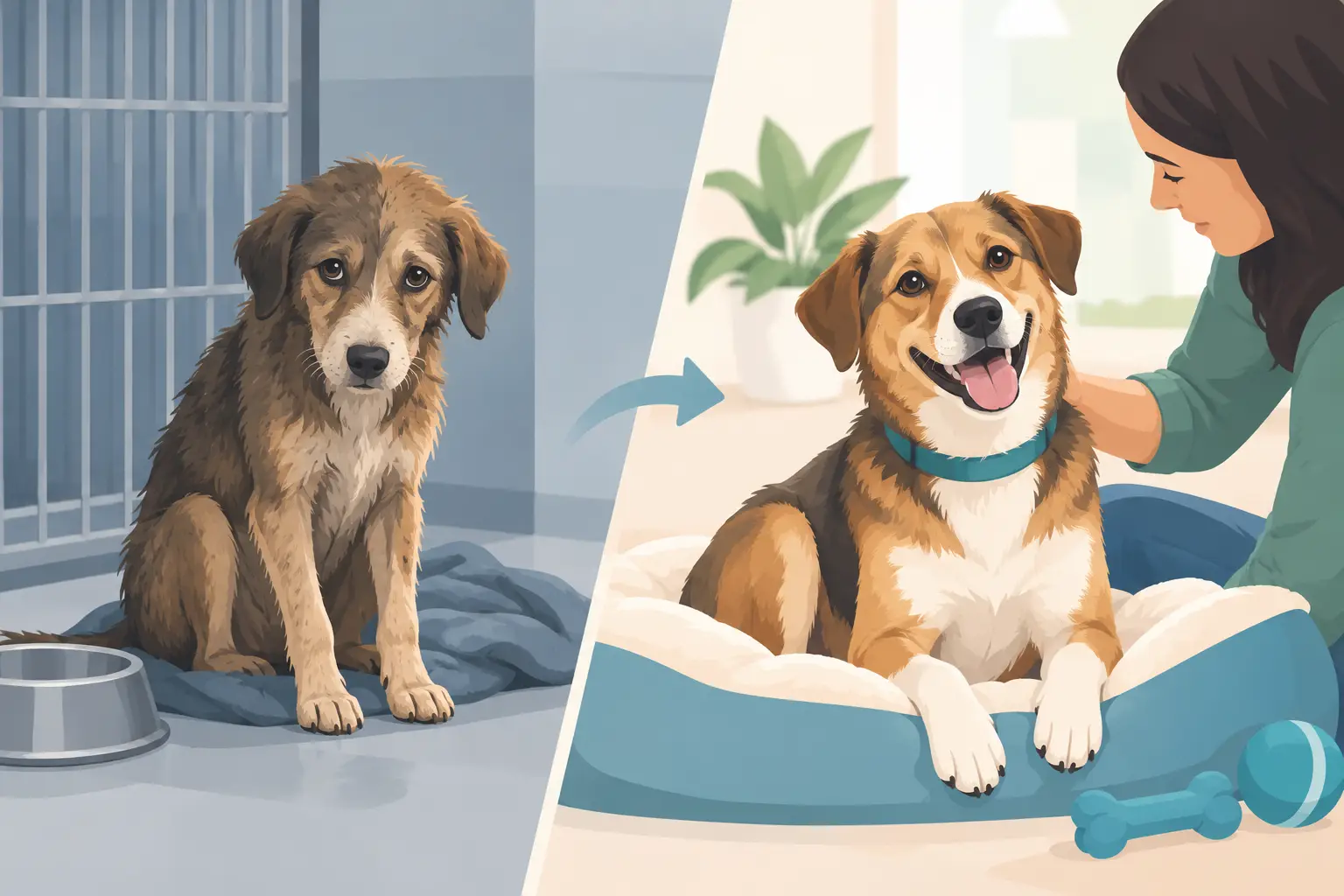
A rescue dog’s first week at home can look nothing like the dog you expect to have a month later. The quiet dog may begin barking at every hallway sound. The affectionate dog may panic when left alone. The energetic dog may pull hard enough to make walks stressful. Real rescue dog transformations do happen, but they are not overnight makeovers. They are the result of safety, structure, and training that gives a dog a clear path forward.
For a newly adopted dog, even a loving home can feel unfamiliar. New people, scents, routines, surfaces, rules, and neighborhood sounds can be overwhelming. Owners often interpret those early behaviors as personality or stubbornness when the dog is still trying to understand whether this new environment is safe.
A trained dog is a happy dog, and for many rescue dogs, training is also the bridge between uncertainty and confidence.
Why Rescue Dog Transformations Take Time
Dogs entering a new home bring different histories with them. Some were well loved but surrendered because of a move, medical issue, or financial hardship. Others may have spent time in a shelter, bounced between homes, or received little early socialization. You may not know every detail of your dog’s past, but you can work with the behavior you see today.
The first goal is not to demand perfect obedience. It is to create predictability. Dogs settle faster when meals, walks, rest, bathroom breaks, and training happen on a dependable schedule. That consistency lowers uncertainty and makes it easier for the dog to understand what earns attention, freedom, and rewards.
This does not mean allowing problem behavior to continue while the dog adjusts. If a dog is jumping on guests, pulling on leash, guarding a bed, or having accidents indoors, early guidance matters. The right approach is calm, fair, and structured. You can respect a dog’s adjustment period while still teaching household rules from day one.
The Foundation Behind Successful Rescue Dog Transformations
The most meaningful changes are not cosmetic. A dog may learn to sit quickly, but the real win is a dog that can settle on a mat while dinner is prepared, walk through a busy neighborhood without dragging the owner, and remain calm when the doorbell rings.
Start With Management, Not Guesswork
Management prevents a dog from practicing behaviors you do not want. If your new dog chews shoes, shoes should not be accessible. If the dog has accidents, freedom in the house should be limited until housebreaking is reliable. If visitors create too much excitement, use a leash, crate, gate, or separate room while you build better greeting skills.
Management is not a punishment. It is a practical way to keep everyone safe and set the dog up to succeed. Every time a dog rehearses lunging, barking, bolting through doors, or counter surfing, the habit becomes stronger. Preventing those repetitions gives training a chance to work.
A crate or designated quiet area can be especially useful when introduced positively. It gives a rescue dog a place to decompress without being followed, handled, or expected to socialize. For families with children, this protected rest space is essential. Dogs need breaks, and children need clear rules about when to leave the dog alone.
Build Communication Through Everyday Commands
Reliable obedience is not about making a dog perform tricks. It is about creating communication when it matters. A strong response to come, sit, down, place, leave it, and heel can make daily life safer and more enjoyable.
Start in low-distraction environments, then gradually practice around the real situations your dog will face. A recall that works in the living room is only the beginning. The goal is a dog that can respond outside, near other dogs, around people, and when something interesting is happening.
Positive reinforcement and motivation-based training help dogs understand what behavior earns a reward. Praise, food, toys, access to a walk, or the chance to greet someone can all become meaningful rewards. But timing and consistency matter. If the dog receives attention while jumping, pulling gets them to the park, or barking makes people back away, those behaviors may be rewarded unintentionally.
Teach Calm Before You Need It
Many owners focus on stopping unwanted behavior in the moment. That is necessary at times, but lasting progress comes from teaching an alternative behavior before the stressful moment arrives.
For example, instead of only correcting a dog for charging the front door, teach a reliable place command and practice it when the home is quiet. Instead of waiting for a reactive dog to explode on a walk, work at a safe distance where the dog can notice another dog and still respond to you. Instead of repeatedly saying no to frantic jumping, teach the dog that four paws on the floor earns greeting and attention.
Calm is a skill. It can be trained, rewarded, and strengthened through repetition.
Common Changes Owners Can Expect
Every dog progresses at a different rate, but well-structured training commonly improves the behaviors that make adoption feel difficult in the first place. Housebreaking becomes more dependable when bathroom trips are scheduled, supervised, and rewarded. Leash walking improves when the dog learns that pulling does not move the walk forward, while walking with the handler does.
Separation-related stress can improve when departures and returns are handled calmly and the dog learns to rest independently. Some dogs need a more gradual plan, especially if they panic, destroy property, or vocalize for long periods. Severe separation anxiety deserves professional guidance rather than a quick fix.
Reactivity toward dogs or people also requires a thoughtful plan. For some dogs, the goal is friendly social interaction. For others, the best outcome is neutral behavior: seeing another dog across the street, staying under control, and continuing the walk. Not every rescue dog needs to become a dog park regular. A calm, responsive dog who can safely enjoy daily life is a meaningful success.
What Can Slow Progress Down
The biggest obstacle is often inconsistency. If one family member allows furniture access, another rewards whining with attention, and a third lets the dog pull to greet people, the dog receives mixed messages. Everyone in the home should understand the same rules, commands, and rewards.
Moving too fast can also create setbacks. A dog that has been home for three days does not need a crowded patio, a dog park visit, a family party, and a trip to a busy pet store. Exposure is valuable when it is controlled and positive. Flooding a nervous dog with overwhelming experiences can increase fear instead of building confidence.
Finally, avoid comparing your dog to social media before-and-afters. A rescue dog’s progress may be quiet at first: sleeping through the night, taking food gently, relaxing in another room, or looking at you when a truck passes. Those small signs are often the groundwork for larger behavioral change.
When Professional Training Makes a Difference
Professional help is especially valuable when safety, family stress, or daily routines are being affected. Resource guarding, biting, intense leash reactivity, repeated housebreaking issues, escape behavior, and severe anxiety are not problems to simply wait out.
A qualified trainer can assess the dog in context, identify what is triggering the behavior, and create a plan that fits your household. That plan should address more than commands. It should include management, practice routines, clear owner coaching, and realistic goals for your dog’s temperament and history.
For busy Los Angeles households, training also needs to work beyond the lesson itself. Your dog must be able to respond in an apartment hallway, around traffic, near other dogs, and during the daily demands of family life. Smart Dogs focuses on functional obedience because reliable behavior is what creates real relief for owners.
Give Your Dog a Clear Job
Rescue dogs do not need perfection from their new families. They need clarity, patience, and follow-through. Give your dog a predictable routine, reward the behavior you want, prevent the behavior you do not, and practice skills where real life happens. With steady guidance, the dog who arrived unsure of everything can become a calm, connected companion who knows exactly where they belong.
