
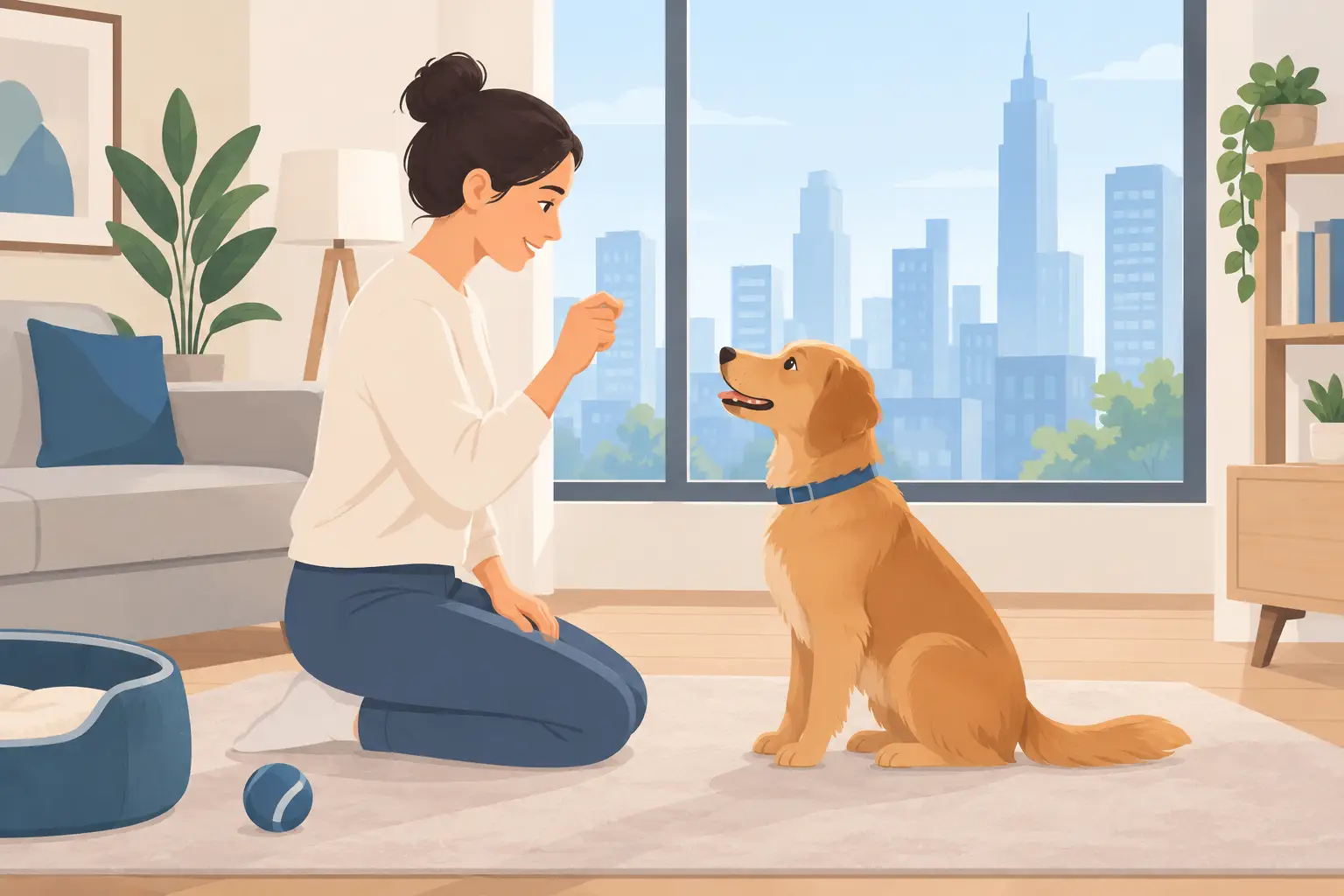
A dog does not know that thin walls, crowded elevators, and a third-floor walk to the grass require different behavior than a house with a backyard. Apartment dog training closes that gap. The goal is not a silent, motionless dog. It is a dog that can settle, respond, wait, and handle everyday city life without turning each hallway sound or delivery knock into a crisis.
For busy Los Angeles dog owners, the biggest improvements usually come from structure, not more freedom. A clear routine gives your dog predictable outlets for energy, bathroom needs, social contact, and rest. That predictability reduces stress for everyone in the home.
Start With the Apartment Environment, Not the Problem
Many apartment behavior issues are blamed on stubbornness or excess energy. Often, the real issue is that the dog has not been taught what to do in a compact, stimulating space. A puppy may bark because every neighbor passing the door feels close. A rescue dog may panic when left alone because the sounds of another unit make the building feel unpredictable. An adolescent dog may pull toward every person in the lobby because that is the most exciting part of the day.
Before correcting a behavior, look at the pattern. When does it happen? What occurs immediately before it? What does your dog get from the behavior? Barking at the window may be self-rewarding because people keep moving below. Pulling toward other dogs may continue because the dog eventually reaches them.
Training works best when you prevent repeated mistakes while teaching a better response. Block access to a window if it causes constant barking. Keep your dog on leash through the lobby rather than allowing uncontrolled greetings. Use a crate, pen, or dog-safe room when supervision is not possible. Management is not a shortcut. It gives the new behavior a real chance to take hold.
Build a Routine Your Dog Can Count On
A reliable schedule is one of the strongest tools in apartment dog training. Dogs do better when they know when they will go outside, eat, train, play, and rest. This is especially true for puppies learning housebreaking and for dogs adjusting after adoption.
Start with morning exercise and a bathroom break before the day becomes busy. The walk does not need to be long to be useful, but it should be purposeful. Ask for a few simple commands during the outing, such as sit at curbs, wait at doors, and come when called. A dog that practices listening outside is more likely to listen in the apartment.
Plan another outing around your work schedule, then give your dog a calm activity when you return home. This could be a short training session, a food puzzle, or supervised chew time. The goal is to meet your dog’s needs without creating a pattern of nonstop excitement indoors.
The right amount of exercise depends on the dog. A young, athletic dog may need more physical activity and mental work than a senior or small companion breed. But more exercise is not the answer to every behavior problem. A dog that never learns to settle can become fitter, more stimulated, and still unable to relax. Balance activity with deliberate quiet time.
Teach the Skills That Matter Most in Shared Spaces
A trained dog is a happy dog because clear expectations remove confusion. In an apartment, several commands carry more practical value than flashy tricks.
Place Means Settle Here
Teaching a dog to go to a bed, mat, or raised cot is one of the most useful indoor skills. “Place” gives your dog a specific job when someone knocks, food is being prepared, children are playing, or you need to open the door. Instead of repeating “no” as your dog rushes around, you can direct them to a familiar spot and reward calm behavior.
Begin in a quiet room. Guide your dog onto the bed, mark the moment all four paws are on it, and reward. Build duration gradually. At first, reward every few seconds of calm. Later, add real-life distractions such as walking across the room, opening a cabinet, or sitting down to eat.
Door and Elevator Manners Prevent Daily Chaos
Doors are high-energy zones for many dogs. They predict walks, guests, and opportunity. Teach your dog that the door opening is not an invitation to charge forward.
Ask for a sit or wait before clipping on the leash. Open the door only when your dog remains in position. If they surge ahead, calmly close the door and try again. The same principle applies at the elevator. Your dog should wait for people to exit, enter with you on a loose leash, and stand or sit without crowding others.
This takes consistency, particularly when you are late for work. Still, a few extra seconds of practice each day can prevent pulling, escaped dogs, and uncomfortable elevator encounters.
Recall Is Safety, Even Indoors
Reliable recall is not only for off-leash parks. Use it when your dog slips through a doorway, heads toward a maintenance worker, or fixates on another dog in the courtyard. Practice “come” frequently in low-distraction settings, reward generously, and never call your dog only when something fun is ending.
If your dog ignores recall around strong distractions, do not keep repeating the cue. Use a long line in a safe area and get professional guidance. Repeating a command your dog does not follow teaches them that listening is optional.
Solve Barking Without Creating More Anxiety
Barking is one of the fastest ways for apartment stress to build between dog owners and neighbors. The solution depends on why the dog is barking.
Alert barking at a hallway noise needs a different response than separation distress. For alert barking, acknowledge the sound without escalating it, then redirect your dog to place or another trained behavior. Reward the quiet choice. If the dog spends all day rehearsing window barking, reduce visual access with privacy film, curtains, or a furniture change.
For barking when left alone, avoid assuming your dog is being spiteful. Record a short period after you leave if possible. A dog that settles after a few minutes may need more practice with departures and a better pre-departure routine. A dog that cries, paces, drools, scratches doors, or remains distressed may be dealing with separation anxiety. This requires a careful training plan, and severe cases may need support from a qualified trainer and veterinarian.
Do not punish barking after the fact. Your dog will not connect the correction to something that happened minutes earlier, and fear-based corrections can make noise sensitivity worse. Focus on what you want instead: a dog that hears a sound, checks in with you, and returns to resting.
Make Housebreaking Practical, Not Perfect
Apartment housebreaking requires more planning because you cannot simply open a back door. Puppies have small bladders and limited control. Rescue dogs may not understand your routine yet. Accidents are information, not proof that your dog cannot learn.
Take your dog out after waking, eating, drinking heavily, playing, and coming out of confinement. Go to the same relief area whenever possible, keep the trip boring until your dog eliminates, and reward immediately afterward. Timing matters. The reward should happen outside, not after returning to the apartment.
If accidents continue, tighten supervision and shorten the time between trips. Clean indoor accidents with an enzymatic cleaner so lingering odor does not draw your dog back to the same area. Avoid giving full access to the apartment before your dog has shown consistent success. Freedom should expand as reliability improves.
Practice Calm Alone Time Before You Need It
Dogs in apartments often struggle because owners leave them alone for too long before teaching them how to be alone. Start with short, successful absences. Give your dog a safe resting area, leave without a long emotional goodbye, and return before anxiety builds. Gradually increase time as your dog shows relaxed behavior.
A crate can be helpful for some dogs, especially puppies, but it is not right for every situation. The crate should be introduced as a positive resting place, never used as punishment. Some adult dogs do better in a gated kitchen, bedroom, or exercise pen. The best setup is the one where your dog can rest safely without rehearsing destructive or anxious behavior.
Get Help Before Small Problems Become Lease Problems
A barking complaint, repeated accidents, lunging in shared spaces, or panic when left alone can escalate quickly in an apartment building. Early training is easier than repairing a long-practiced habit. Private lessons can be especially useful when the problem involves your exact layout, schedule, and daily triggers.
Smart Dogs focuses on functional obedience that fits real life: calm door manners, dependable recall, housebreaking structure, and behavior owners can use every day. Proven results come from practicing the right skills consistently, not from waiting for a dog to outgrow the problem.
Your apartment may be small, but your dog’s training does not have to be. Give your dog clear rules, enough appropriate activity, and regular practice settling near you. The payoff is a calmer home, more confident outings, and a dog that feels secure wherever the day takes you.
