
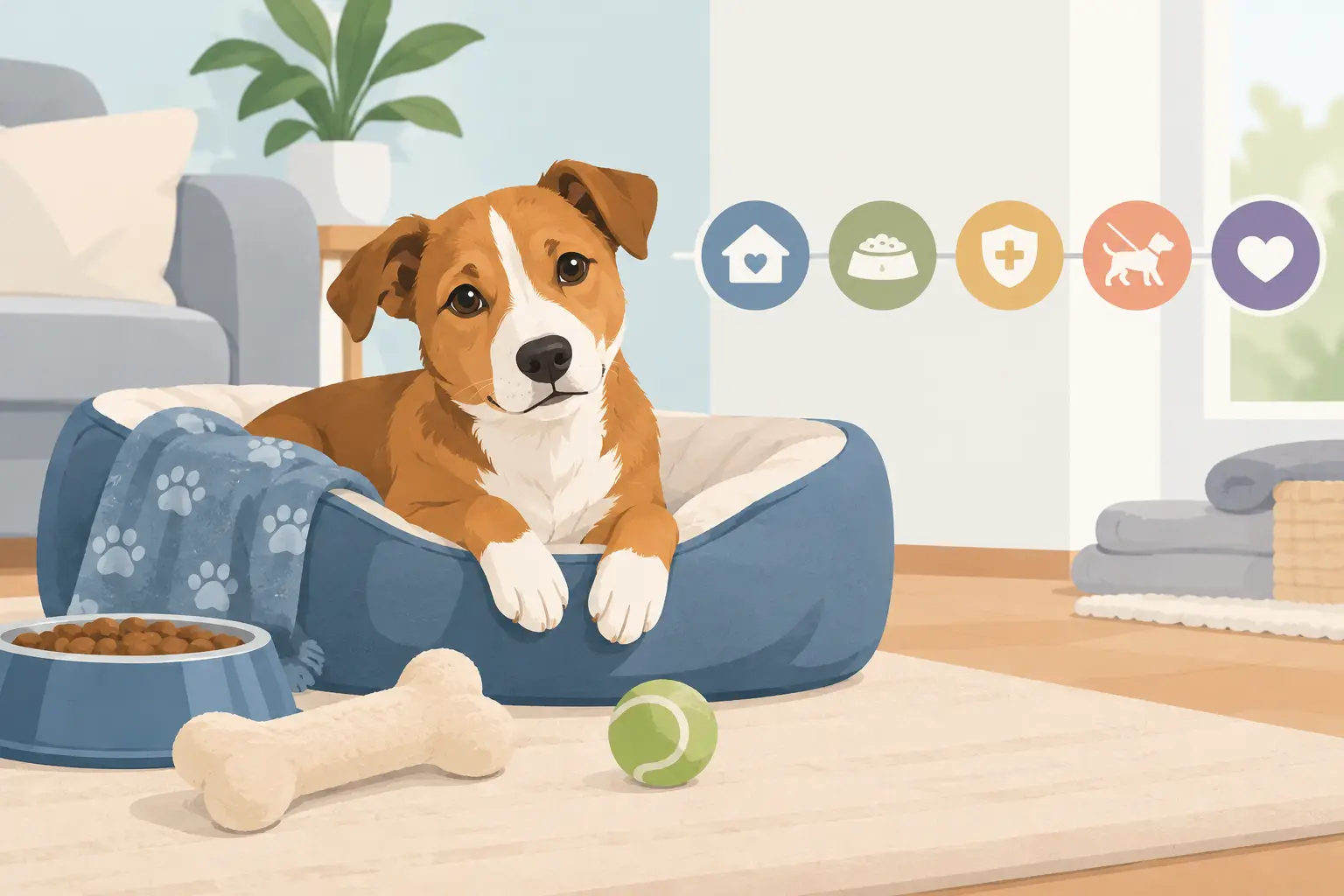
The first night with a newly adopted dog can look nothing like the dog you met at the shelter or foster home. A quiet dog may pace, a friendly dog may hide, and a dog who seemed house-trained may have an accident by morning. This rescue dog first week example is built around one priority: creating predictable structure before asking for too much behavior.
Your new dog does not need a packed social calendar, a dozen visitors, or immediate freedom in every room. They need a calm place to rest, clear rules, consistent bathroom breaks, and a family that responds steadily. A trained dog is a happy dog, but training starts with helping the dog feel safe enough to learn.
Set Up the Home Before the Dog Arrives
Choose a quiet area where your dog can rest without being watched, handled, or interrupted all day. A crate, exercise pen, gated room, or bed in a low-traffic corner can work well. The right setup depends on the dog. Some dogs settle quickly in a crate, while others need a larger enclosed space at first. Do not force confinement if it creates panic, but do prevent your new dog from having unsupervised access to the whole house.
Have a leash, collar with identification, food, water bowl, secure chew items, waste bags, and an enzymatic cleaner ready. Keep the first few days simple with the food your dog was already eating when possible. A sudden food change, combined with travel and stress, can create stomach upset that makes housebreaking harder.
Everyone in the household should agree on the basics before the dog comes home. Decide where the dog sleeps, whether furniture is allowed, which door is used for potty trips, and what words you will use for cues. Consistency is not about being harsh. It is how you make the rules understandable.
Rescue Dog First Week Example: Day One
Bring your dog home quietly. Skip the neighborhood parade and avoid introducing friends, relatives, or other dogs on the first day. Take a short, low-pressure potty break before entering the house, then guide your dog to the designated rest area.
Let the dog explore one or two rooms on leash or under close supervision. This is not the time to test whether they can be trusted alone. Even a wonderful rescue dog may chew, mark, counter-surf, or bolt through an open door when overwhelmed. Management prevents problems from becoming habits.
Offer water, a small meal if it fits the normal feeding schedule, and a chance to rest. If the dog approaches you, keep your interaction calm and brief. Petting should be invited, not demanded. Sitting on the floor sideways, speaking softly, and allowing the dog to come closer often builds more trust than repeated attempts to touch them.
That first night, take the dog out for one final bathroom break and settle them near enough that you can hear if they need help. Expect some disrupted sleep. If they whine, pause before reacting. A brief complaint may fade as they settle. Escalating distress, frantic scratching, or repeated attempts to escape means the setup may be too difficult for that dog right now.
Days Two and Three: Build the Routine
By the second day, start a dependable rhythm. Feed at scheduled times, take regular potty breaks, provide rest periods, and add short walks that prioritize sniffing and decompression over distance. For many adult dogs, bathroom trips are needed first thing in the morning, after meals, after naps, after play, and before bed. Puppies need more frequent trips.
Use the same route to the potty area when possible. The moment your dog finishes, calmly praise and reward. Then give them a little extra time outside or a few minutes of sniffing. This teaches the dog that going potty does not always end the fun.
Begin teaching their name with positive reinforcement. Say the name once. When the dog looks toward you, mark the moment with praise and offer a small treat. Keep sessions short, usually one to three minutes. You are building attention, not drilling obedience.
This is also a good time to introduce a simple recall foundation indoors. Take one or two steps away, say the dog’s name followed by “come,” and reward generously when they move toward you. Never call your dog to punish them, end every enjoyable activity, or force an uncomfortable interaction. Reliable recall is built on a history of good outcomes.
Days Four Through Seven: Add Structure, Not Pressure
Once your dog is eating, sleeping, and eliminating more predictably, you can begin adding practical household skills. Practice leash handling in a quiet area, reward four paws on the floor when greeting family members, and teach a simple place or bed routine. A place command is especially useful in busy Los Angeles homes, apartments, and family spaces because it gives the dog a clear job when the doorbell rings or meals are being prepared.
Keep new experiences controlled. A confident dog may be ready for a brief walk on a calm street. A fearful dog may benefit more from sitting at a comfortable distance and watching the world go by while receiving treats. Progress is not measured by how many places your dog visits. It is measured by whether your dog can stay calm, recover from surprises, and look to you for guidance.
Do not rush dog-to-dog introductions. Even social dogs can react differently after adoption, when their stress level is high and their environment is unfamiliar. If your household includes another dog, use parallel walks and short, supervised interactions rather than immediately turning both dogs loose together. Feed separately and remove high-value chews until you understand each dog’s comfort level.
Visitors should wait if possible. If a visit cannot be avoided, keep it brief and structured. Ask guests to ignore the dog at first, avoid reaching over their head, and let the dog choose whether to approach. A dog that retreats to their bed or crate should be left alone.
A Simple First-Week Daily Schedule
A practical schedule gives busy owners a starting point without turning the week into a rigid military operation. Adjust timing for your dog’s age, medical needs, energy level, and work schedule.
Morning starts with a potty trip, breakfast, and a short walk or sniff break. Follow that with quiet rest while you prepare for the day. Midday includes another potty break, a few minutes of training, and calm enrichment such as a food puzzle or safe chew. In the evening, take a measured walk, serve dinner, practice one or two easy skills, and allow the dog to settle before a final potty trip.
Most new rescue dogs need more sleep than owners expect. If your dog becomes wild, mouthy, or unable to settle, the answer may not be more exercise. It may be a quieter environment and a protected nap.
What to Do When the Week Does Not Go Smoothly
Setbacks are normal. A dog may seem relaxed for three days and then begin barking at hallway noises, guarding a bed, refusing walks, or having accidents. This does not mean the adoption is failing. It often means the dog is becoming comfortable enough to show you their real concerns and habits.
For accidents, clean thoroughly, increase supervision, and shorten the time between potty trips. Do not scold after the fact. Your dog will not connect the correction to something that happened minutes earlier, and fear can make housebreaking less reliable.
For barking, lunging, freezing, or fearful behavior, create more distance from the trigger and reward calm attention. Avoid forcing greetings or punishing fear. At the same time, do not simply hope serious behavior will disappear with time. Growling, snapping, intense guarding, separation distress, or repeated attempts to escape are reasons to seek professional guidance early. Addressing the behavior while it is new is usually easier than fixing a well-practiced pattern months later.
Smart Dogs uses proven, motivation-based training to turn daily routines into reliable real-world behavior. The goal is not a dog who obeys only in a quiet room with treats visible. The goal is a dog who can settle at home, respond on walks, and fit comfortably into your life.
Give your rescue dog a calm first week, clear expectations, and plenty of chances to succeed. Trust grows through hundreds of small, predictable moments, and those moments are where a well-behaved companion begins.
