
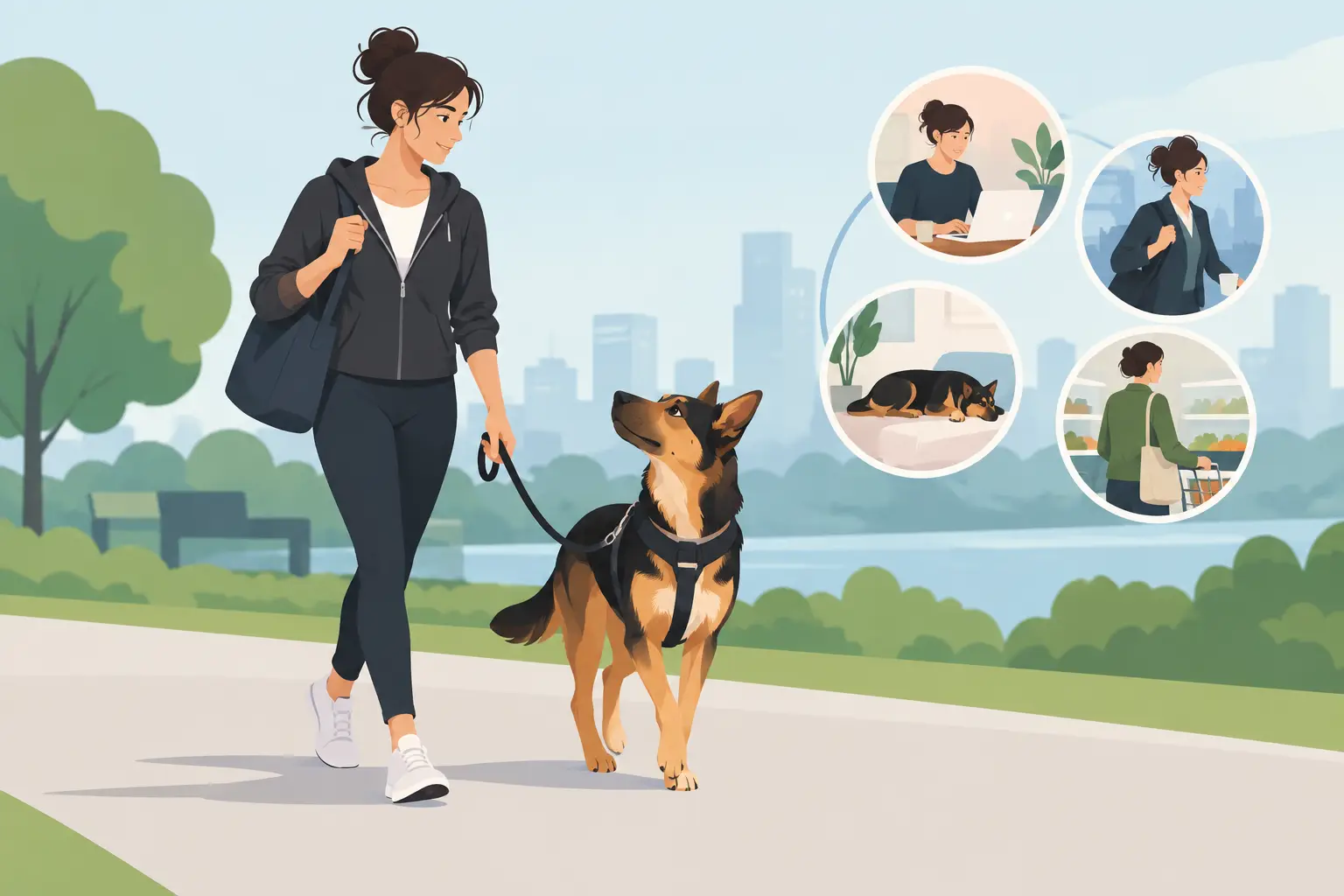
A walk should not feel like a tactical operation. Yet for many Los Angeles dog owners, a single dog, skateboard, delivery truck, or person passing too closely can turn an ordinary outing into a stressful struggle. The right reactive dog training help does more than stop barking in the moment. It gives your dog a clear job, builds confidence around triggers, and helps you regain control without adding fear or frustration.
Reactivity is common, especially in busy neighborhoods where dogs have limited space and frequent exposure to people, pets, traffic, and noise. It is also highly trainable when owners stop treating the outburst as the whole problem and start working on the pattern behind it.
What Reactivity Really Means
A reactive dog has an oversized response to something in the environment. That response may look like barking, lunging, growling, spinning, whining, freezing, or pulling hard toward or away from a trigger. The trigger might be other dogs, unfamiliar people, bicycles, cars, visitors, or handling such as nail trims.
Reactivity is not automatically aggression. A dog can bark and lunge because he is frightened, frustrated, overstimulated, excited, or trying to create distance. The behavior can still be serious, especially if a dog is large, strong, or difficult to physically manage. But labeling every reactive dog as aggressive can lead owners toward the wrong solution.
The more useful question is: what is your dog trying to accomplish with this behavior? A fearful dog may be saying, “Please stay away.” A frustrated greeter may be saying, “I need to get to that dog now.” Training changes the emotional response and teaches a better behavior that works in daily life.
Why Reactive Behavior Gets Worse
Most reactive dogs rehearse the same sequence: they notice a trigger, become tense, react, and the trigger moves away or passes. From the dog’s perspective, the outburst worked. Barking made the scary person leave, or lunging was followed by getting closer to the dog they wanted to greet.
Owners often unintentionally add to the cycle. Tightening the leash, dragging the dog forward, repeatedly saying “no,” or forcing close contact can increase pressure when the dog is already over threshold. On the other hand, allowing every leash greeting can teach a dog that pulling toward another dog is the fastest route to access.
This does not mean you should ignore the behavior. It means correction without a plan is rarely enough. Reliable improvement comes from management, timing, structured practice, and consistent expectations.
Start With Safety and Management
Before asking a reactive dog to learn around distractions, prevent situations where he is likely to explode. Management is not giving up. It is how you stop the behavior from being practiced while new skills take hold.
Choose quieter walking times and routes when possible. Cross the street early rather than waiting until another dog is six feet away. Use parked cars, driveways, and distance to create breathing room. If your dog reacts at windows or fences, limit access to those areas during the training process.
Your equipment should give you control without creating unnecessary discomfort. A properly fitted leash and collar or harness are essential. For dogs with a bite history, a carefully introduced basket muzzle can be an important safety tool. A muzzle is not a punishment or a substitute for training. It allows safer practice while protecting the public, your dog, and your ability to work calmly.
If your dog has bitten, attempted to bite, or cannot be safely handled, bring in a qualified professional before testing new strategies around triggers. Pain and medical changes can also affect behavior, so a veterinary check is a smart first step when reactivity appears suddenly or worsens without a clear reason.
Build Skills Away From Triggers First
A dog cannot make good choices when he is already overwhelmed. Start in a quiet location where your dog can focus, then build the commands that will matter when real-life distractions appear.
Teach Attention on Cue
Your dog should learn that hearing his name or a simple cue such as “look” means turning his attention back to you. Say the cue once, reward the moment he looks at you, then release him. Keep sessions short and upbeat. The goal is not to make your dog stare at you for an entire walk. The goal is to create a dependable way to reconnect before the reaction starts.
Practice Loose-Leash Position
A reactive dog does not need to march in a perfect competition heel, but he does need to walk with enough slack in the leash for you both to move safely. Reward your dog for staying near your side, checking in voluntarily, and moving with you when you change direction.
If pulling is constant, do not wait for a trigger to address it. A dog who is pulling all the way down the block is already more aroused and harder to redirect when another dog appears.
Add a U-Turn and Place Cue
A practiced U-turn is one of the most useful tools on a neighborhood walk. Use a simple cue, turn away, and reward your dog for moving with you. Train it in calm areas first so it becomes automatic when you need distance.
At home, teach a place command on a bed or mat. This gives your dog a clear assignment when visitors arrive, delivery activity starts, or the front window becomes too stimulating. A trained dog is a happy dog because he knows what is expected instead of having to make every decision on his own.
Use Distance to Change the Reaction
Distance is one of the most powerful forms of reactive dog training help. Find the point where your dog can see a trigger without barking, lunging, or losing the ability to respond to you. That is your working distance.
At that distance, let your dog notice the trigger. Mark and reward calm observation, then guide his attention back to you. You are teaching a new association: seeing another dog or person predicts good things and a simple task, not panic or chaos.
If your dog refuses food, stares hard, closes his mouth, stiffens, or ignores familiar commands, you are too close. Create more space immediately. Trying to push through often turns a training session into another rehearsal of the unwanted behavior.
Progress is not always a straight line. One dog may improve quickly around people but need more time around high-energy dogs. A dog may handle a calm dog across the street but react to a dog that is barking behind a fence. That is normal. Change one variable at a time so your dog can succeed.
What to Do When a Reaction Happens
Even with a strong plan, reactions can happen. Your job is not to win an argument with your dog in public. Your job is to regain space and lower the intensity.
Stay as calm as possible, move away with purpose, and use the U-turn or other practiced movement cue. Avoid yanking, shouting, or repeatedly asking for commands your dog cannot perform in that state. Once you are far enough away for your dog to settle, ask for an easy behavior he knows, reward it, and continue only if he is ready.
Do not punish growling. A growl is valuable communication that tells you a dog is uncomfortable. Suppressing the warning without addressing the underlying stress can create a dog who gives less notice before escalating.
Consistency at Home Matters
Walk training will be harder if your dog spends the rest of the day practicing frantic behavior. Calm routines support calm behavior. Ask for a sit before meals, doors, the leash, and greetings. Reward settled behavior on a bed while the family eats dinner or works from home.
This is not about making your dog rigid or joyless. It is about giving him structure that carries into the moments that matter. Dogs do best when boundaries are clear, rewards are timely, and the rules do not change from one family member to the next.
When Professional Training Makes Sense
Private coaching is especially valuable when a dog reacts intensely, has a bite history, is difficult for family members to handle, or has behavior that affects everyday routines. A professional can identify what is driving the reaction, set up safe training distances, improve leash handling, and help every person in the home follow the same system.
At Smart Dogs, the focus is not on temporary distractions or tricks that only work in a quiet room. The goal is practical obedience that holds up on sidewalks, around visitors, and in the routines your family actually lives. Positive reinforcement and motivation-based training can build engagement while clear structure teaches your dog how to respond when excitement rises.
Your dog does not need to love every dog, person, or sound in the neighborhood. He needs to learn that he can notice the world, stay connected to you, and move through it safely. With consistent practice and the right support, calmer walks can become part of your normal routine again.
