
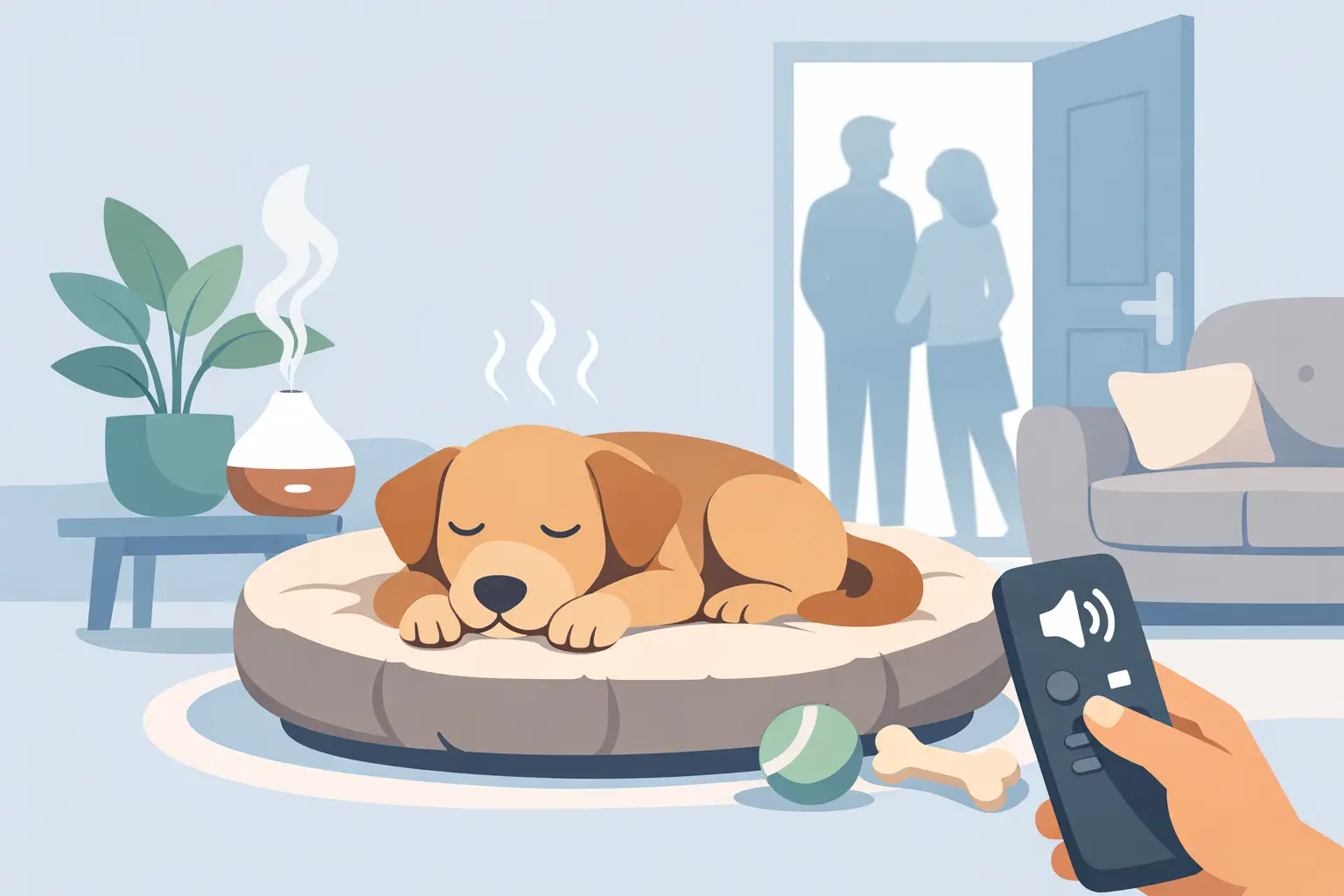
The doorbell rings, your dog launches toward the entryway, and the first five minutes of every visit feel like crowd control. Creating a calm dog before guests arrive is not about expecting your dog to ignore people or suppress excitement. It is about giving them a clear job, practicing it before the pressure is on, and managing the moment so everyone can enter safely.
For busy Los Angeles households, visitors may be friends stopping by, children coming home with classmates, delivery workers, family members, or a pet sitter. Your dog does not need to greet every person at the door. In many homes, the most polite and reliable behavior is staying settled in a designated place until you say otherwise.
Why Guests Can Trigger Overexcitement
Dogs often react strongly to visitors because guests change the normal rhythm of the home. There is a knock, a door opens, voices become louder, people make eye contact, and someone may immediately reach for the dog. For a social dog, that can feel like the best event of the day. For a worried or reactive dog, it can feel unpredictable and threatening.
Jumping, barking, spinning, rushing the door, or ignoring commands is not always a sign that a dog is being stubborn. Usually, the dog has rehearsed that response enough times that it has become automatic. If barking at the window, charging the entryway, and receiving attention has happened dozens of times, a single correction at the door is unlikely to change the pattern.
The answer is not to wait for the next dinner party and hope your dog behaves differently. Build a routine that works on ordinary days, when there is no visitor to create extra excitement.
Start Your Calm Dog Before Guests Routine Early
The best time to prepare is 20 to 45 minutes before people arrive. A rushed dog has a harder time settling, so give yourself enough room to meet your dog’s physical and mental needs without turning the pre-guest routine into a high-energy event.
Begin with a purposeful walk, sniff break, or short obedience session appropriate for your dog’s age and fitness. The goal is not to exhaust your dog. Overdoing exercise can create an overstimulated athlete who is still ready to explode at the door. A moderate outlet followed by a quiet transition is more useful.
Once back inside, lower the energy in the home. Put away noisy toys, reduce window access if passing people trigger barking, and avoid excited statements such as, “Your friends are coming over!” Dogs notice patterns quickly. If the household becomes hectic before each visit, the dog will become hectic too.
A stuffed food toy, chew, or meal served in a quiet area can help many dogs settle. This is management, not a replacement for training. Food gives the dog an appropriate activity while you prepare, but the dog still needs to learn what to do when the door opens.
Teach a Reliable Place Command
A place command is one of the most practical skills for guest behavior. It means your dog goes to a bed, mat, cot, or designated station and remains there until released. This gives the dog a clear alternative to racing toward the door.
Start when no guests are present. Guide your dog onto the bed or platform, mark and reward the moment all four paws are on it, then reward again for remaining there. Release your dog after a few seconds. Keep the early repetitions easy and successful.
Gradually build duration. Then add distance, movement around the room, and mild distractions. Open and close the front door without anyone entering. Ring the doorbell from a phone recording or ask a family member to knock. Reward the dog for staying on place rather than reacting to the sound.
The key is to increase difficulty one piece at a time. If your dog can stay on place for two minutes in a quiet living room but breaks the moment the doorbell rings, the doorbell is currently too difficult. Go back a step, reward calm behavior, and practice shorter sessions.
A reliable place command should not feel like punishment. It should be a familiar, well-rewarded position where the dog understands exactly how to succeed. A trained dog is a happy dog because clear expectations reduce confusion.
Use the Door as a Training Exercise
Most dogs do not need guests to practice guest manners. You can rehearse the entire sequence with a household member.
Have your dog on place or behind a gate. A family member steps outside, knocks, waits, and enters calmly. Reward your dog for staying settled. If your dog gets up, quietly reset them without arguing or repeating commands over and over. Keep the visitor neutral at first. No talking to, staring at, or touching the dog while you are building the behavior.
As your dog improves, add realistic challenges: the visitor carries a bag, talks more loudly, removes shoes, or sits down. Practice with different people when possible. Dogs do not always generalize well. A dog who behaves beautifully for one familiar neighbor may struggle with a tall man in a hat or a group of excited children.
Give Guests Simple Instructions
Your training plan can fail quickly if guests unknowingly reward the behavior you are trying to change. Before opening the door, give visitors a short instruction: please come in calmly and ignore the dog until invited to interact.
That may feel formal, but it is fair to your dog. Many people naturally squeal, bend over, clap, or reach toward a dog at the entrance. Those actions can encourage jumping or make a nervous dog more uncomfortable.
If your dog is ready for a greeting, bring them over on leash after the guest is settled. Ask for a sit, then allow a brief greeting only if your dog can remain reasonably composed. If jumping starts, calmly guide the dog away and return to place. The dog learns that calm behavior earns access, while chaotic behavior pauses the interaction.
For dogs that are fearful, protective, or have a bite history, do not use arriving guests as a socialization experiment. Keep separation in place using a secure room, crate, gate, or another safe setup. Visitors should never be asked to “help” by forcing contact. Safety comes first, and behavior concerns involving aggression deserve professional evaluation.
Choose Management That Matches Your Dog
Training creates long-term change, but management protects the moment while training is still in progress. The right setup depends on your dog, your home, and the type of guest.
A friendly adolescent dog may do well on a leash and place bed in the living room. A dog that becomes frantic at the entryway may need a baby gate creating more distance. A dog that is highly stressed by visitors may be most comfortable in a quiet bedroom with white noise, water, and a long-lasting chew. That is not failure. It is responsible handling.
Avoid giving a dog full access to the front door just because guests want to say hello. One uncontrolled greeting can undo a lot of repetition, especially if the dog gets rewarded with attention after jumping, barking, or rushing forward.
Also consider the guests themselves. Toddlers, older relatives, people who are uncomfortable around dogs, and contractors moving equipment through the home all change the risk level. A reliable routine is one that works for real life, not just for the easiest visitor.
Common Mistakes That Keep Dogs Overstimulated
The most common mistake is waiting until the dog is already barking and excited before giving a command. At that point, the dog may be too aroused to respond well. Start the routine before the knock.
Another mistake is repeating cues. Saying “place, place, place” teaches your dog that the first command does not matter. Give the cue once, help your dog follow through if needed, and reward the correct choice.
Finally, do not confuse stillness with calm. A dog may remain on a bed while staring hard, trembling, growling, or refusing food. Those signs can indicate stress. Respect what your dog is communicating and create more distance or a quieter setup when necessary.
Smart Dogs works from the principle that dependable obedience should make daily life easier, not add another complicated routine to your schedule. Short, consistent practice at home is what turns a command into a habit your dog can use when guests actually arrive.
The next time someone is coming over, do not make the front door a test of your dog’s patience. Give your dog a predictable routine, a clear place to settle, and enough structure to succeed. With repetition, the sound of a knock can become just another part of a calm, manageable home.
