
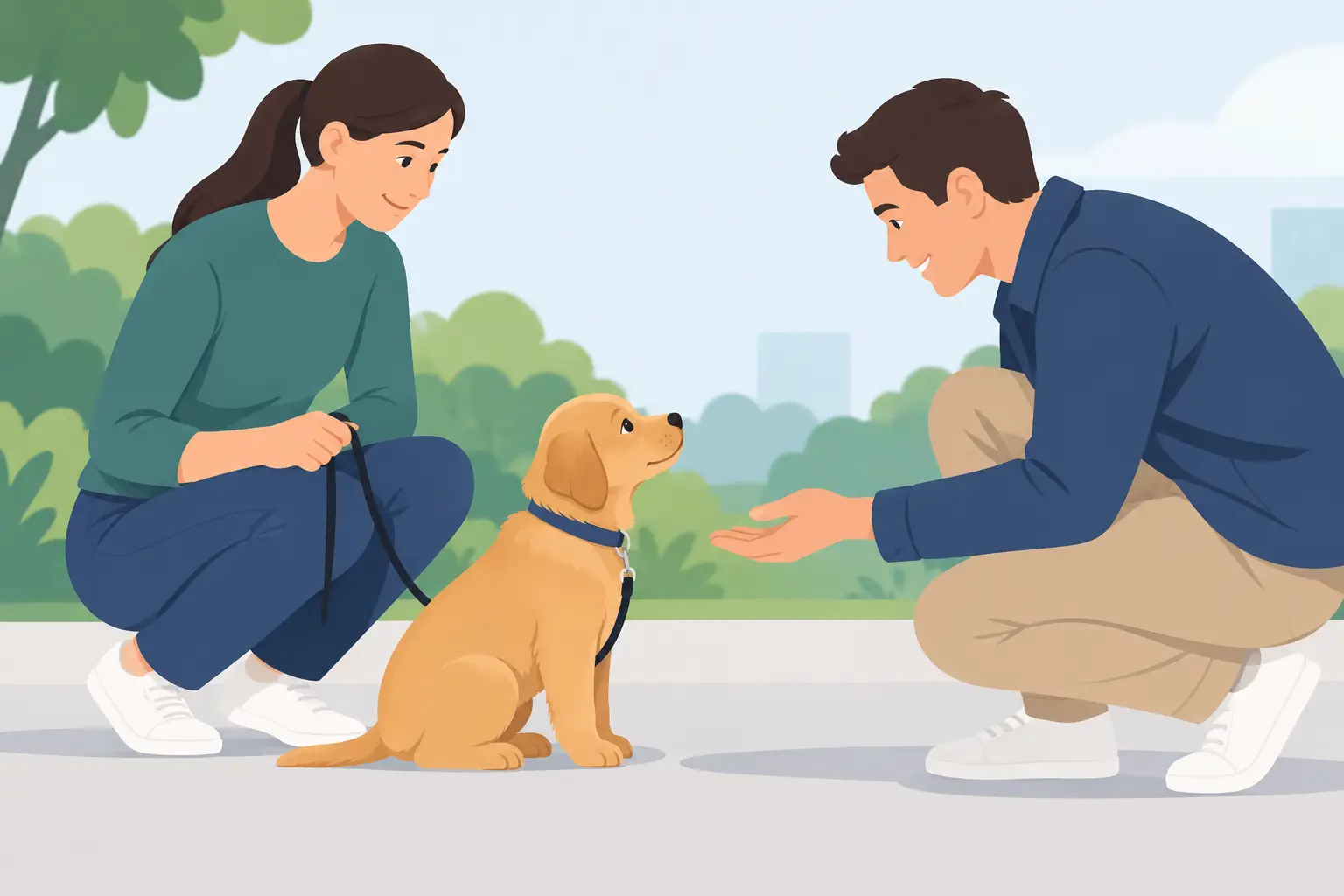
A stranger reaching down with both hands, a busy sidewalk, an excited child at the park – these ordinary moments can shape your puppy’s behavior for years. When you introduce a puppy to strangers, the goal is not to make your dog greet every person. The goal is to teach calm confidence, good judgment, and the ability to focus on you in real-world situations.
A puppy who learns that people are predictable and that you will manage interactions is less likely to become overwhelmed, fearful, or overly excitable. That creates a more enjoyable dog to live with – and a calmer experience for everyone around you.
Start With the Right Goal
Many well-meaning owners believe socialization means allowing every stranger to pet, hold, or excite their puppy. That approach can backfire. Some puppies become pushy and jumpy because they expect attention from everyone. Others become uneasy when they are repeatedly handled by unfamiliar people before they are ready.
Successful socialization is broader than greetings. Your puppy should learn to see people of different ages, appearances, voices, and movement patterns without feeling pressure to interact. Calm observation is a win. Choosing to look at a stranger and then check back in with you is an even better win.
Use a simple standard: your puppy should be able to notice people while staying loose-bodied, responsive, and comfortable. If your puppy is pulling hard toward strangers, barking, freezing, hiding, or refusing treats, the situation is too intense. Create more distance and slow the process down.
How to Introduce a Puppy to Strangers Step by Step
Begin in quiet, controlled settings. Invite one calm adult friend to meet you outside your home, in a yard, or on a low-traffic walk. Avoid starting with a crowded farmers market, a packed pet store, or a family gathering where several people want access to the puppy at once.
Keep your puppy on a loose leash and bring high-value treats. Ask the stranger to ignore the puppy at first. No direct eye contact, leaning over, reaching, or high-pitched chatter. Those gestures may seem friendly to people, but they can feel like pressure to a young dog.
Stand far enough away that your puppy can notice the person and still take treats. The moment your puppy sees the stranger and remains calm, mark that choice with a cheerful “yes” or praise, then reward. You are teaching a valuable association: unfamiliar people predict good things, and calm behavior earns reinforcement.
If your puppy voluntarily approaches with a relaxed body, allow the person to turn slightly sideways and offer a treat low to the ground or toss it gently nearby. Let the puppy choose whether to move closer. Choice builds confidence. Pulling a puppy toward someone or allowing a person to reach for a hesitant puppy can create unnecessary fear.
Once your puppy is comfortable, the stranger can offer a brief, gentle pet under the chin or on the chest. Keep it short, then call your puppy back to you and reward. Ending an interaction while your puppy is still comfortable teaches that greetings are safe, manageable, and not overwhelming.
Read Your Puppy’s Body Language
A wagging tail alone does not always mean a puppy is comfortable. Look at the whole dog. A relaxed puppy has soft eyes, a loose face, normal breathing, and fluid movement. They may approach, sniff, and move away without tension.
Signs that your puppy needs space include a tucked tail, crouching, turning the head away, licking lips, yawning when not tired, showing the whites of the eyes, stiffening, growling, or trying to retreat. Do not punish these signals. Growling is communication. If you correct the warning without addressing the discomfort, a puppy may learn to skip the warning and react more strongly later.
Instead, calmly increase distance. Tell the stranger, “He’s learning, so we’re giving him space.” Then reward your puppy for turning back toward you. Protecting your puppy in these moments builds trust and prevents a small concern from becoming a lasting behavior problem.
Teach a Polite Greeting, Not an Excited One
For friendly puppies, the challenge is often overexcitement rather than fear. A puppy that launches toward every person, jumps on legs, or mouths hands is not being social – they are practicing poor impulse control.
Before greeting anyone, ask for a simple behavior your puppy knows, such as sit or four paws on the floor. The stranger should only move closer while your puppy remains composed. If the puppy jumps, the person quietly steps away. When the puppy settles, the greeting can resume.
This is not about demanding perfect obedience from a young dog. Puppies are still learning. It is about creating a clear pattern: calm behavior makes attention happen, while jumping makes attention pause. Consistency matters more than intensity.
For busy Los Angeles walks, this skill is especially useful. Sidewalks, apartment lobbies, outdoor cafes, and neighborhood parks can bring frequent attention from strangers. Your puppy does not need to greet each person. A brief sit, a reward from you, and a calm pass-by often serve your long-term training goals far better.
Give Children Extra Structure
Children and puppies can be wonderful together, but they need adult guidance. Children often move quickly, speak loudly, hug tightly, or reach over a puppy’s head. Even a friendly puppy may become nervous or react by jumping and mouthing.
Set up the interaction before it begins. Ask children to stand still, keep their hands low, and let the puppy come to them. They can toss treats on the ground instead of placing hands near the puppy’s face. If petting is appropriate, teach brief strokes on the chest or shoulder rather than hugs or pats on top of the head.
Keep the session short. A few successful seconds are more valuable than ten minutes of escalating excitement. Always separate a puppy who looks tired, overstimulated, or uncomfortable.
Practice Neutrality in Public
A well-socialized puppy is not required to be everyone’s best friend. In fact, many of the best-behaved adult dogs are neutral around strangers. They can walk through a crowd, wait at a veterinary office, or settle on a patio without demanding interaction or becoming worried by it.
Practice this by visiting puppy-appropriate public spaces at quiet times. Sit at a comfortable distance from foot traffic. Reward your puppy for watching people calmly, looking back at you, lying down, or choosing to sniff the ground. Keep outings brief and end before your puppy becomes overtired.
Gradually work up to more activity. A puppy who succeeds near one or two pedestrians today may be ready for a busier environment another day. Progress is rarely perfectly linear. A puppy may handle a crowded sidewalk well one week and need more distance the next, particularly during normal developmental fear periods.
Avoid These Common Mistakes
Do not force greetings because someone says they are “good with dogs.” Your responsibility is to your puppy’s comfort and training plan, not to a stranger’s desire to pet a cute dog. A polite “We’re training today, thank you” is enough.
Avoid handing the leash to strangers, allowing people to pick up your puppy without consent, or permitting rough play during introductions. Also avoid overwhelming your puppy with too many new experiences in one day. A young dog needs recovery time, sleep, and predictable routines to process new learning.
Most importantly, do not wait for a behavior problem before getting structured help. Fear, reactivity, and overexcitement are easier to address when they are early habits rather than established patterns.
Build Confidence That Lasts
The strongest socialization plan is built from many small, successful repetitions. Some puppies are naturally outgoing, while others are thoughtful and reserved. Neither temperament is wrong. Your job is to work at the puppy in front of you, protect their comfort zone, and expand it gradually through positive experiences.
At Smart Dogs, we see the difference clear structure makes for busy owners and growing puppies. A trained dog is a happy dog because they understand what is expected, can rely on their owner for guidance, and have the skills to handle everyday life with confidence.
The next time someone asks to meet your puppy, take a breath and assess the moment. A calm pass-by may be the right choice. A short, successful greeting may be the right choice. Either way, every interaction is an opportunity to teach your puppy that the world is safe, and that listening to you is always worthwhile.
