
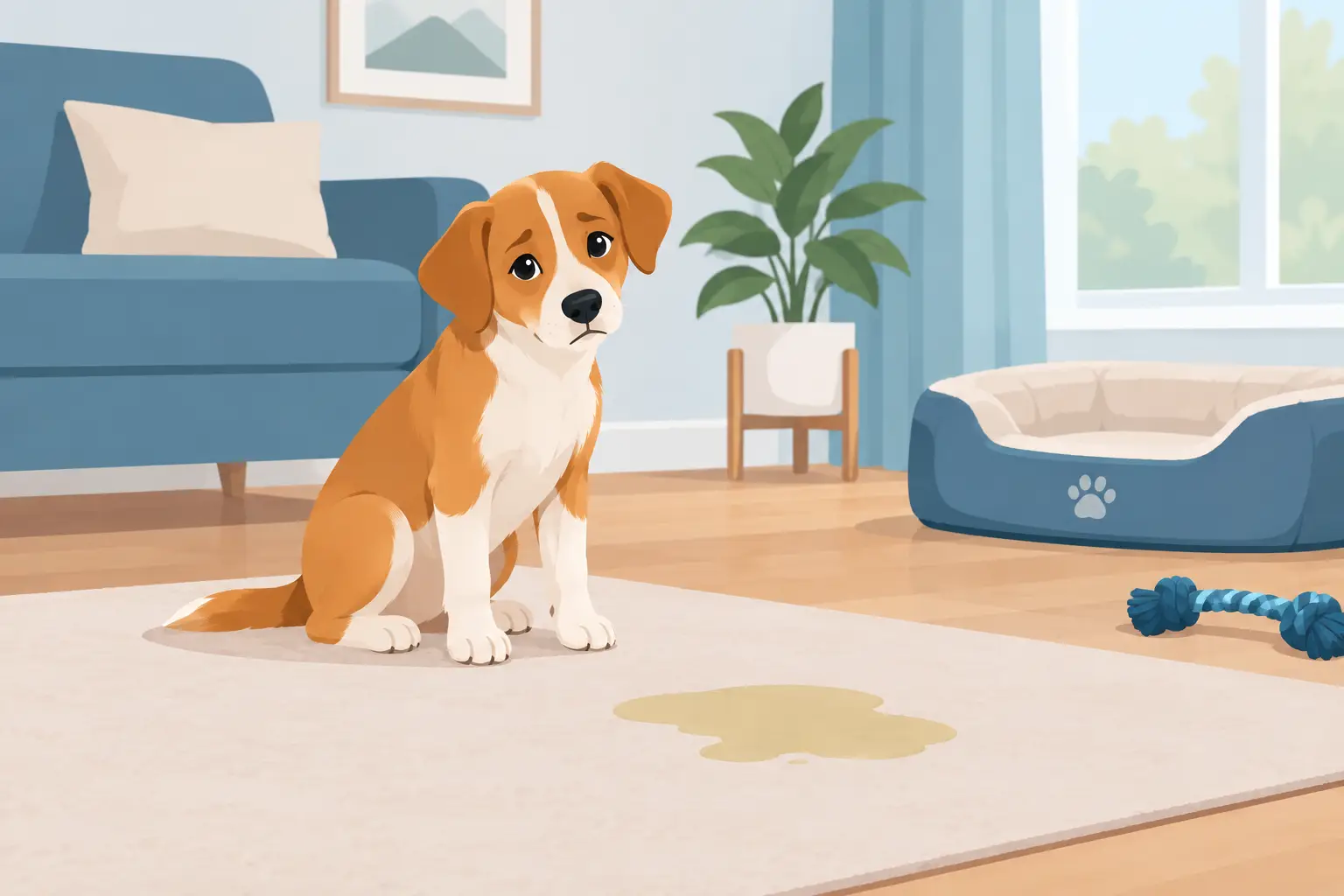
A newly adopted dog may have a clean record at the shelter, arrive with good manners, and still have an accident on your living room rug that first night. Housebreaking accidents after adoption are frustrating, but they are rarely a sign that your dog is being stubborn or that the adoption is not working. More often, your dog is adjusting to a completely new schedule, environment, family, and set of expectations.
The fastest path forward is not punishment. It is structure. A clear routine, close supervision, and well-timed rewards teach your dog where to go while helping them feel secure in their new home. A trained dog is a happy dog, and reliable housebreaking begins with making the right choice easy to understand.
Why housebreaking accidents after adoption are common
Even adult dogs can need a refresher when they move into a new home. Dogs do not automatically understand that every indoor space has the same bathroom rules. A dog who reliably eliminated outside in a foster home may be confused by an apartment hallway, a shared yard, turf patio, balcony, elevator ride, or the noise of a busy Los Angeles street.
Stress also changes behavior. Adoption is positive, but it is still a major transition. Your dog may be processing unfamiliar smells, new people, resident pets, different meal times, and periods alone while you are at work. Some dogs drink more water when nervous. Others wait too long to relieve themselves because they do not yet feel comfortable outside. Either pattern can lead to accidents.
Previous history matters, too. Rescue dogs do not always come with a complete background. Some may have lived outdoors, spent long hours in a kennel, been moved between homes, or never learned a consistent bathroom routine. That is not a character flaw. It simply means the dog needs clear instruction and repetition in this home.
Start with a schedule your dog can trust
For the first few weeks, treat your adopted dog like a puppy in training, even if they are fully grown. Take them out first thing in the morning, after meals, after naps, after play, after exciting greetings, and before bed. If you are unsure whether they need to go, take them out. Preventing one accident is more useful than reacting to one after it happens.
Choose one predictable bathroom area whenever possible. The smell, surface, and routine help your dog recognize the purpose of the trip. Stand quietly and give them time to sniff. A dog that is distracted by traffic, neighbors, squirrels, or other dogs may need a calmer location or a slightly longer outing before they can settle enough to eliminate.
When your dog goes in the right place, reward immediately. Praise warmly and offer a small, high-value treat within a second or two of finishing. The timing matters. If the reward comes after you return indoors, your dog may think they are being rewarded for coming inside rather than for using the bathroom outside.
Use a simple cue such as “go potty” once your dog begins to understand the pattern. Say it calmly as they are about to eliminate, not repeatedly while they are sniffing. Over time, the cue becomes useful before bedtime, during rain, and on rushed mornings.
Supervision prevents bad habits from forming
Freedom should be earned gradually. During the adjustment period, your dog should be either with you, safely confined, or in a controlled area that is easy to monitor. If your dog wanders into a bedroom, behind furniture, or to the far end of the house unsupervised, they may find a quiet place to have an accident without you noticing.
Keep your dog near you with a leash when practical. This is not a punishment. It gives you the chance to notice early signs that they need to go out, such as circling, sudden sniffing, pacing, walking away from the room, whining, or heading toward a previous accident spot. Calmly take them outside as soon as you see those signals.
A properly introduced crate or exercise pen can also support housebreaking. Most dogs prefer not to soil a small sleeping area, which encourages them to wait until they are taken outside. The trade-off is that confinement must be reasonable for the dog’s age, physical needs, and comfort level. A crate should never be used to make a dog hold it longer than they can safely manage, and it should not become a place of isolation or correction.
For busy professionals, the schedule has to match real life. If your workday is long, arrange for a family member, trusted walker, or pet sitter to provide a midday bathroom break. Asking a newly adopted dog to hold it for eight to ten hours can create accidents, discomfort, and setbacks even when the dog is making progress.
What to do when an accident happens
If you catch your dog in the act, interrupt gently with a neutral sound, then take them outside right away. Do not yell, chase, or force them to look at the mess. Those responses can make a dog afraid to eliminate in front of you, which often leads to secret accidents behind furniture or in another room.
If you find an accident later, simply clean it thoroughly. Your dog will not connect a delayed correction with something they did minutes or hours earlier. Use an enzymatic cleaner designed for pet urine or waste. Standard household cleaners may remove the visible stain but leave odor behind, and lingering scent can invite your dog to use the same spot again.
Then assess the situation without blame. Did the accident happen after a long stretch indoors? Was your dog given too much freedom? Did a visitor, delivery, thunderstorm, or another dog interrupt the routine? The answer tells you what to adjust. Progress comes from identifying the gap in the system, not from making the dog feel guilty.
Watch for medical or emotional warning signs
Not every housebreaking issue is a training issue. Contact your veterinarian if a dog who had been doing well suddenly begins having accidents, strains to urinate, urinates very frequently, has diarrhea, drinks unusually large amounts of water, seems painful, or has blood in their urine or stool. Urinary tract infections, gastrointestinal illness, medication changes, and age-related conditions can all affect bathroom habits.
Fear and separation distress can also play a role. A dog that only has accidents when left alone, destroys doors or windows, vocalizes excessively, or panics during departures may need more than a tighter potty schedule. Addressing the underlying anxiety with a structured behavior plan is kinder and more effective than increasing correction.
Build reliability one successful day at a time
Do not rush your dog’s access to the whole home because they had two good days. Give them a consistent pattern of success first, then slowly expand freedom one room at a time. If accidents return, reduce access and increase supervision for several days. That is not failure. It is a normal adjustment to a harder level of responsibility.
Housebreaking also improves when everyone in the household follows the same plan. Agree on meal times, outdoor breaks, the bathroom cue, and the reward. Mixed signals slow learning, especially for a rescue dog still figuring out which routines are permanent.
Most adopted dogs settle into a dependable bathroom routine with patience and a proven system. Focus on the next successful trip outside, reward it generously, and keep your expectations clear. Each calm repetition tells your dog something powerful: this is home, these are the rules, and they can succeed here.
