
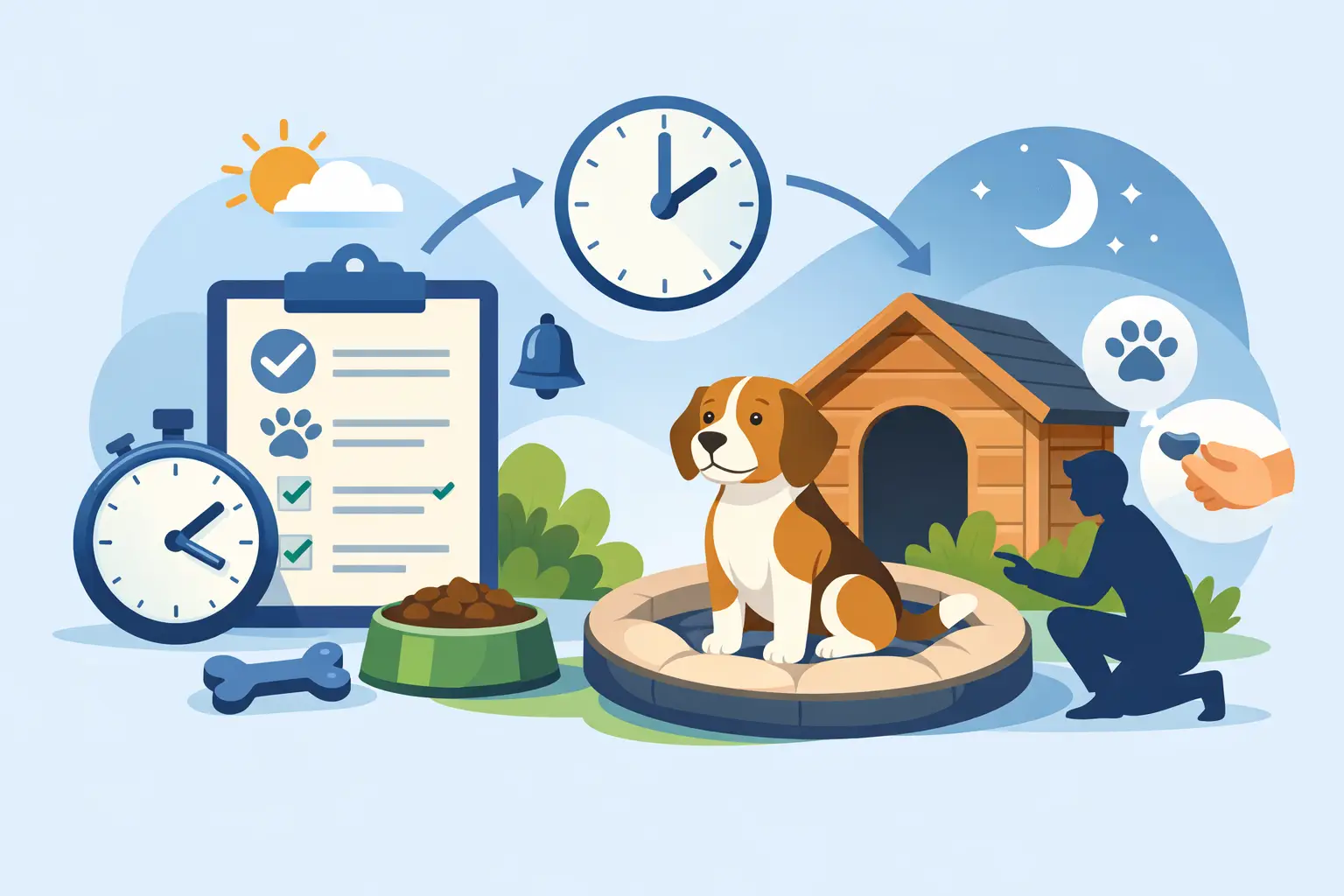
A good dog house training schedule does more than get your puppy outside often. It gives you a predictable system: your dog learns where to go, you learn when to take them out, and accidents stop feeling like a daily surprise. For busy Los Angeles households, that structure is what turns a new puppy or rescue dog into a calm, manageable member of the family.
House training is not about waiting for a dog to “get it.” It is about preventing mistakes long enough for the right habit to become automatic. A trained dog is a happy dog, and a clear routine gives your dog the confidence to succeed.
Start With a Dog House Training Schedule You Can Keep
The best schedule is not the most complicated one. It is the one everyone in the home can follow every day, including weekends. Puppies need frequent opportunities to eliminate outside, especially after sleeping, eating, drinking, playing, training, or spending time in a crate.
A young puppy may need to go out every one to two hours while awake. As bladder control develops, the breaks can be spaced farther apart. Age is only a rough guide, though. A small puppy, a recently adopted rescue, a dog adjusting to a new home, or a puppy with an exciting play session may need more frequent trips than the calendar suggests.
Start by taking your dog to the same outdoor bathroom area on leash. Stand quietly and give them enough time to focus. This is not a walk, a social visit, or playtime. Use one simple cue, such as “go potty,” then wait patiently. The moment your dog finishes, calmly praise and reward them with a small, high-value treat.
That timing matters. The reward should happen outside, within seconds of the behavior. If the treat comes after you return indoors, your dog may think the reward is for coming inside instead of using the correct bathroom spot.
A Sample Daily Schedule for Puppies
A schedule should be adjusted to your household, but this outline gives most new puppy owners a reliable starting point. The key moments are wake-up, meals, activity, rest, and bedtime.
Morning: Make the First Trip Immediate
Take your puppy out as soon as they wake up. Do not stop to make coffee, check messages, or let them wander through the house. Carry a very young puppy if needed. After they eliminate outside, reward them, then offer breakfast.
Take them out again 10 to 20 minutes after the meal. Many puppies need another bathroom break after a short play session or a burst of morning activity. If you are getting ready for work, use a crate, pen, or closely supervised area between trips rather than giving your puppy free access to the home.
During the Day: Plan for Reality
For a puppy under four months old, a midday break is usually necessary. If everyone works away from home, arrange a family member, trusted neighbor, professional pet sitter, or dog walker. Expecting a young puppy to stay clean for an entire workday is not realistic, and repeated accidents can slow the training process.
Older puppies may handle longer intervals, but do not increase time simply because you hope they can manage it. Increase gradually after your dog has had consistent success. If accidents return, shorten the interval for several days and rebuild the habit.
A rescue dog may need a similar schedule even if they are fully grown. New surroundings, stress, unfamiliar routines, and incomplete previous training can all cause temporary accidents. Treat the dog as untrained at first, then give them more freedom as they demonstrate reliability.
Evening: Supervise, Then Settle
Take your dog out after dinner, after play, and before bedtime. Evening is when many owners relax their supervision too early. A puppy who has been busy, tired, or excited may not show obvious signs they need to go.
Keep the final potty trip calm and boring. Give the cue, wait, reward success, and return inside for bedtime. For very young puppies, one overnight bathroom trip may be needed. As they mature and remain dry overnight, you can gradually phase it out.
Use Management to Prevent Accidents
House training moves faster when your dog has fewer chances to practice the wrong behavior. This is where most owners either make real progress or accidentally create a longer problem.
When you cannot actively watch your dog, use a properly sized crate, an exercise pen, or a puppy-safe confined area. A crate should be large enough for your dog to stand, turn around, and lie down comfortably, but not so large that they can use one end as a bathroom and sleep at the other. Most dogs naturally prefer to keep their sleeping space clean, which makes crate training a useful management tool.
A crate is not punishment and should never be used to force a dog to hold it beyond their physical ability. Pair it with meals, treats, chew items, and calm rest so your dog sees it as a safe place. If a puppy is repeatedly soiling the crate, review the schedule, crate size, health concerns, and the amount of time they are being left alone.
When your dog is out with you, use close supervision. Keep them in the same room, use a lightweight leash attached to you when appropriate, or block access to rooms where accidents have happened. Freedom should be earned in small stages. Start with one room, then add more space after your dog has been successful for several weeks.
Learn Your Dog’s Early Signals
Some dogs circle, sniff intensely, wander away, pace, suddenly stop playing, or head toward a familiar accident area. Others give almost no warning. Do not depend on signals alone, especially at the beginning. Your schedule is the safety net.
Keep a simple note on your phone for the first week or two. Record meal times, outdoor successes, accidents, and major drinks of water. Patterns show up quickly. You may notice that your puppy needs to go 15 minutes after breakfast, immediately after wrestling with the kids, or twice during a long evening.
That information lets you make practical changes instead of guessing. A proven system is based on what your dog is actually doing, not on a generic timetable.
What to Do When an Accident Happens
If you catch your dog in the act, interrupt gently with a neutral sound and take them outside right away. If they finish outdoors, praise and reward them. Avoid yelling, scolding, rubbing their nose near the mess, or using any punishment after the fact. Your dog will not connect a delayed correction to an accident that happened minutes earlier. They may simply learn to hide when they need to go.
If you find an old accident, clean it thoroughly with an enzymatic pet cleaner and move on. Standard household cleaners may remove the visible stain while leaving odor traces your dog can still detect. Dogs often return to areas that smell like previous bathroom spots.
Then ask a better question: what failed in the system? Was the break too late? Was your dog unsupervised? Did a visitor, play session, or schedule change disrupt the routine? One accident is information. Repeated accidents usually mean the plan needs tighter management or more frequent trips outside.
Food, Water, and Consistency Matter
Feed scheduled meals instead of leaving food down all day, unless your veterinarian has recommended otherwise. Predictable meals often lead to more predictable bathroom habits. Fresh water should be available throughout the day. Do not restrict water to solve house training problems, particularly in warm Southern California weather. Instead, offer an appropriate final drink well before bedtime and take your dog out on schedule.
Be consistent with the outdoor location, cue word, and reward. Every family member should follow the same routine. Mixed rules create mixed results: one person lets the puppy roam freely, another uses the crate, and someone else misses the post-meal trip. Your dog cannot be expected to understand a plan that changes from hour to hour.
When to Get Extra Help
Most dogs improve quickly when the schedule, supervision, and rewards are consistent. But frequent urination, straining, sudden accidents in a previously house-trained dog, excessive thirst, diarrhea, or pain can signal a medical concern. Contact your veterinarian promptly if you see those signs.
Professional training can also help when house training is tied to separation anxiety, crate distress, fear of going outdoors, marking, or a rescue dog with a difficult history. Smart Dogs uses practical, motivation-based training to build the habits that work in real homes, not just during a lesson.
Your goal is not to watch the clock forever. It is to use the schedule until your dog has a strong, reliable habit. Stay patient, reward the behavior you want, and give your dog enough structure to make the right choice. The calm home you want is built one successful trip outside at a time.
