
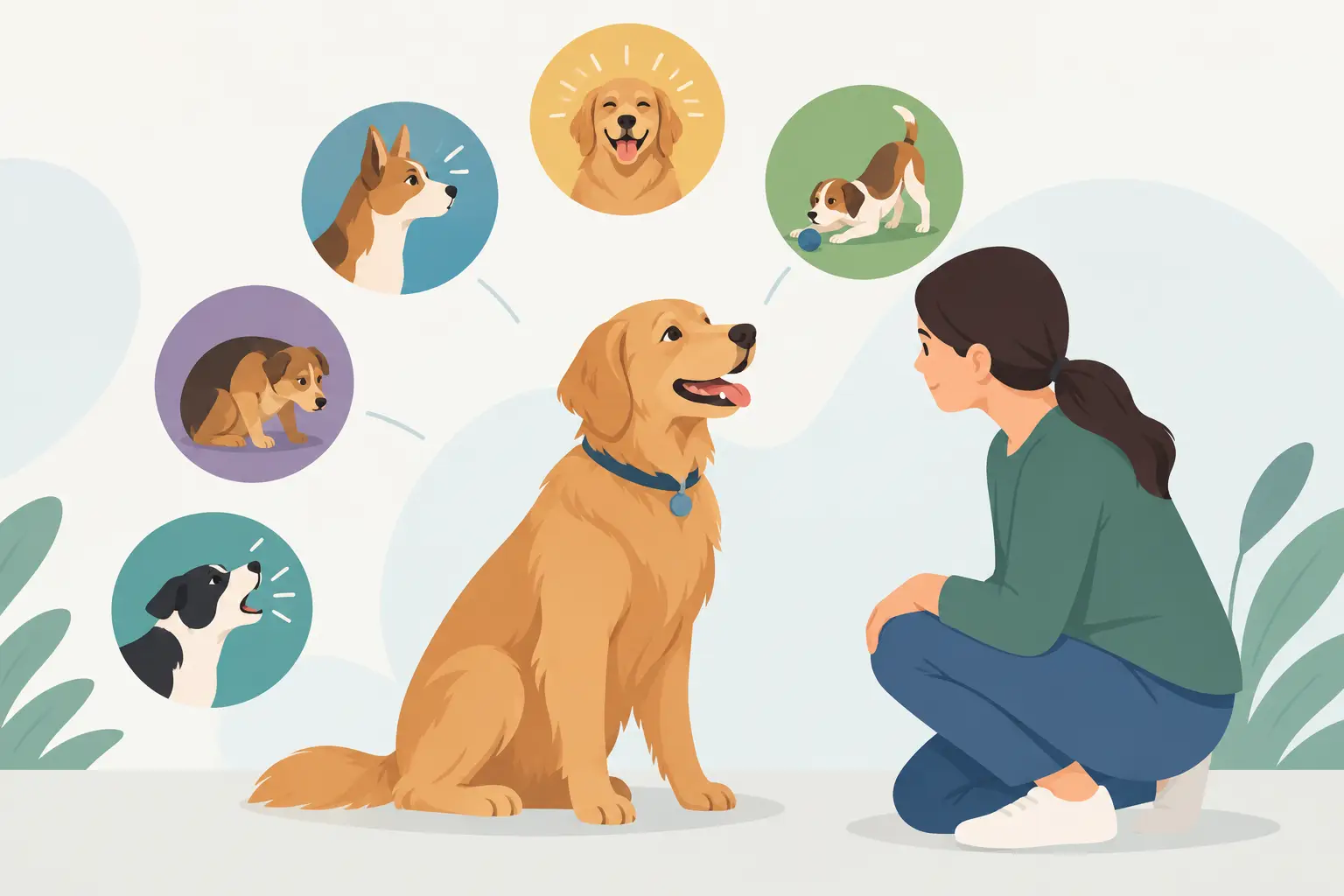
A dog that ignores “come” at the park, barks when the doorbell rings, or has accidents after seeming housebroken is not trying to make life difficult. Canine behavior is communication. Your dog is responding to what they have learned, what is happening around them, and whether they have the skills to make a better choice in that moment.
That distinction matters. Owners often label a dog as stubborn, hyper, anxious, or aggressive before looking at the pattern behind the behavior. A clearer approach is to ask: What happened right before this? What does my dog gain or avoid by doing it? Has my dog been taught what to do instead? Those answers create a practical training plan, not a guessing game.
What Shapes Canine Behavior?
Every dog brings an individual mix of genetics, early experiences, health, breed tendencies, energy level, and temperament. A young herding breed may notice every moving skateboard. A rescue dog may need more time to feel secure around visitors. A social adult dog may still struggle to settle because excitement has been rewarded for years.
Environment matters just as much. A quiet home can create different habits than a busy Los Angeles apartment building with elevators, delivery drivers, neighbors, traffic, and frequent dogs on walks. Dogs do not automatically know which situations are safe, polite, or worth ignoring. They learn through repetition.
The consequences of behavior are powerful teachers. If barking at the window makes a person move out of sight, barking may become more frequent. If pulling gets a dog to the interesting smell faster, pulling works from the dog’s point of view. If jumping earns attention, even occasional attention, jumping can stay in the routine.
This is why effective training does more than correct an unwanted action. It gives the dog a clear, achievable replacement behavior and makes that choice worthwhile. Instead of rehearsing door charging, the dog learns to go to a place. Instead of pulling toward another dog, the dog learns to check in and walk on a loose leash. The goal is reliable behavior that fits real life.
The Difference Between a Behavior Problem and a Training Gap
Not every frustrating habit is a serious behavior issue. Many dogs simply have not received consistent instruction in the situations where owners need manners most. A dog may sit beautifully in the kitchen but lose focus outside because the distractions are harder and the skill has not been practiced there.
Training gaps are common with puppies, newly adopted dogs, and dogs whose rules vary between family members. One person allows the dog on the couch, another scolds it. One person asks for a sit before meals, another feeds the dog while it jumps. The dog is not being defiant. The dog is working with inconsistent information.
Behavior concerns deserve closer attention when they involve fear, escalating reactivity, guarding, biting, separation distress, or a sudden change in personality. A dog that growls when touched may be communicating discomfort, fear, or pain. Do not punish the warning. The growl is valuable information, and suppressing it can leave a dog with fewer safe ways to communicate.
Sudden changes should also be discussed with a veterinarian. Pain, illness, changes in vision or hearing, and age-related cognitive changes can affect behavior. Training is most productive when the dog’s physical needs are addressed first.
Arousal Changes What Your Dog Can Do
A dog can know a command and still fail to respond when overly excited, worried, or frustrated. Think of arousal as the dog’s emotional speed. At a manageable level, your dog can hear you, think, and respond. At a high level, the dog may bark, pull, spin, shut down, or act as if you are invisible.
This is why repeating a command louder rarely solves the problem. If your dog cannot respond near a crowded sidewalk, create distance and practice where success is possible. Build difficulty gradually. A reliable recall starts indoors, then in a quiet yard, then on a long line around mild distractions. It does not begin at a crowded dog park.
How to Improve Canine Behavior at Home
The fastest improvements often come from better structure, not more frustration. Dogs thrive when daily routines make expectations predictable. Consistent feeding, exercise, rest, supervised freedom, and short training sessions reduce opportunities for unwanted habits to take over.
Start with a small set of functional skills that improve everyday life: name recognition, come, sit, down, place, loose-leash walking, leave it, and a calm wait at doors. These are not party tricks. They are tools for safety, communication, and a more peaceful home.
Use rewards your dog truly values. For some dogs, food is highly motivating. For others, access to a toy, a chance to sniff, praise, or moving forward on a walk may be more meaningful. Positive reinforcement does not mean allowing every behavior. It means clearly rewarding the right behavior while calmly preventing the wrong behavior from paying off.
For example, if your dog jumps on guests, put management in place before the door opens. Use a leash, gate, crate, or place command so your dog cannot rehearse jumping. Reward calm feet on the floor and controlled greetings. If the dog becomes too excited, reduce the challenge rather than continuing until everyone is frustrated.
Consistency across the household is essential. Choose the words you will use, decide what the rules are, and make sure everyone follows them. A dog cannot be expected to understand a command that changes from “off” to “down” to “get out of here” depending on who is speaking.
Exercise Is Helpful, but It Is Not the Entire Answer
A tired dog is often easier to live with, but endless physical exercise does not automatically create a calm, trained dog. In some cases, it simply builds a fitter dog with even more stamina. Dogs also need mental work, boundaries, and the ability to settle.
A balanced day may include a structured walk, sniffing time, a short obedience session, food puzzles, supervised rest, and calm time on a bed or in a crate. The right balance depends on the dog. A high-energy adolescent may need more outlets than a senior dog, while an anxious dog may benefit more from controlled, confidence-building exposure than from chaotic social activity.
When Professional Training Makes Sense
Owners often wait until a behavior feels unmanageable before seeking help. Early guidance can prevent that point. Professional training is especially useful when your dog is rehearsing behaviors that create safety concerns, when your schedule makes consistency difficult, or when you have tried common advice without dependable results.
The right program should focus on your real routines. If your dog lives with children, the plan should include household boundaries and calm greetings. If you work long hours, the plan should be realistic enough to maintain. If leash reactivity is the problem, training should take place where walking challenges actually occur.
At Smart Dogs, the objective is not a dog that performs only in a lesson. It is a dog that responds at the front door, on neighborhood walks, around guests, and during the everyday moments that used to feel stressful. Proven results come from clear communication, motivated learning, and repetition in the environments that matter.
A trained dog is a happy dog because clarity reduces conflict. Your dog does not need perfection, and neither do you. Start with one behavior that would make daily life easier, practice it consistently in low-distraction settings, and build from there. Small wins, repeated often, become the calm and reliable habits your dog can carry anywhere.
