
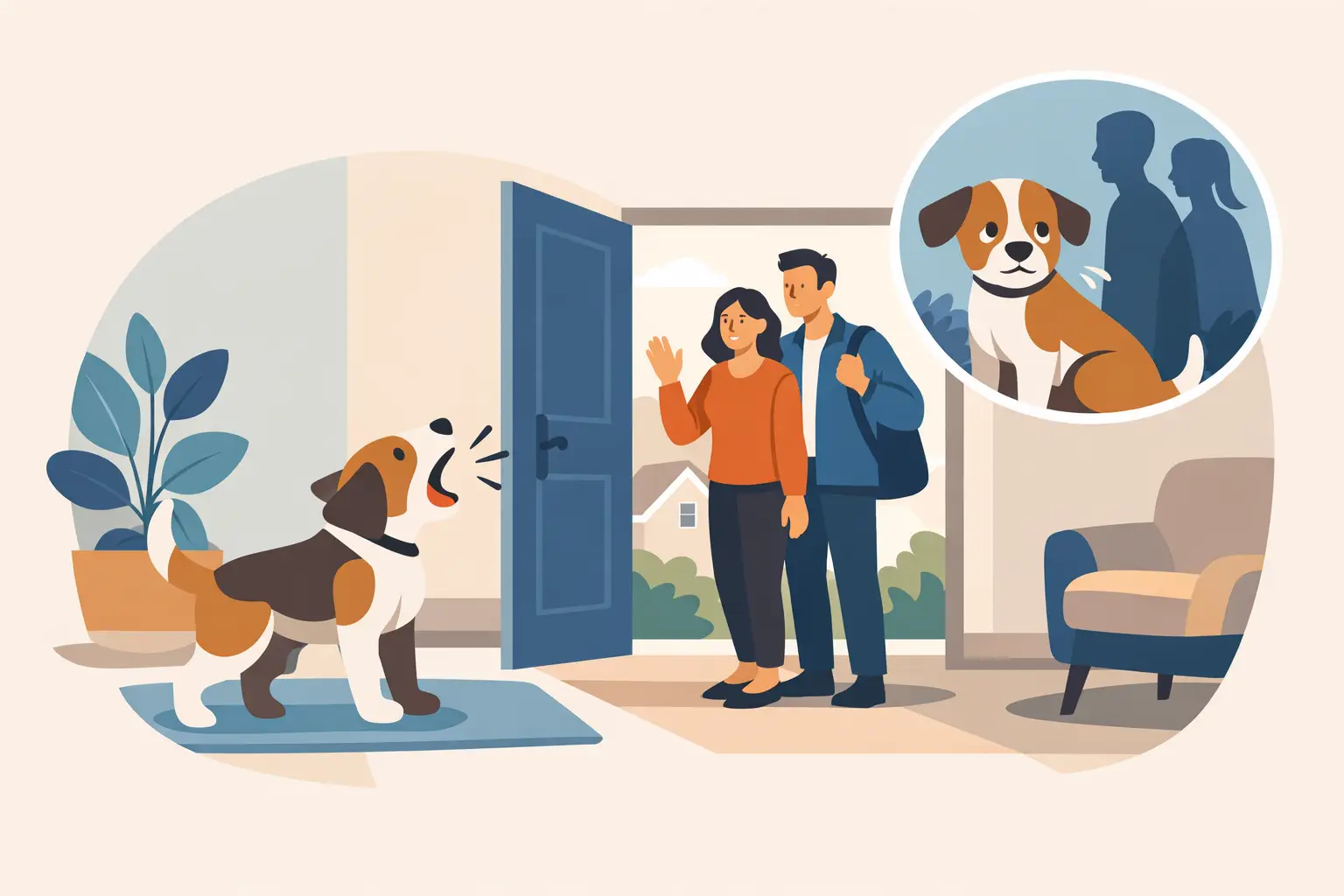
The doorbell rings, and your dog goes from resting quietly to racing toward the entryway, barking hard enough to make a simple visit feel stressful. If you have asked, “why does my dog bark at visitors,” the short answer is that your dog is reacting to a change in their territory, routine, or sense of safety. The better answer is that the barking has a purpose – and identifying that purpose is the first step toward changing it.
Barking at guests is common, especially in busy homes, apartments, and neighborhoods where dogs hear people coming and going all day. It does not automatically mean your dog is aggressive or poorly behaved. But when barking escalates into lunging, growling, charging the door, or an inability to settle, it is time for a clear training plan. A trained dog is a happy dog, and a calm greeting routine gives your dog useful direction when excitement is high.
Why Does My Dog Bark at Visitors?
Dogs bark at visitors for several different reasons. The sound may look the same to us, but the underlying emotion matters. A fearful dog needs support and distance. A territorial dog needs boundaries and a better job to do. An excited social dog needs impulse control.
They are protecting their space
Your home is your dog’s territory. A knock, doorbell, unfamiliar footsteps, or a person entering without your dog’s permission can trigger an alert response. Some barking is normal communication: your dog hears something unusual and lets you know.
The problem begins when the dog believes they are responsible for handling every arrival. If barking makes the person pause, speak loudly, or leave, the dog may learn that the behavior worked. Each repetition can make the response stronger.
They feel afraid or uncertain
Not every barking dog is trying to be tough. A dog who backs away, tucks their tail, lowers their body, avoids eye contact, or barks from behind furniture may be nervous about strangers. Rescue dogs, dogs with limited early socialization, and naturally cautious dogs may struggle with unfamiliar people in the home.
For these dogs, forcing an introduction can make matters worse. Asking a visitor to reach over the dog, stare at them, or offer a hand for sniffing can feel like pressure. Training should build confidence at the dog’s pace while keeping everyone safe.
They are overexcited
Some dogs bark because visitors are the most interesting thing that has happened all day. They may wiggle, jump, spin, grab toys, and bark nonstop because they want attention immediately. This is not fear or guarding, but it can still create chaos at the door.
Excitement barking often improves quickly when the dog learns that calm behavior, not noisy behavior, is what earns access to people.
The routine has accidentally rewarded barking
Dogs repeat what pays off. If barking brings the family running, gets the visitor talking to them, opens the door faster, or results in being picked up, it can become part of the greeting ritual. Even scolding can be rewarding to a dog who wants engagement.
This is why simply yelling “quiet” from across the room rarely delivers proven results. Your dog needs a clear alternative behavior, practiced well before the next visitor arrives.
Read Your Dog’s Body Language Before You Act
Before working on the barking itself, look at the full picture. A loose, wiggly dog who barks and then eagerly retreats to grab a toy has different needs than a stiff dog who stares at the guest and freezes.
Watch for relaxed movement, soft eyes, a loose tail, and the ability to take treats. These signs generally suggest excitement or manageable alert barking. Stiff posture, a hard stare, raised hackles, lip lifting, growling, snapping, or repeated attempts to rush the visitor indicate that you should slow down and prioritize management.
Do not punish growling. A growl is a warning signal, and suppressing it does not remove the discomfort behind it. Instead, create distance, prevent the dog from rehearsing the behavior, and get professional guidance for any dog that may bite or has already bitten.
Start With Management, Not a Test
A successful greeting begins before the visitor reaches the door. Until your dog has the skills to stay calm, manage the situation so they cannot practice charging, barking, or jumping on every guest.
Use a leash, baby gate, crate, closed interior door, or a designated room before opening the front door. Management is not a failure or a shortcut. It protects your guest, lowers your dog’s stress, and gives you control while training takes hold.
Ask visitors to ignore your dog at first. No direct eye contact, excited talking, leaning over, or reaching toward the dog. This is especially helpful for nervous dogs. Your guest does not need to win the dog over in the first thirty seconds. The goal is for the dog to learn that people entering the house are ordinary and safe.
Teach a Better Job Than Barking
The most practical solution is to teach your dog exactly what to do when someone arrives. For many households, that behavior is going to a bed, mat, crate, or a spot several feet away from the front door. The command might be “place,” “bed,” or “go settle.” What matters is consistency.
Build the place command away from visitors
Start when the house is quiet. Lead your dog to their bed or mat and reward them for stepping on it. Once they understand the destination, add your command. Reward a down, then reward calm staying. Gradually increase the time before each reward.
Keep sessions short and successful. Your dog should learn that going to their place is not a punishment. It is a predictable, rewarding task that earns treats, praise, or a favorite toy.
Add low-level door triggers
Once your dog can go to place reliably, practice with small versions of the real trigger. Touch the doorknob. Walk toward the door. Open and close it. Play a quiet doorbell sound. Each time, give the place command and reward your dog for staying calm.
If your dog explodes into barking, the exercise is too difficult right now. Make it easier. Training works best when you build from manageable practice to real-life pressure, not when you wait for a difficult moment and hope your dog can figure it out.
Practice with a planned visitor
Choose a patient friend who will follow instructions. Put your dog on leash or behind a gate, send them to place, and have the visitor enter quietly. Reward your dog for looking at the guest and then returning attention to you. A calm glance is progress. Silence for three seconds is progress. Relaxing on the mat is progress.
For an excited dog, the visitor can offer attention only after the dog has four paws on the floor and a calmer body. For a fearful dog, the visitor should continue to ignore the dog and allow the dog to observe from a safe distance. Do not rush contact just because the barking has stopped.
Common Mistakes That Keep the Problem Going
Many owners unintentionally make visitor barking harder to solve by waiting until the doorbell rings to begin training. The dog is already over threshold, the guest is standing there, and everyone feels rushed. Practice should happen when there is no pressure.
Avoid repeatedly shouting over your dog. Loud corrections can add more intensity to an already intense moment, and some dogs interpret the noise as their owner joining the alarm. Also avoid allowing a dog to race to the door sometimes but not others. Inconsistent rules create inconsistent behavior.
Finally, do not assume every friendly-looking dog is safe to greet visitors freely. A dog can be affectionate with family and still feel uncomfortable with strangers entering the home. Respecting that distinction prevents preventable problems.
When Professional Training Is the Right Next Step
If your dog has a history of snapping, biting, cornering guests, breaking through barriers, or cannot settle even with distance, get help before inviting more people into the situation. The same is true if the behavior appeared suddenly, especially in an older dog. Pain, hearing changes, or other medical concerns can alter how a dog responds to people.
A professional trainer can assess the dog’s body language, household setup, triggers, and current obedience level, then create a practical plan for your home. At Smart Dogs, training focuses on functional commands and reliable behavior that fits everyday life – including the moments that matter most, like answering your own front door without stress.
Your dog does not need to love every visitor. The goal is simpler and more useful: your dog can remain safe, responsive, and under control while you decide how each greeting should happen. With consistent practice, clear boundaries, and rewards for calm choices, the front door can become just another part of a well-managed day.
