
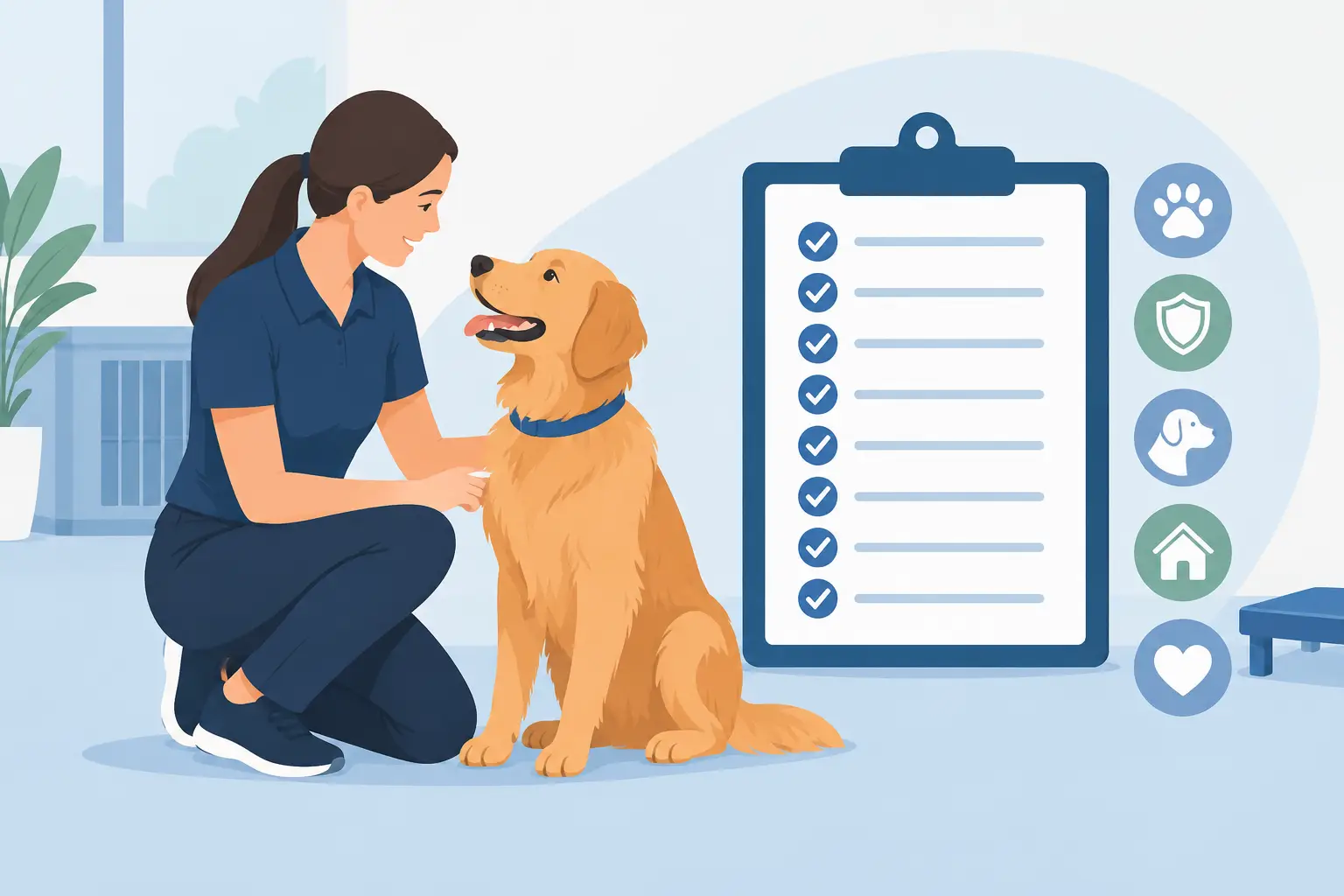
A board and train review checklist helps you look past polished photos, five-star ratings, and promises of a perfectly behaved dog in two weeks. The right program can create meaningful progress in obedience, house manners, and behavior. The wrong fit can leave you with unclear answers, a stressed dog, and little guidance once training is over.
For busy Los Angeles families, professionals, and new dog owners, boarding-based training can be a practical way to establish a foundation quickly. But no responsible trainer should sell it as magic. Your dog still needs the right plan, humane handling, consistent practice, and a clear handoff that teaches you how to maintain the results at home.
How to Use a Board and Train Review Checklist
Start by comparing more than the price, training length, and number of commands listed on a website. A lower-cost program may offer less one-on-one work, limited owner instruction, or no post-program support. A longer program is not automatically better either. The right length depends on your dog’s age, history, behavior, health, and the specific skills your household needs.
Use this checklist during phone calls, consultations, facility visits, and while reading client feedback. A quality provider should answer direct questions clearly. If the answers are vague, defensive, or focused only on sales pressure, keep looking.
1. Confirm the program has clear, real-life goals
Ask what your dog will actually be able to do when the program ends. “Obedience training” is too broad to be useful on its own. You should hear concrete goals such as coming when called, walking politely on leash, settling on a place bed, responding to sit and down around distractions, greeting visitors calmly, or following housebreaking routines.
The goals should match your everyday life. A young dog in a downtown apartment may need calm elevator behavior, leash manners around traffic, and the ability to settle while you work from home. A family dog may need reliable responses around children, guests, doorbells, and backyard activity. The best training plan is functional, not just impressive in a video.
2. Ask how the trainer evaluates your dog first
Every dog arrives with a different temperament, learning history, energy level, and tolerance for stimulation. Puppies, rescues, fearful dogs, and dogs with reactivity should not all receive the same cookie-cutter plan.
Ask whether the trainer evaluates your dog’s behavior before enrollment and how that evaluation affects the program. A professional should ask about medical history, routines, bite history, previous training, triggers, and what happens before and after problem behaviors. They should also be honest when a boarding program is not the right starting point for a dog’s needs.
For serious aggression concerns, look for careful risk assessment and realistic expectations. Training can improve behavior and safety, but no ethical professional can guarantee that every dog will become safe in every situation.
3. Understand the training methods, not just the labels
Terms such as “balanced,” “positive,” “behavior modification,” and “off-leash” can mean different things from one business to another. Ask the trainer to explain exactly how they teach a new command, what they do when a dog makes a mistake, and how they build reliability around distractions.
At Smart Dogs, motivation-based training and positive reinforcement are used to help dogs understand what earns reward and what is expected of them. Effective training still includes structure, timing, boundaries, and follow-through. Positive does not mean permissive, and disciplined training does not need to mean intimidation.
Pay attention to whether the trainer can describe their process in plain language. You deserve to know how your dog will be handled while away from home.
4. Review the daily routine and living conditions
Board and train is both training and temporary care. Ask where dogs sleep, how often they are exercised, whether they have supervised rest periods, and how dogs are separated or grouped. Find out how the facility handles feeding instructions, medications, allergies, heat, sanitation, and emergencies.
A full schedule matters because an overtired or overstimulated dog cannot learn well. Dogs need focused training sessions, but they also need sleep, decompression, appropriate physical activity, and safe management. Ask whether you can tour the training and boarding areas or see current, unedited examples of the environment.
Be cautious of facilities that will not explain who is responsible for your dog overnight, how often staff monitor dogs, or what happens if a dog becomes ill or injured.
5. Look for proof of process, not just dramatic before-and-afters
Before-and-after clips can be encouraging, but they rarely show the full story. A dog may perform beautifully with a trainer in a controlled setting and struggle when returned to a busy household. Ask to see examples of dogs working in ordinary environments, with realistic distractions and handlers other than the trainer.
When reading reviews, look for specifics. Helpful reviews mention the dog’s starting challenges, what changed, how the owner was taught, and whether the results held up after returning home. Notice patterns in the feedback. Repeated praise for communication, follow-up, and practical results is more meaningful than generic comments about a dog being “fixed.”
Also read the less enthusiastic reviews with a fair eye. One complaint does not define a business. A repeated concern about poor communication, unexpected fees, injured dogs, or lack of support deserves attention.
6. Check whether owner training is built into the program
This is one of the most important items on any board and train review checklist. Your dog may learn with a professional, but your dog must live with you. If you are not taught the commands, leash handling, reward timing, household rules, and maintenance routine, the training can fade quickly.
Ask how many transfer sessions are included and whether all primary caregivers can attend. A strong handoff should let you practice with your dog while the trainer coaches you through real situations. You should leave knowing what to do when your dog ignores a cue, becomes excited at the door, pulls toward another dog, or loses focus on a walk.
Children should be included in age-appropriate ways, but adults remain responsible for managing and reinforcing the dog’s behavior. Clear family rules prevent mixed signals once your dog comes home.
7. Ask what support looks like after pickup
Dogs often need time to adjust after returning home. The home environment brings back familiar habits, exciting triggers, and different routines. A quality program prepares you for that transition rather than treating pickup day as the finish line.
Ask whether follow-up lessons, phone support, refresher sessions, or written homework are included. Find out how long the support period lasts and what is expected from you. Guarantees deserve close attention too. A guarantee is only valuable if the terms are clear and the trainer provides a practical path for continued work.
8. Make sure policies are written and straightforward
Review the enrollment agreement before dropping off your dog. It should clearly explain fees, cancellation terms, vaccination requirements, emergency veterinary authorization, medication procedures, pickup arrangements, and any extra charges.
You should also understand the trainer’s communication policy. Will you receive updates, photos, training notes, or scheduled check-ins? Daily updates are not required for every program, but you should never feel shut out or unsure of your dog’s well-being.
9. Measure the result by life at home, not a graduation photo
The best question is not, “Can my dog perform commands for the trainer?” Ask, “Can I use these skills in the moments that matter?” That may mean a calmer morning routine, fewer accidents, safer walks, easier visitor greetings, or the ability to take your dog to a patio without constant stress.
Expect progress, not perfection. Training changes behavior through repetition, clear communication, and consistent reinforcement over time. Some dogs need additional private lessons, especially when fear, reactivity, or long-standing habits are involved. That is not a failure. It is responsible training tailored to the dog in front of you.
A trained dog is a happy dog because clear expectations make daily life less confusing. Choose the program that gives your dog skilled instruction and gives you the confidence to lead calmly once you are back home together.
