
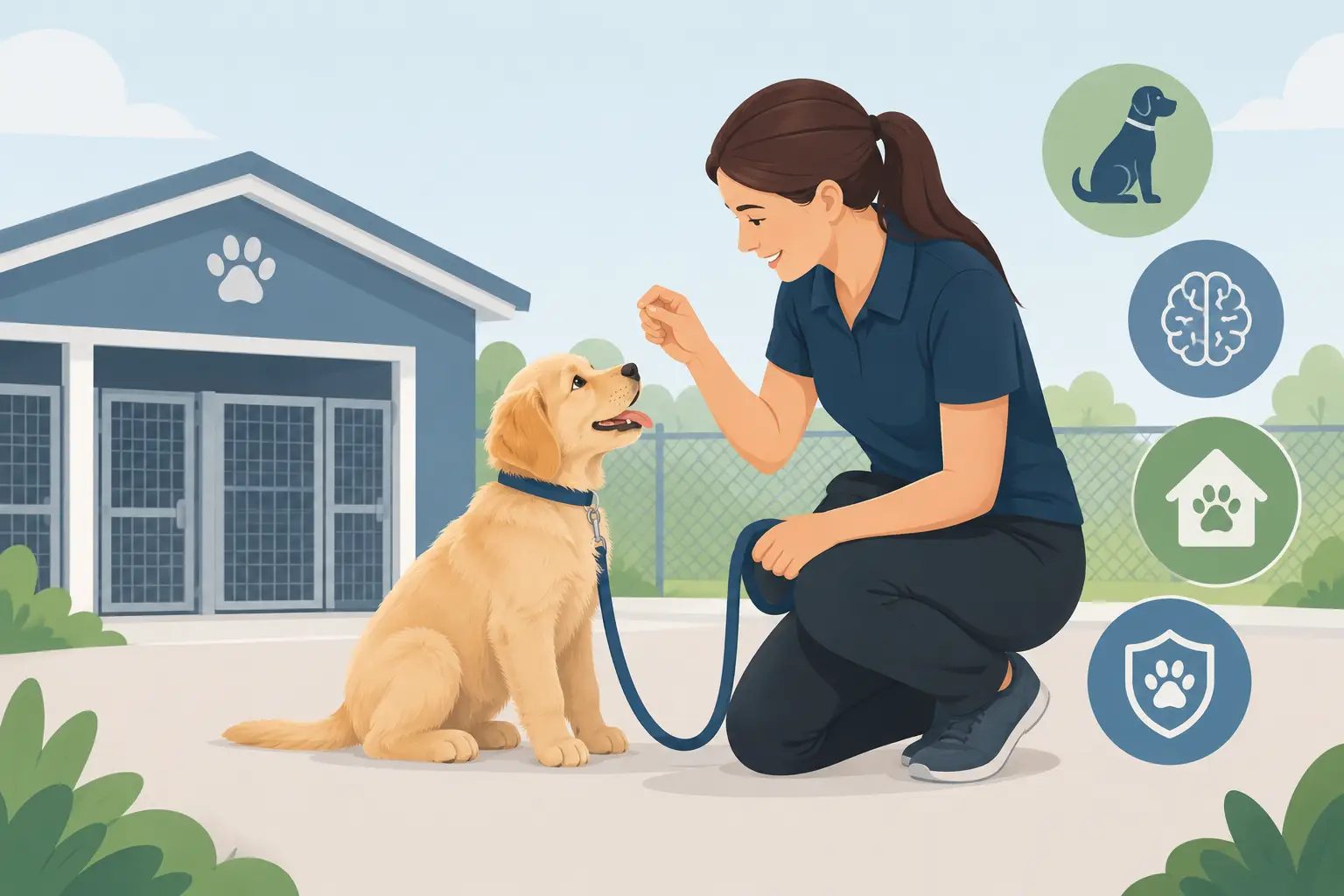
A puppy can learn a surprising amount in a few weeks, including habits you did not mean to teach. Pulling toward every dog on the sidewalk, barking for attention, chewing the rug, or treating the crate like a personal insult can become familiar fast. Board and train for puppies gives families a structured way to build better habits early, before daily frustration becomes the routine.
For busy Los Angeles households, the appeal is obvious: your puppy receives focused, professional training while you keep up with work, school, and family obligations. But it is not a magic handoff. The best programs train the puppy and prepare the owner to continue the work at home. A trained dog is a happy dog, and a confident owner is a major part of that result.
What Board and Train for Puppies Can Accomplish
A quality puppy board and train program is designed around real-life skills, not tricks for a training demo. The goal is a puppy that can settle in the home, respond to direction, and move through the world with more confidence and control.
During a structured stay, a puppy can practice foundation commands such as sit, down, come, place, heel, leave it, and stay. Just as important, the trainer can work on the moments between commands: waiting calmly at doors, settling in a crate, accepting handling, walking without dragging the leash, and disengaging from distractions.
Puppies also benefit from predictable routines. Consistent feeding, potty breaks, rest periods, exercise, and training sessions help clarify what is expected. That structure is especially valuable for housebreaking. Accidents often continue not because a puppy is stubborn, but because the schedule, supervision, and response from humans changes from day to day.
The right program uses positive reinforcement and motivation while still giving the puppy clear boundaries. Puppies need encouragement, but they also need to understand which choices lead to freedom, attention, and rewards. Clear communication reduces confusion. It does not make a puppy less playful or less affectionate.
When a Board and Train Program Makes Sense
Boarding-based training can be a strong option when your schedule makes consistency difficult. A puppy needs many short, well-timed repetitions each day. If everyone in the home is gone for long hours, overwhelmed by a new baby, or juggling unpredictable work schedules, training may happen only when there is already a problem. That is not an ideal setup for a young dog.
It can also help families who are getting conflicting advice. One person allows jumping, another corrects it, and someone else laughs and gives the puppy attention. From the puppy’s perspective, the rule is unclear. Professional training creates a starting system that the whole household can follow.
Early board and train support may be particularly useful when a puppy is showing concerning behavior such as resource guarding, intense fear, persistent demand barking, rough mouthing, or reactivity around dogs or people. Not every issue requires a boarding program, and severe behavior concerns may need a more customized plan. Still, getting experienced eyes on the problem early can prevent small issues from gaining momentum.
Age matters. Very young puppies have developmental and vaccination considerations, so responsible programs evaluate whether a puppy is ready for a boarding environment. A good trainer will not simply accept every puppy at every age. They will consider health, temperament, socialization needs, and the goals of the family.
What Your Puppy Will Not Learn in a Vacuum
The biggest misunderstanding about board and train is that the dog comes home fully finished. Training does not work that way because dogs do not automatically apply a skill in every new setting. A puppy may hold a reliable place command with a trainer, then test the rule when returning to a familiar couch, a favorite child, and a busy household.
That is normal. It does not mean the program failed. It means the puppy needs help transferring the lesson from the training environment to daily life.
Your follow-through is what turns training into a long-term habit. After pickup, you should know the commands, the timing, the reward system, and how to respond if your puppy ignores a cue. You should also understand how to manage freedom. A puppy that has just learned house rules should not immediately have unrestricted access to every room, every visitor, and every tempting shoe.
The first few weeks at home are where the family puts the system into practice. Keep routines consistent. Ask for simple obedience before meals, walks, greetings, and access to favorite spaces. Reward the behaviors you want repeated. If a problem appears, address it calmly and promptly rather than waiting for it to become a pattern again.
How to Choose the Right Puppy Training Program
The right question is not simply, “How many commands will my puppy know?” Ask how the trainer will prepare your puppy for your actual life. A family in a downtown apartment may need calm elevator behavior, leash control around traffic, and polite greetings in shared spaces. A suburban family may need door manners, reliable recall around a yard, and safe behavior around children and guests.
Before enrolling, ask what the daily routine looks like and how training is personalized. Find out whether the program includes housebreaking support, crate training, leash work, socialization, and distraction training. Ask how trainers handle fear, overstimulation, and setbacks. A reputable professional should give clear answers, not vague promises.
You should also ask what happens after the board and train stay. Owner transfer lessons are essential. These sessions allow you to practice the commands under guidance, ask questions, and learn how to maintain the results. Follow-up support can make a meaningful difference when your puppy returns to a new environment with familiar temptations.
At Smart Dogs, the focus is on practical obedience that supports everyday life. With experience training more than 20,000 dogs, the program centers on clear communication, motivation-based methods, and skills owners can use at home, on walks, and around real distractions.
Preparing Your Puppy for Boarding Training
A little preparation helps your puppy get more from the experience. Make sure vaccinations and health records are current, and tell the trainer about medications, food sensitivities, previous training, and any behavior you have noticed. Do not minimize concerns because you are embarrassed. Details about growling over food, fear of strangers, car sickness, or separation distress help create a safer and more effective plan.
Be honest about your goals, too. “I want a better puppy” is understandable, but it is not specific enough to guide training. Explain what a better day would look like. Maybe you want to drink coffee without being jumped on, walk through the neighborhood without leash pulling, welcome visitors without chaos, or leave your puppy in a crate without a barking marathon. Those are useful, trainable outcomes.
When your puppy comes home, keep the transition calm. Resist the urge to throw a welcome-home party with every relative and neighborhood dog. Give your puppy time to settle, then begin practicing the routine you learned. Short, successful sessions are more valuable than long, frustrating ones.
The Real Return on Early Training
Puppy training is not about creating a perfectly quiet dog with no personality. It is about giving your dog guidance so excitement, curiosity, and energy do not turn into chaos. It is also about giving your family a plan you can follow when the puppy is tired, distracted, or testing limits.
Board and train is worth considering when it provides structure, skilled coaching, and a clear handoff back to the people who matter most. Choose a program that trains for the life your puppy will actually live, then commit to the small daily habits that protect the progress. The calm walk, the peaceful dinner, and the reliable recall begin with what you practice after your puppy comes home.
