
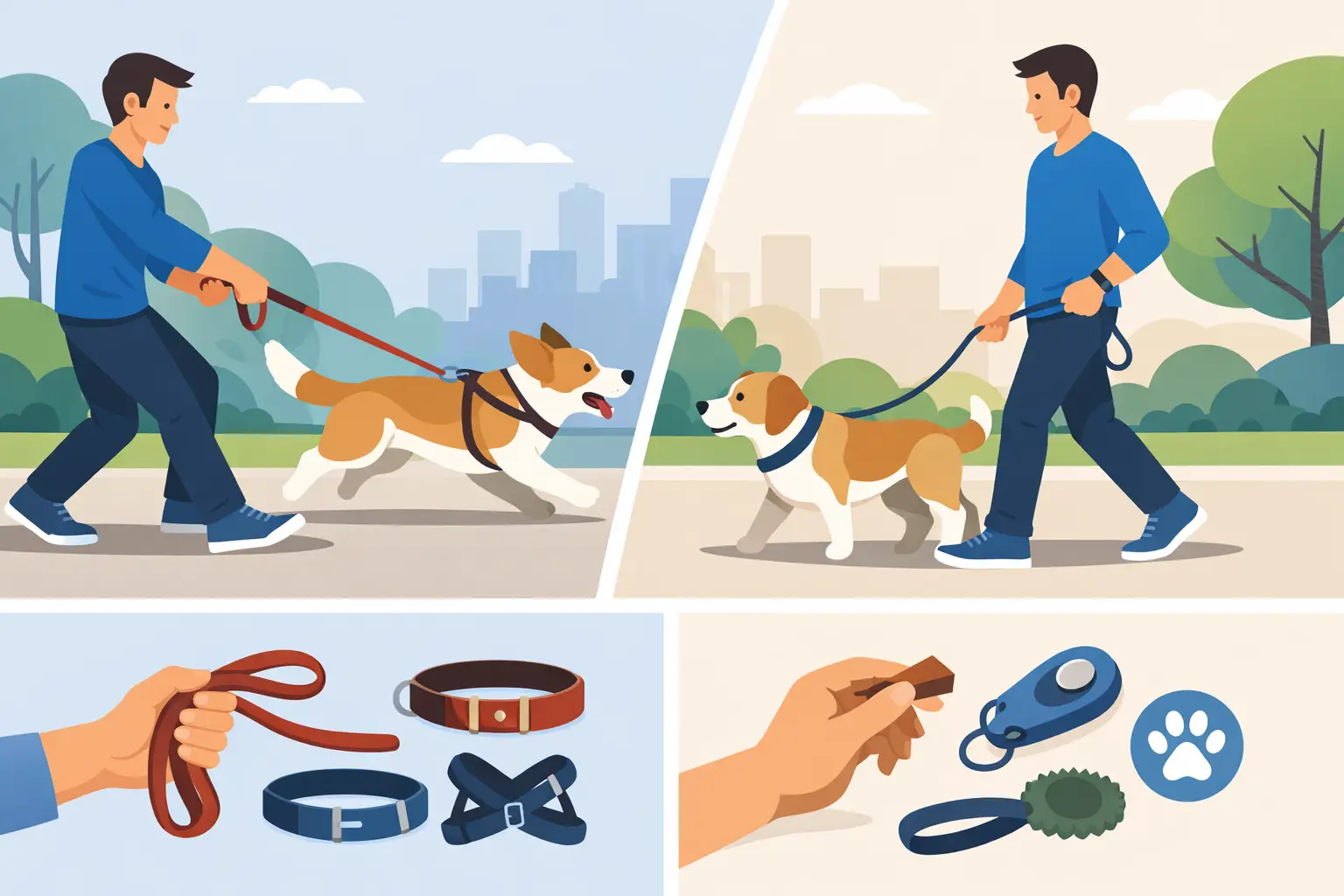
A dog leaning into the leash can make a simple walk through the neighborhood feel like a daily contest of strength. Understanding why dogs pull is the first step toward changing it. Most dogs are not trying to be difficult or take charge of the household. They are doing what works: pulling gets them closer to the smell, dog, person, patch of grass, or destination they want.
The good news is that leash pulling is a trainable behavior. With the right equipment, consistent timing, and a clear plan, your dog can learn that a loose leash gets them where they want to go. That creates safer walks, less frustration, and a dog that fits more comfortably into everyday life.
Why Dogs Pull on the Leash
Dogs move faster than people. They also experience walks differently. A sidewalk is full of information: food smells, squirrels, other dogs, dropped napkins, landscaping, traffic sounds, and the scent trail of every animal that passed through earlier. When a dog spots something interesting, their natural response is to move toward it.
If the leash becomes tight and the dog still reaches that interesting thing, pulling has been rewarded. It does not matter whether the reward is a greeting, a sniff, or simply forward motion. From the dog’s perspective, the lesson is clear: lean into the leash, and the walk continues.
This pattern can develop quickly, especially with puppies. A young dog may begin pulling because they are excited, curious, or still learning how to move with a person. A newly adopted rescue dog may pull because the outside world is overwhelming, unfamiliar, or far more stimulating than their previous environment. An adult dog may have practiced the behavior for years without anyone intentionally teaching a different option.
Pulling can also increase when a dog has excess energy, limited exercise, poor impulse control, or anxiety around triggers. The cause matters because a dog who pulls to chase squirrels needs a different management plan than a dog who pulls to create distance from another dog. The training principle remains the same, but the pace and setup should match the dog in front of you.
Pulling Is Usually Not a Dominance Problem
Owners are often told that their dog is trying to be the “pack leader” by walking ahead. That explanation misses what most leash behavior actually looks like. Dogs pull because the environment is rewarding and because nobody has made loose-leash walking the more successful choice.
Your dog can walk in front of you without pulling, and they can walk beside you while still feeling stressed or disconnected. Position alone is not the goal. The goal is a dog who can respond to you, maintain a loose leash, and move through real-life distractions under control.
That distinction is useful for busy Los Angeles dog owners. You do not need a perfect competition heel for every block. You need a dog that can walk safely past a driveway, pause at a curb, ignore most distractions when asked, and avoid dragging you into traffic or toward another dog.
The Reward Loop That Keeps Pulling Going
Leash pulling often survives because people accidentally reward it. A dog pulls toward a tree, and the owner follows. The dog pulls toward another dog, and the owner allows a greeting. The dog pulls toward the park, and the walk continues at full speed.
None of this means you have failed your dog. It means the dog has received consistent feedback from the environment. Every successful pull makes the next pull more likely.
Changing the habit means changing that feedback. When the leash tightens, forward movement should stop. When the leash loosens, the dog earns movement, access to a sniff, praise, or a small food reward. This teaches a practical rule: a loose leash makes good things happen.
Timing is everything. If your dog reaches the grass after pulling you there, then receives a treat, the treat will not erase the reward they already received. Instead, wait for even a moment of slack in the leash before moving forward or giving permission to sniff.
Start With the Right Walking Setup
Training is easier when your equipment gives you control without creating discomfort or conflict. A well-fitted front-clip harness can reduce a dog’s ability to drive straight ahead with their full body weight. It can be a helpful management tool for strong pullers while you teach new habits.
A standard flat collar may work well for a dog that is already responsive, but it gives less leverage for a powerful dog that lunges or pulls hard. Avoid retractable leashes during training. They teach dogs that tension on the leash creates more distance, which is the opposite of loose-leash walking.
Equipment is not the training itself. No harness, collar, or leash will teach your dog to make good choices without clear practice. The best setup is the one that keeps everyone safe while allowing you to communicate consistently and reward the behavior you want.
Use a regular six-foot leash and bring rewards your dog values. For some dogs, kibble is enough in a quiet area. For others, especially around distractions, you may need small pieces of higher-value food. You can also use life rewards, such as permission to sniff a hedge or greet a familiar person, once your dog has earned them with a loose leash.
How to Teach a Loose Leash
Begin in the least distracting environment possible. For many dogs, that means inside the home, in a yard, or on a quiet stretch of sidewalk rather than outside a busy coffee shop or near a dog park.
Teach Your Dog the Leash Has Slack
Stand still with your dog near you and a little slack in the leash. The moment your dog looks at you, turns back toward you, or creates slack by shifting their body closer, mark the behavior with a calm “yes” and reward near your leg. Repeat until your dog starts checking in because being near you pays.
Then take one or two steps. If the leash stays loose, reward. If your dog surges ahead and creates tension, stop moving. Do not yank, scold, or turn the walk into a tug-of-war. Simply become still and wait for the leash to loosen. The instant it does, mark it and move forward again.
At first, this can feel slow. That is normal. You are replacing a well-practiced habit, not correcting a single mistake. A five-minute training walk with clear repetitions is more productive than a 45-minute walk where pulling works the entire time.
Use Direction Changes With Purpose
If your dog reaches the end of the leash and stays there, calmly turn and walk the other direction. Encourage them to come with you, then reward when they catch up and the leash becomes loose. This helps your dog learn that paying attention to your movement matters.
Do not turn randomly every few seconds. Your dog should be able to understand the pattern. Pulling makes the current direction pause or change. Staying connected keeps the walk moving forward.
Give Sniffing a Place in the Plan
A well-trained walk does not need to be joyless. Sniffing is mentally enriching for dogs, and it can be one of your strongest rewards. The key is to make it something your dog earns rather than something they drag you toward.
Ask for a few steps on a loose leash, then say a release cue such as “go sniff” and walk with your dog to the interesting spot. Over time, your dog learns that self-control does not end the fun. It is how they gain access to it.
Common Mistakes That Slow Progress
The biggest mistake is inconsistency. If pulling works on the morning walk but not the evening walk, your dog will keep trying. If one family member stops when the leash tightens while another follows the dog, the habit becomes harder to change.
Another common issue is asking too much too soon. A dog that can walk politely in the living room may not be ready to perform the same behavior beside a busy street, at a crowded park, or when another dog is approaching. Increase difficulty gradually. Start with short sessions, then add distance, distractions, and busier environments as your dog succeeds.
Finally, do not wait until your dog is fully overstimulated. Watch for early signs such as staring, speeding up, closing their mouth, or putting weight into the front of the harness. Create more distance from the trigger, ask for a simple response your dog knows, and reward before the leash becomes tight.
When Pulling Needs More Than Basic Practice
If your dog pulls hard enough to hurt you, lunges at dogs or people, panics around traffic, or cannot take food outdoors, there may be more than ordinary excitement involved. Fear, reactivity, and frustration can all appear as leash pulling. In those cases, forcing the dog closer to triggers or relying on harsh corrections can make the behavior worse.
A professional trainer can evaluate the pattern, help you manage safety, and build a plan that fits your dog’s temperament and your daily routine. Proven results come from training the behavior you see in real life, not from trying one quick trick after another.
A trained dog is a happy dog, and a calmer walk starts with small, repeatable wins. On your next outing, do not measure success by how far you travel. Measure it by the moments your dog notices you, softens the leash, and chooses to move with you.
