
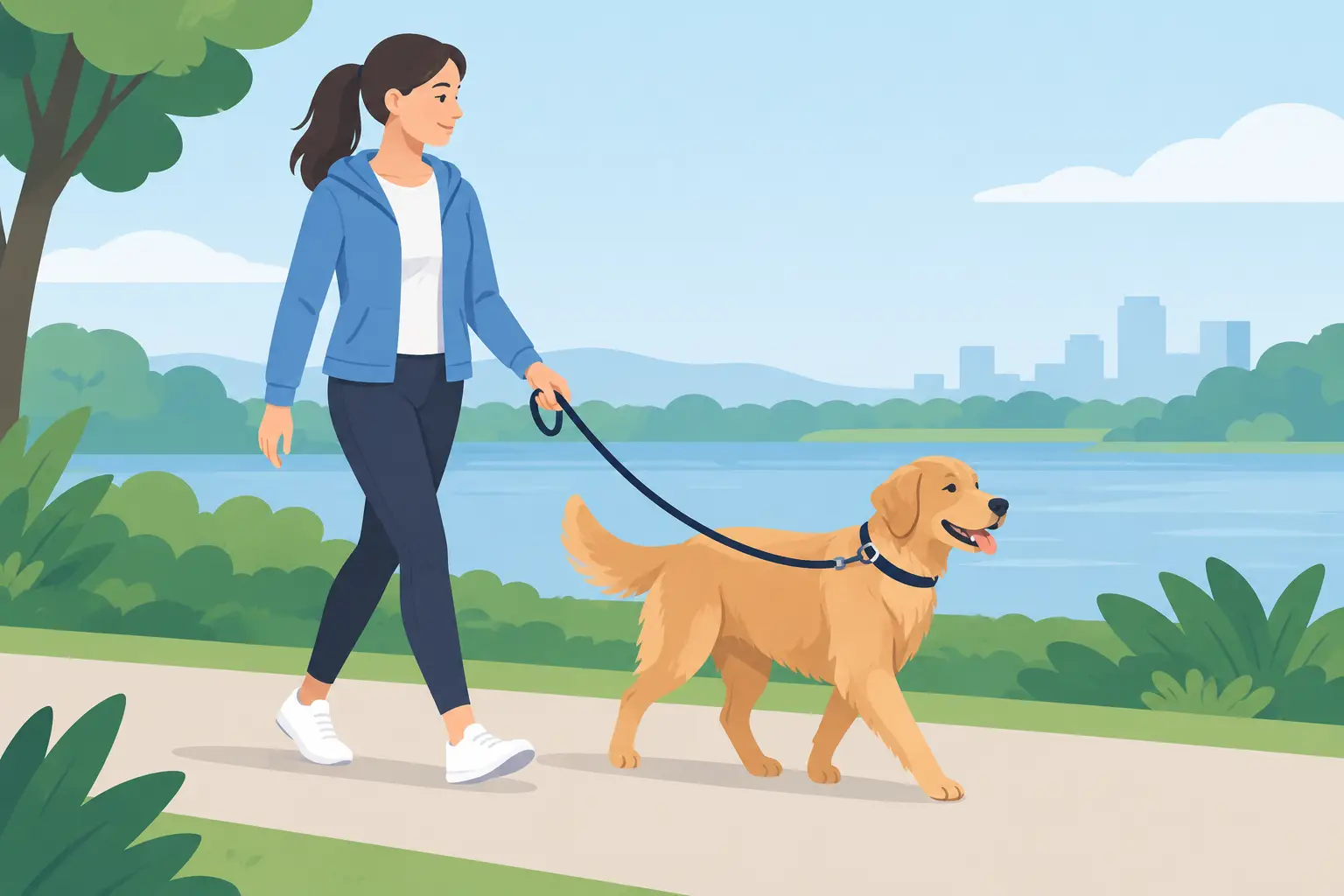
A walk should not feel like a tug-of-war from your front door to the end of the block. When you train dog loose leash walking, the goal is simple: your dog learns that staying near you, with a relaxed leash, is what makes the walk continue. This is not about forcing a dog into a perfect heel for an hour. It is about building a reliable habit that makes everyday outings calmer, safer, and more enjoyable.
For Los Angeles dog owners, that matters. Sidewalks can be crowded, delivery trucks are loud, other dogs appear around corners, and tempting smells are everywhere. A dog that pulls may be excited, nervous, distracted, or simply used to getting where they want by putting pressure on the leash. The good news is that pulling is trainable when the rules are clear and everyone handling the dog follows them.
What Loose Leash Walking Really Means
Loose leash walking means your dog can move with you without constant tension on the leash. Your dog does not need to stare at your face or stay glued to one exact position. They can sniff, look around, and enjoy the walk. The standard is that the leash has a visible curve or slack in it, and your dog responds when you ask them to come closer or change direction.
That distinction helps owners avoid a common mistake: expecting too much too soon. A formal heel has a place, especially near traffic, crowded areas, or when you need close control. But loose leash walking is a practical everyday skill. It gives your dog appropriate freedom while keeping you in control of the pace and direction.
Start With the Right Equipment and Expectations
A standard 4- to 6-foot leash is usually the best starting point. Retractable leashes often teach the opposite lesson because the dog can keep moving forward while leaning into pressure. Choose a properly fitted collar, harness, or training tool that you can handle confidently. The right equipment depends on the dog’s size, strength, behavior, and training history.
Equipment can support training, but it cannot replace it. A no-pull harness may reduce leverage for some dogs, while another dog may respond better to a different setup under professional guidance. What matters most is consistency: pulling should stop producing forward progress, while walking near you should produce good things.
Bring rewards your dog truly values. For many dogs, small pieces of chicken, cheese, or a favorite training treat work better than dry kibble outside. You can also use praise, movement, sniffing, and permission to greet as rewards. The right reward is whatever your dog will work to earn in that environment.
Teach the First Steps in a Low-Distraction Area
Do not begin on the busiest street in the neighborhood. Start in your living room, backyard, driveway, or a quiet stretch of sidewalk where your dog can focus. If your dog cannot walk with you for five steps in a calm space, asking for success beside traffic, squirrels, and other dogs will only create frustration.
Begin with your dog near your preferred side. Say their name or use a simple cue such as “let’s go,” then take one or two steps. The moment your dog moves with you and the leash stays loose, mark the behavior with a cheerful “yes” and deliver a treat near your leg. This reward placement matters. Feeding close to your side helps your dog understand where the successful position is.
Repeat in short sessions. Take a few steps, reward, turn, reward again. Keep the pace active and positive. Five focused minutes often produces better learning than a 30-minute practice session where the dog is tired, overstimulated, and repeatedly pulling.
Use Movement as a Reward
Many dogs pull because getting forward is highly rewarding. Use that motivation rather than fighting it. When the leash is loose, move toward the tree, mailbox, patch of grass, or interesting scent. When the leash becomes tight, stop.
Avoid jerking, dragging, or repeatedly saying the cue without changing anything. Just become still. The instant your dog creates slack by stepping back, turning toward you, or loosening the leash, mark it and move forward again. Your dog begins to learn a clear rule: loose leash makes the walk go; tight leash makes the walk pause.
At first, you may stop often. That is normal. If you stay consistent, the number of stops decreases because your dog starts checking in before reaching the end of the leash.
What to Do When Your Dog Pulls Hard
If your dog hits the end of the leash and continues pulling, calmly turn and walk the other direction. This is often called a direction change or “about turn.” It works well because it removes access to what the dog wanted while giving them an easy opportunity to reconnect with you.
Do not turn this into a punishment or a battle. Keep your body language calm, make the turn, and reward when your dog catches up on a loose leash. Some dogs need several repetitions before they recognize the pattern. Others improve quickly once they realize that charging ahead never reaches the destination.
For a powerful dog, safety comes first. If you cannot physically control your dog, or if pulling is connected to lunging, barking, fear, or aggression, do not rely on random advice from social media. A hands-on training plan can address the full behavior picture and help you choose handling techniques that are safe for both you and your dog.
Build Attention Without Demanding Constant Focus
A dog does not need to maintain eye contact for an entire walk. In fact, demanding that level of concentration can make walks feel restrictive and exhausting. Instead, teach your dog that checking in with you is worthwhile.
Reward spontaneous moments when your dog looks at you, matches your pace, or chooses to turn with you. If a distraction is coming, such as another dog across the street, get your dog’s attention early. Use their name, move farther away if needed, and reward generously for staying connected.
Distance is a training tool. A dog that can calmly watch another dog from 30 feet away may not be ready to pass within three feet. Creating space is not failure. It is how you keep your dog under threshold, meaning calm enough to think and respond rather than react.
Add Real-World Distractions Gradually
Once your dog understands the basic rule in quiet areas, practice in slightly harder places. Move from the driveway to a calm residential block, then to a park path, then to busier sidewalks. Change only one challenge at a time when possible. A new location, a longer walk, and a high-distraction environment all at once can overwhelm even a dog that was doing well the day before.
Plan short success-based walks. If your dog is handling a busy corner well for 10 minutes, end there rather than pushing until they lose focus. Training is not measured by how far you walk. It is measured by how often your dog practices the behavior you want repeated.
It also helps to give your dog clear release time. After a stretch of focused walking, say a release word such as “go sniff” and allow them to explore on a loose leash. This teaches your dog that cooperation does not mean the walk becomes boring. Good behavior earns access to the world.
Keep Every Handler on the Same Page
Loose leash walking can fall apart when one person trains consistently and another allows pulling to get to the park, greet people, or reach a favorite dog. Dogs learn from consequences, not from good intentions. If pulling works sometimes, they will keep trying it.
Agree on the household rules before heading out. Use the same walking cue, the same response to a tight leash, and the same reward strategy. Children should only walk the dog when the dog’s size, training level, and behavior make that safe. For many families, adults should establish the skill first.
Smart Dogs sees this pattern often: the dog is not being stubborn, but the message has been inconsistent. A proven training system gives the dog one understandable answer every time.
When Professional Training Makes Sense
Some dogs need more than basic leash practice. Puppies may need structured socialization alongside walking skills. Newly adopted dogs may be adjusting to an unfamiliar neighborhood and routine. Dogs that lunge at other dogs, chase bikes, panic around traffic, or pull with enough force to risk injury need a more tailored approach.
Private coaching can be especially useful because the trainer can watch the actual timing, handling, and environmental triggers that affect your dog. Small changes in leash handling, reward timing, distance, and expectations can make a major difference. The objective is not to make your dog robotic. It is to create dependable behavior that fits your real life.
A calm walk is built one loose-leash step at a time. Stay patient, reward the choices you want, and make pulling unproductive. With consistent practice, your dog can learn that the best place to be is right there with you, ready for wherever the day takes you.
