
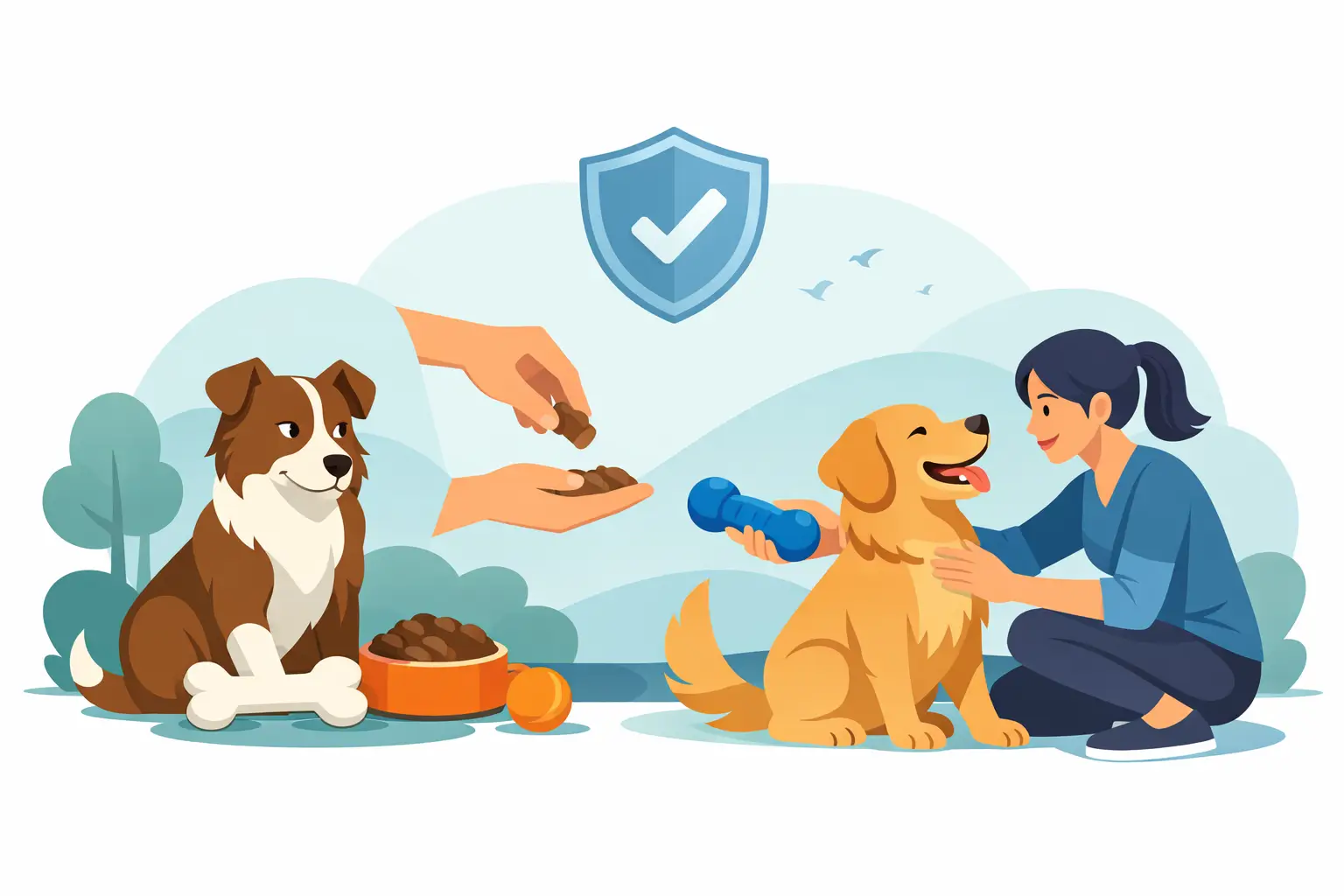
A dog stiffens when someone walks past the food bowl. A puppy races under the coffee table with a sock. A newly adopted dog growls when a hand reaches toward a chew. These moments can make owners nervous, but resource guarding prevention starts with a clear goal: teach your dog that people approaching valuable items predict good things, not loss.
Resource guarding is a normal canine instinct that can become a serious household problem when a dog feels compelled to protect food, toys, beds, stolen objects, or even a favorite person. Prevention is not about proving you can take anything from your dog. It is about building trust, creating reliable routines, and teaching practical commands before pressure builds. A trained dog is a happy dog, and a dog that feels safe around people is easier to live with every day.
What Resource Guarding Looks Like
Guarding does not always begin with a growl. Many dogs show quieter signs first: eating faster when someone approaches, hovering over an item, freezing, turning their head away, hard staring, or carrying a toy to a hidden spot. Those signals are communication. Respecting them gives you the chance to change the pattern before it escalates.
A growl should never be punished. It is a warning that tells you the dog is uncomfortable. If you correct the warning without addressing the discomfort, some dogs learn to skip the growl and move directly to a snap or bite. The safer response is to create space, manage the situation, and begin a structured training plan.
Dogs may guard because of genetics, prior competition for resources, anxiety, inconsistent handling, or simple learning history. A rescue dog that had to compete for food may need extra time. A puppy may develop guarding when people repeatedly chase, corner, or pry objects from its mouth. The cause matters, but the next step remains similar: make human proximity safe and predictable.
Resource Guarding Prevention Guide: Start With Daily Trust
The strongest prevention work happens before there is a problem. Instead of routinely taking items away to test your dog, show your dog that your approach adds value. This is especially useful for puppies, newly adopted dogs, and multi-dog households.
When your dog is calmly eating a meal, walk by at a comfortable distance and toss a small piece of something better into the bowl, such as chicken or a training treat. Then keep walking. Do not reach into the bowl. Repeat this in brief sessions until your dog looks up happily when you pass. Over time, you can gradually work closer if the dog stays loose and relaxed.
Use the same principle with chews and toys. Approach, toss a better treat beside the dog, and move away. Your dog learns a simple lesson: people near my valuable item make good things happen. This is far more effective than looming over the dog, grabbing the item, or demanding that the dog tolerate handling before trust has been built.
Keep sessions short. Two or three successful repetitions are more valuable than pushing until the dog becomes tense. Watch body language closely. A soft body, relaxed face, and willingness to eat are good signs. Freezing, lip lifting, hard eyes, or a lowered posture mean you moved too quickly and should add distance next time.
Teach Trade Before You Need It
A dependable trade is one of the most useful real-world skills a dog can learn. It helps when your dog picks up a shoe, finds food on a walk, or has something unsafe. The goal is not to trick the dog into surrendering every prized item. The goal is to create a reliable exchange that your dog wants to participate in.
Start with a low-value toy in a quiet room. Offer a high-value treat near your dog’s nose and say a consistent cue such as “trade.” When your dog releases the toy, mark the choice with calm praise and give the treat. In many early repetitions, give the toy back after the exchange. Returning it teaches your dog that releasing an item does not always mean it disappears forever.
As your dog understands the game, practice with different safe objects. Keep the value gap realistic. Asking a dog to release a plain toy for a dry biscuit may not work when the dog has a steak bone. Better payment is not bribery. It is clear communication that helps establish a behavior you can depend on.
“Drop it” is helpful for an item already in the mouth. “Leave it” is a separate skill for choosing not to pick something up in the first place. Both commands are worth practicing with positive reinforcement, but neither should be used as a reason to crowd a dog or force a confrontation.
Manage the Home So Your Dog Can Succeed
Training works best when the environment supports it. In a busy Los Angeles home, that may mean planning around children, visitors, delivery activity, tight living spaces, and multiple pets. Management is not a failure of training. It prevents rehearsals of unwanted behavior while good habits become stronger.
Feed dogs separately if there is any tension around meals. Use separate rooms, gates, crates only if each dog is already comfortable being crated, or another arrangement that allows every dog to eat without being watched or pressured. Pick up bowls when meals are over, particularly in homes with children or dogs that like to inspect each other’s leftovers.
Put high-value chews away when guests arrive or when dogs are together unsupervised. Keep laundry, food, and tempting household objects out of reach. If your dog tends to steal items, use closed doors, covered hampers, and thoughtful storage rather than chasing the dog through the house. Chasing often turns a simple stolen sock into a valuable prize.
Give your dog a protected resting area. Dogs should be able to relax in a bed, crate, or quiet corner without people repeatedly reaching in, climbing on them, or taking possessions. This is particularly important for young children, who need clear adult guidance around all dogs, including family dogs with no history of guarding.
Set Clear Family Rules Around Food and Toys
Every adult in the household should handle resources the same way. If one person trades calmly while another takes toys by force, the dog receives mixed information. Consistency creates faster, more dependable results.
Teach children never to approach a dog that is eating, chewing, sleeping, or holding an item. They should not hug, climb on, tease, or attempt to remove objects from the dog. Adults should supervise interactions rather than asking children to “be careful.” Dogs and children can live safely together, but safety depends on structure, space, and active leadership.
Avoid outdated exercises that encourage people to put hands in a dog’s bowl, pet the dog while eating, or repeatedly remove food to show control. These actions can create the very concern owners are trying to prevent. Your dog does not need to accept harassment around meals. Your dog needs to learn that household members are predictable and safe.
If Your Dog Is Already Guarding
Do not wait for a bite to take guarding seriously. If your dog has growled, snapped, lunged, or bitten over food, toys, space, or stolen objects, stop testing the behavior. Separate the dog from the trigger when needed, prevent access to high-risk situations, and avoid physical corrections or forced removal of items.
The right training plan depends on the dog, the item being guarded, the intensity of the reaction, and who lives in the home. Mild food tension in an adult-only home may improve with careful management and positive counterconditioning. A dog that guards multiple items, guards from children, has bitten, or becomes highly aroused needs professional guidance. Pain and medical discomfort can also lower a dog’s tolerance, so a veterinary check is wise when guarding appears suddenly or worsens without an obvious reason.
A qualified trainer can help you read your dog’s body language, set up safe exercises, and build obedience that carries into daily life. Commands such as place, come, leave it, and trade are most useful when they have been practiced calmly and consistently, not introduced during a conflict.
Build the Dog You Want to Live With
Resource guarding prevention is not about winning a contest over a bowl or proving who is in charge. It is about teaching your dog that cooperation pays, personal space is respected, and everyday routines are calm. That approach produces better obedience because your dog is working with you instead of worrying about what you might take away.
Start with one small habit this week: toss something better into your dog’s bowl as you pass, practice a few easy trades, or organize meals so every dog can eat in peace. Those simple repetitions build the trust that makes a calmer home possible.
