
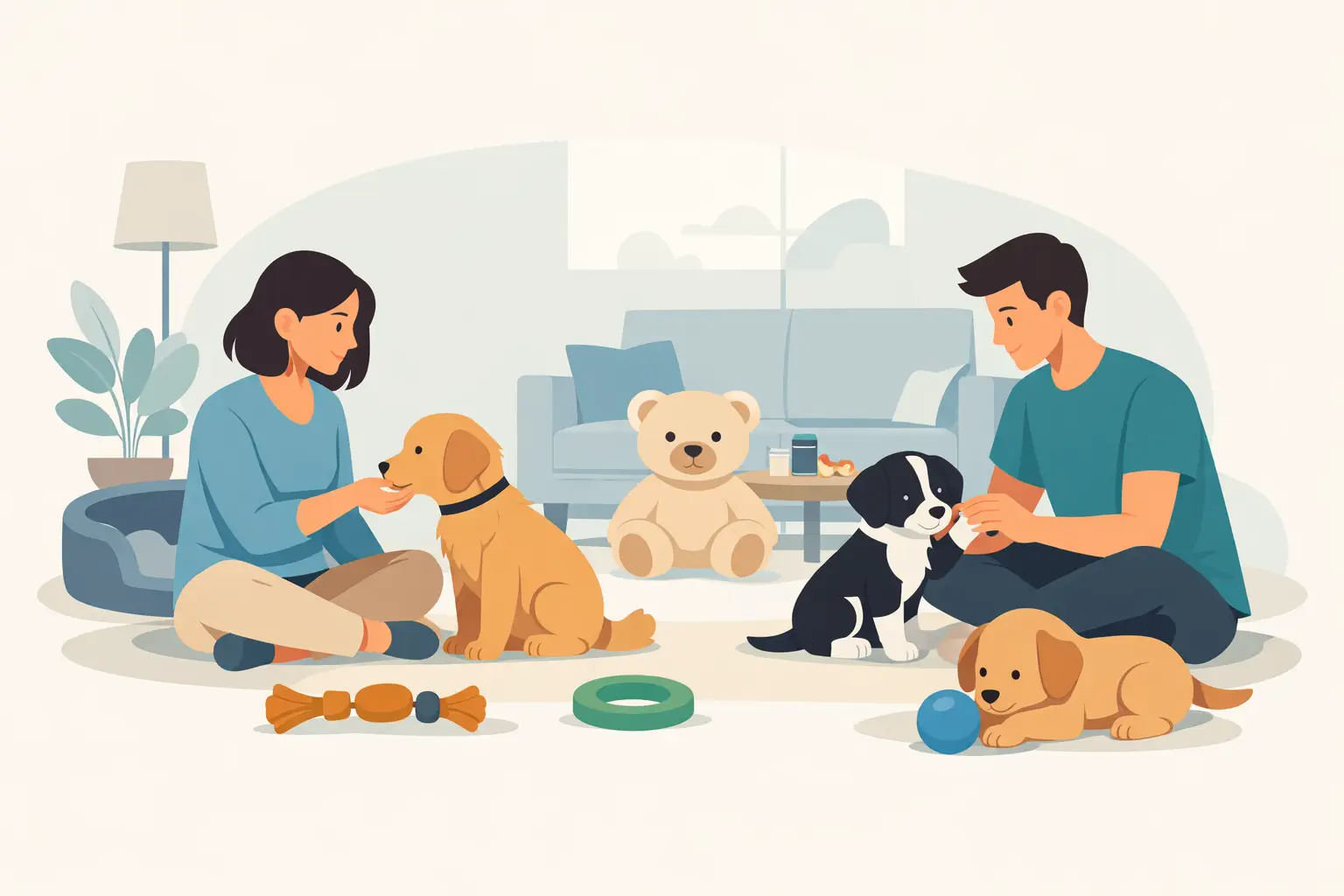
The first week home can feel deceptively quiet. Your puppy may be too young for busy sidewalks, dog parks, or public outings, but their learning has already begun. This puppy socialization guide indoors gives you a practical way to build confidence, good manners, and trust before your puppy is ready to take on the outside world.
Socialization is not about making your puppy greet every person, chase every sound, or play with every dog. It is about teaching them that ordinary life is safe, manageable, and worth looking to you for guidance. A trained dog is a happy dog, and the foundation starts in your living room.
What Indoor Puppy Socialization Really Means
Puppies have a limited early developmental window when new experiences can make a strong impression. The goal is to create many positive, controlled exposures without overwhelming them. Indoors, you can control the volume, distance, pace, and duration of each experience. That control is valuable, especially for families in Los Angeles where a puppy may eventually encounter elevators, traffic, visitors, delivery workers, apartment hallways, and active parks.
Good socialization teaches a puppy to recover quickly from something new. A blender turns on, a child drops a toy, a visitor enters the home, or a suitcase rolls across the floor. Your puppy notices it, stays composed or regains composure, and checks in with you. That is more useful than a puppy who has simply met a long list of people and dogs.
Avoid the common mistake of forcing interaction. If your puppy backs away from a vacuum, do not pull them closer to “prove” it is harmless. Give them distance, let them observe, and pair calm curiosity with praise or a small food reward. Confidence grows when a puppy has room to make a good choice.
Set Up a Calm Learning Space
Before introducing new sights and sounds, establish one reliable area where your puppy can settle. This may be a crate, pen, bed, or gated section of a room. It should be a place where children do not crowd them, guests do not reach in uninvited, and they can rest without interruption.
Use this space to teach a simple pattern: calm behavior brings good things. When your puppy lies down, chews an appropriate toy, or watches household activity without barking, quietly reward them. You are showing them that they do not need to react to every movement in the home.
A consistent schedule also helps. Puppies learn faster when meals, potty trips, play, training, and naps have a predictable rhythm. An overtired puppy is more likely to bite, bark, panic, or lose focus. Rest is not separate from training. It is part of training.
Build Your Puppy Socialization Guide Indoors Around Real Life
The best indoor socialization plan uses the things your puppy will live with every day. Start gently and keep sessions short. Three to five minutes of successful exposure is far better than 20 minutes that ends with a frightened or overstimulated puppy.
Introduce household sounds at a distance
Household noises are often the first challenge. Start with sounds at a low level or from another room, then reward your puppy for relaxed behavior. You can gradually make the experience more realistic as they show confidence.
Useful sounds include the vacuum, coffee grinder, hair dryer, dishwasher, television, washing machine, doorbell, knocking, and recorded city noises. Do not turn sound exposure into a test of endurance. If your puppy freezes, tries to flee, barks repeatedly, or will not take food, the exercise is too difficult. Lower the volume, increase the distance, or end the session and try again later.
Teach comfortable handling
Veterinary visits, grooming, nail trims, and daily care are easier when handling is introduced early and correctly. Begin when your puppy is relaxed, perhaps after a potty break or a brief play session. Touch one area for a second, reward, and stop.
Practice touching paws, looking briefly at ears, lifting lips, brushing the coat, holding the collar, and gently supporting the body. Keep your movements calm and purposeful. If your puppy pulls away, do not restrain them harder. Make the next repetition easier. The objective is cooperation, not compliance through pressure.
Invite people in with a plan
Visitors can provide excellent socialization, but only when the puppy is not treated as entertainment. Ask guests to enter quietly and ignore the puppy for the first minute or two. Let the puppy choose whether to approach.
If the puppy comes forward with a loose body and curious expression, a guest can calmly toss a treat nearby. Avoid having people lean over the puppy, reach over their head, or insist on petting. Children should be supervised closely and taught to pet briefly on the chest or side, then give the puppy space.
This approach creates a dog who is polite around guests instead of frantic for attention or worried about strangers. It also protects the puppy from learning that every knock at the door requires a full-speed greeting.
Practice equipment before you need it
A collar, harness, leash, crate, car restraint, and grooming tools should not appear only when something unpleasant is about to happen. Let your puppy see and sniff the item, then reward calm investigation. Put on the harness for a few seconds indoors, reward, and remove it. Clip on a lightweight leash and allow your puppy to drag it only under active supervision.
Short indoor leash sessions are especially useful for busy owners. Practice walking a few steps with your puppy beside you, reward attention, then release them. You are building the habit of responding to you before there are distractions outside.
Pair Socialization With Basic Obedience
Socialization works better when your puppy has simple ways to earn guidance. Their name, come, sit, place, and leave it are not party tricks. They are functional commands that help your puppy make safer decisions.
When the doorbell rings, ask for a sit or guide your puppy to their place. When a visitor arrives, reward four paws on the floor. When a loud sound happens, call your puppy to you and reward their response. These small moments teach your puppy that uncertainty has a solution: listen to the person who is responsible for them.
Use positive reinforcement, but be clear about what earns it. Reward the behavior you want at the moment it happens. If your puppy is jumping and receives attention only after they land on the floor, they may still learn that jumping starts the interaction. Instead, wait for calm behavior first, then provide praise, treats, play, or access to what they want.
Watch Your Puppy, Not the Calendar
Age matters, but your puppy’s body language matters more. A confident puppy may be ready to progress faster than a sensitive one. A cautious puppy may need several easy repetitions before they can handle a more active visitor or louder sound.
Look for soft eyes, a loose body, normal breathing, willingness to take treats, and the ability to return to play or rest after exposure. Warning signs include tucked tail, stiff posture, pinned ears, lip licking, yawning when not tired, hiding, growling, or refusing food. Growling is communication, not bad behavior to punish. It tells you your puppy needs more space and a better plan.
Some puppies also become overexcited rather than visibly fearful. Constant barking, nipping, frantic running, and inability to settle can mean the environment is too stimulating. Reduce activity, provide a nap, and make the next session simpler.
Common Indoor Socialization Mistakes
Owners often mean well but move too fast. Avoid these four mistakes:
- Letting every visitor handle the puppy, even when the puppy is hesitant.
- Playing loud sounds close to the puppy to force them to get used to them.
- Confusing overstimulation with confidence because the puppy looks energetic.
- Skipping structure and hoping exposure alone will produce a well-behaved adult dog.
Your puppy does not need a bigger social calendar. They need repeated experiences that end with calm behavior and a sense of safety. Quality beats quantity.
When Professional Guidance Helps
Early support can prevent small issues from becoming difficult habits. If your puppy is showing intense fear, guarding food or toys, hard biting, repeated barking at household triggers, or difficulty settling, do not wait for them to outgrow it. Puppies do change quickly, but unwanted behavior can become more established with practice.
A professional trainer can help you adjust the environment, timing, rewards, and structure to fit your puppy’s temperament and your household routine. This is particularly helpful for first-time owners, families with young children, and busy professionals who need a reliable plan rather than trial and error.
Every calm greeting, quiet recovery, and successful check-in is a deposit in your puppy’s future behavior. Keep the sessions short, make success easy, and let your puppy learn that home is the place where listening, settling, and feeling safe all go together.
