
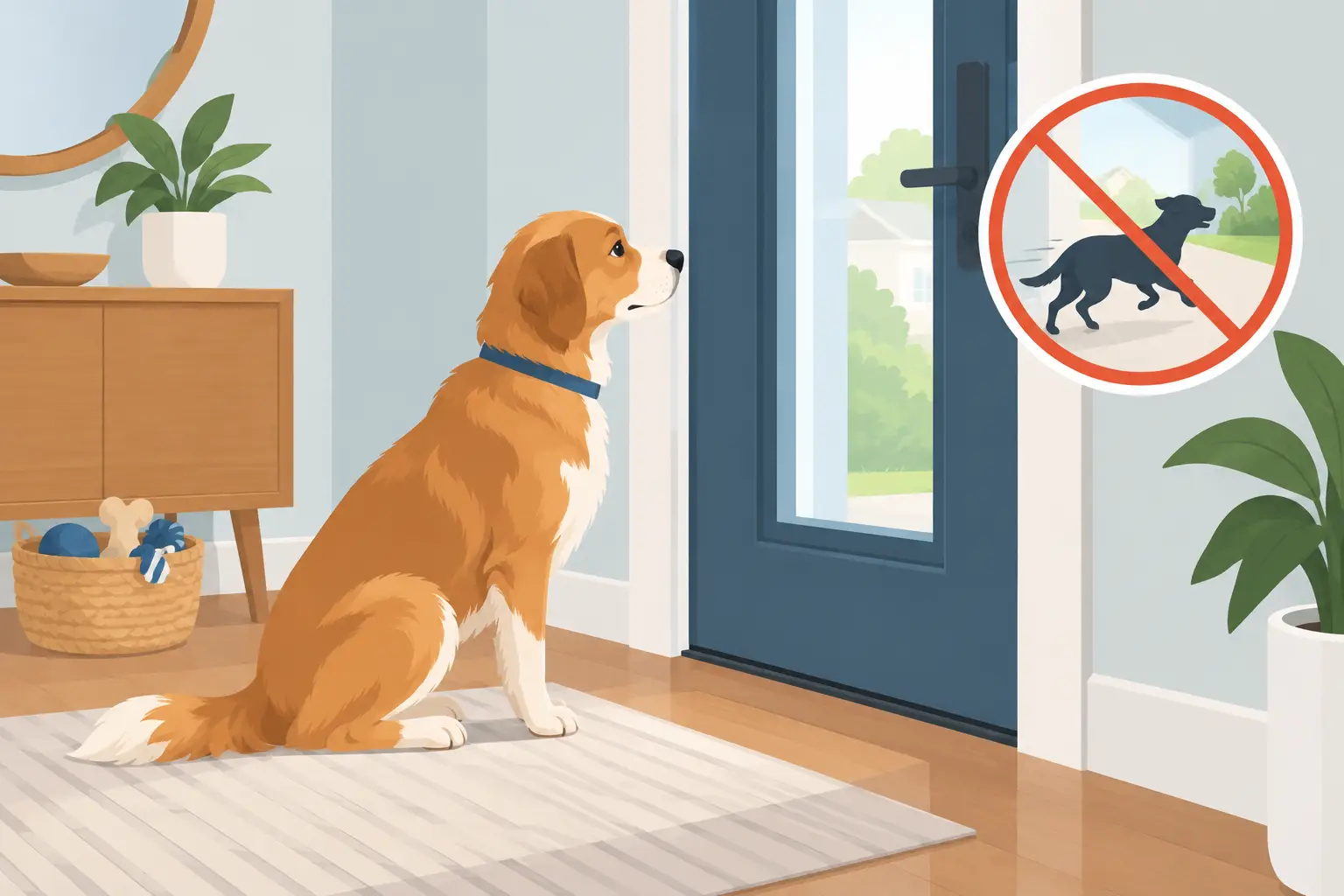
A dog rushing through an open front door can turn an ordinary moment into a serious safety emergency. Cars, unfamiliar dogs, delivery workers, and busy Los Angeles streets leave little room for error. To prevent door dashing in dogs, you need more than a shouted “stay” as the door opens. You need a clear routine your dog understands, repeated until calm behavior becomes the default.
Door dashing is not usually a sign that your dog is being defiant. The outside world is exciting, the door predicts access to it, and a fast exit has probably worked before. With consistent training, smart management, and rewards that matter to your dog, you can teach a safer response.
Why Dogs Dash Through Doors
Most dogs dash because the doorway has become highly valuable. It may lead to a walk, a visitor, a squirrel, another dog, or simply the freedom to investigate. For an energetic puppy or a recently adopted rescue, the front door can feel like the most exciting place in the house.
The behavior is also reinforced easily. If your dog lunges forward and reaches the sidewalk, even once, the reward is immediate. From the dog’s perspective, charging the door worked. Repeating the behavior makes it faster and more automatic.
Some dogs become especially reactive when the doorbell rings or someone knocks. In that case, door dashing may be connected to excitement, alarm barking, territorial behavior, or anxiety. The training plan still starts with the same foundation: teach your dog what to do instead of rushing the opening.
Start With Management, Not a Test
Training takes repetition. Until your dog has reliable skills, prevent opportunities to rehearse the unwanted behavior. Every successful dash makes the next one more likely.
Use a leash before opening the front door when visitors, deliveries, or walks are involved. A baby gate, exercise pen, or closed interior door can create a second layer of protection between your dog and the entryway. This is especially helpful in homes with children, where someone may open the door without realizing the dog is nearby.
Management is not a substitute for training, but it protects your dog while training takes hold. Think of it as a seat belt: you still drive carefully, but you do not skip the safety measure.
Avoid opening the door to “see if your dog will listen.” That creates a high-stakes test before the skill is ready. Build the behavior in small, winnable steps indoors first.
Teach a Reliable Place Command
A strong place command gives your dog a specific job when the door opens. Rather than asking for vague calmness, you teach your dog to go to a bed, mat, or raised platform and remain there until released.
Choose a location that is several feet away from the door. Your dog should be able to see activity at the entrance without being close enough to bolt through it. Begin when the house is quiet. Guide your dog onto the designated spot, say “place,” and reward immediately. Release your dog after a second or two with a consistent release word, such as “free.”
Gradually increase the duration. Reward your dog for staying on the spot, then take one step away, return, and reward again. Once your dog understands the command, add small distractions: walk toward the door, touch the doorknob, or pick up your keys. If your dog gets up, calmly guide them back and make the next repetition easier.
The goal is not to trap your dog in place. The goal is to create a familiar, rewarding pattern: activity at the door means go to your spot and wait.
Add the Door in Small Stages
When your dog can hold place while you move around, begin working with the actual door. Keep your dog on leash during early sessions for safety, but avoid using the leash to drag or correct them. It is there to prevent a mistake while your dog learns.
Start by reaching for the handle, then reward your dog for staying in place. Next, turn the handle. Then open the door one inch, close it, and reward. Build slowly until you can open the door fully while your dog remains on the mat.
If your dog breaks position, the door simply closes. There is no need for yelling, scolding, or physical punishment. The lesson is clear and consistent: calm behavior keeps the door open; rushing makes access go away. Then reset and try an easier version.
Practice the Threshold Wait
A place command is excellent for visitors and delivery activity. For walks, teach a separate threshold routine. Your dog can stand or sit at the door, but they do not cross until you give permission.
Put your dog on leash and approach the door together. Ask for a sit or wait. Open the door only a crack. If your dog moves forward, close it gently. When your dog holds position, open it again and reward. Continue until you can open the door fully without your dog forging ahead.
Then give your release cue and walk out together. For many dogs, being allowed to continue toward the walk is a powerful reward, so you may not need a treat every time. Still, food rewards can speed up early training, especially for puppies and dogs learning a new routine.
Be consistent about the release word. If your dog is sometimes allowed to rush out when you are in a hurry, the rule becomes unclear. A trained dog is a happy dog because clear expectations reduce frustration for everyone.
Make Real-Life Distractions Part of Training
Dogs do not automatically understand that “place” means the same thing when the doorbell rings, a child comes home, or a package arrives. Once your dog is successful with calm practice, gradually add the situations that normally trigger the dash.
Ask a family member to knock lightly while you send your dog to place. Reward calm behavior. Later, have someone ring the bell, step inside, or stand on the porch while you practice. Keep the sessions short enough that your dog can succeed.
For highly excitable dogs, start with a helper who understands the plan. Your helper should ignore the dog until you give the all-clear. A visitor who immediately reaches down, talks excitedly, or lets the dog crowd the doorway can accidentally undo your work.
It also helps to rehearse departures. Pick up your keys, put on shoes, and open the door without leaving. These small repetitions teach your dog that door activity does not always mean an exciting outing is about to happen.
Common Mistakes That Slow Progress
The biggest mistake is waiting until the dog is already overexcited. Training is most effective when you begin below your dog’s threshold, before barking, spinning, or lunging takes over.
Another common issue is repeating commands. Saying “stay, stay, stay” teaches a dog that the first cue is optional. Give the cue once, help your dog succeed, and reward the correct response. If the situation is too difficult, reduce the distraction instead of raising your voice.
Finally, do not rely on punishment to solve a door-dashing problem. Harsh corrections may stop movement in the moment, but they can create fear around the doorway, visitors, or your approach. Dogs learn more reliably when they understand exactly which behavior earns access and rewards.
When Professional Training Can Help
Some cases need more than basic practice. Professional guidance is especially valuable if your dog has escaped before, rushes toward traffic, reacts aggressively to visitors, guards the entryway, or cannot stay focused even with distance and rewards.
A qualified trainer can identify whether the behavior is driven primarily by excitement, anxiety, territorial behavior, or a lack of impulse control. That matters because the right plan depends on the dog in front of you. Smart Dogs uses motivation-based training and practical obedience systems designed for real homes, real schedules, and real distractions.
Door safety improves through repetition, not one perfect session. Practice a few minutes at a time, protect the behavior with smart management, and reward the calm choices you want to see. Soon, the sound of the door opening can become your dog’s cue to settle, wait, and look to you for direction.
