
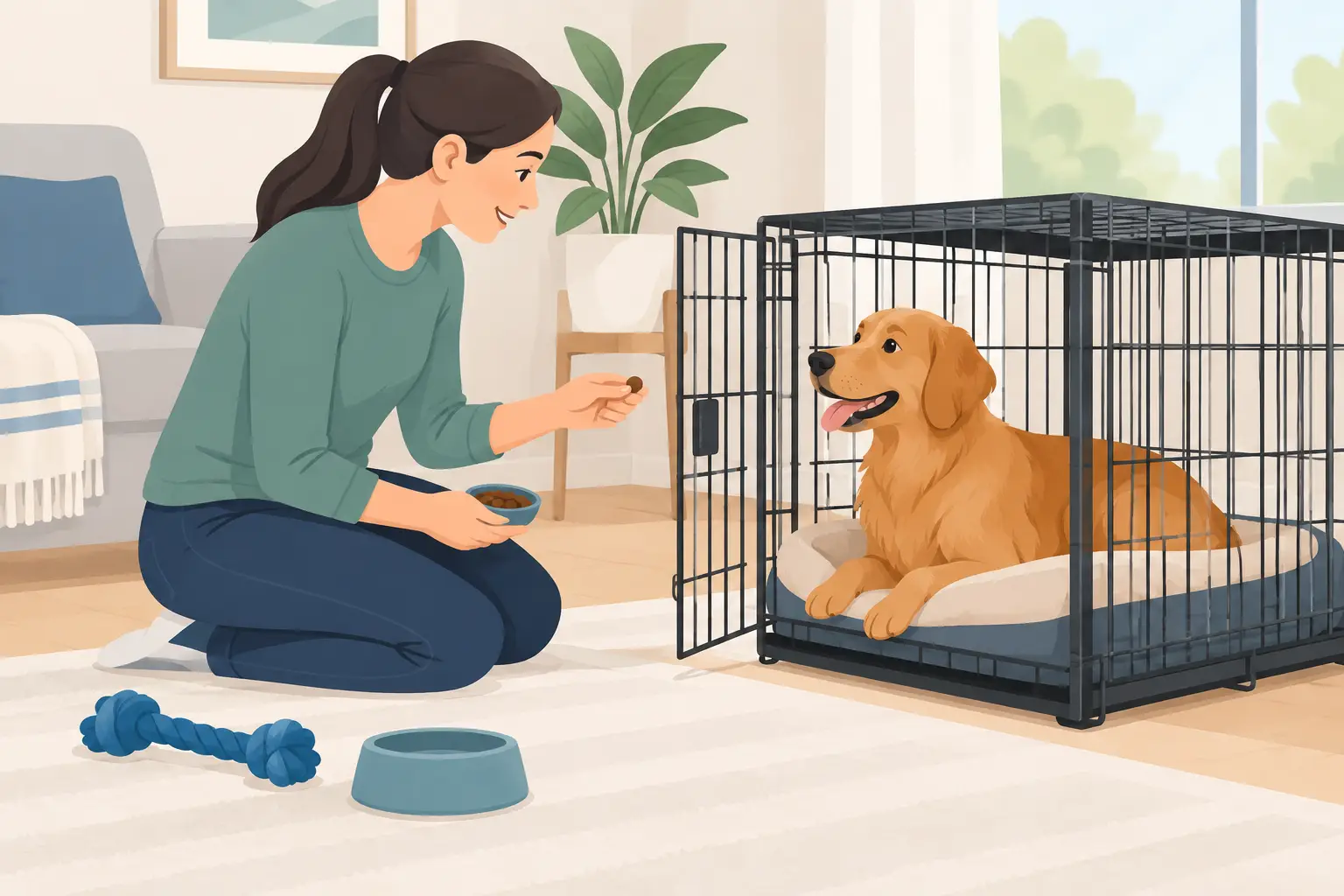
A crate should feel like your dog’s private bedroom, not a place where problems disappear. When you introduce crate training safely, you build a useful skill that supports housebreaking, prevents unsafe chewing, makes travel easier, and gives your dog a calm place to rest. Rush the process or use the crate for punishment, however, and even a well-meaning setup can create stress, barking, and resistance.
At Smart Dogs, we see the difference structure makes for puppies, rescue dogs, and busy households. A trained dog is a happy dog, and crate training works best when it is part of a consistent routine built around your dog’s needs.
Start With the Right Crate Setup
Choose a crate that gives your dog enough room to stand up, turn around, and lie down comfortably. It should not be so large that a young puppy can sleep at one end and use the other end as a bathroom. For growing puppies, a wire crate with a divider is often practical because you can increase the space as your puppy grows.
Place the crate in an area where your family spends time, especially during the first stages of training. A puppy isolated in a back room may feel cut off from the people and activity that help them feel secure. At night, many puppies settle more easily when the crate is near your bed. You can move it gradually once your dog is sleeping comfortably through the night.
Keep the interior simple. A safe mat or crate pad may help some dogs relax, but do not add bedding if your puppy shreds fabric, swallows material, or repeatedly soils it. Remove collars, harnesses, dangling tags, and anything that could catch on crate bars when your dog is unsupervised. Fresh water is appropriate for longer periods, but a healthy adult dog does not need a full bowl inside for every short nap.
How to Introduce Crate Training Safely Step by Step
The first goal is simple: your dog chooses to enter the crate because good things happen there. Leave the door open and place a few small treats just inside the entrance. Let your dog investigate without pressure. If they take a treat and step back out, that is progress. Do not close the door yet.
Over several short sessions, toss treats farther into the crate. Feed a meal near the crate, then just inside it, then toward the back as your dog becomes more comfortable. You can also offer a safe, food-stuffed toy or chew that your dog only receives in the crate. This creates a clear association: crate time predicts calm, rewarding activities.
Once your dog willingly enters, say a simple cue such as “crate” or “bed” as they step inside. Close the door for just a few seconds while your dog enjoys a treat, then open it before they become worried. Gradually build from seconds to a minute, then several minutes. Stay nearby at first. Your dog needs to learn that a closed crate door is normal and temporary.
Progress only when your dog is relaxed. A dog who settles, chews calmly, or lies down is ready for a little more time. A dog who is frantically scratching, biting the bars, panting when the room is cool, or throwing themselves against the door is telling you the step was too difficult. Open the crate when there is a brief quiet moment, then make the next session easier.
This is where owners often lose ground. Letting a dog out during active barking can teach them that barking opens doors. But leaving a genuinely distressed dog to panic is not training either. The practical answer is to avoid pushing your dog to that point. Build duration in small, successful increments.
Use the Crate for Rest, Not Discipline
Never send your dog to the crate because you are angry. Statements like “Go to your crate” after an accident, chewed shoe, or rough play can quickly make the crate feel like a penalty box. Your dog may still go inside eventually, but they will not see it as a safe resting space.
Instead, use the crate proactively. Put your dog in with a rewarding chew while you take a work call, prepare dinner, shower, or need to supervise children less intensely for a short period. This teaches an everyday skill: sometimes the family is busy, and relaxing independently is part of home life.
A crate is also not a substitute for exercise, training, or attention. Dogs need physical activity, mental stimulation, bathroom breaks, and time with their people. The crate helps you manage your dog safely between those needs. It does not replace them.
Create a Schedule That Supports Housebreaking
Crate training and housebreaking work well together because most dogs prefer not to eliminate where they sleep. But that natural instinct only helps if you provide timely outdoor breaks. Asking a puppy to stay crated longer than they can physically hold it sets them up to fail.
Take puppies outside after waking up, after meals, after play, after exciting activity, and before going into the crate. When they eliminate outdoors, reward them right away with calm praise and a treat. The message should be clear: bathroom outside earns good things.
Young puppies usually need frequent daytime breaks. Age, size, diet, activity level, and individual development all matter, so avoid relying on a rigid rule alone. A puppy who has an accident in the crate may need more frequent potty trips, a smaller crate area, or closer supervision. Medical issues can also affect bladder control, especially if accidents suddenly increase.
Adult dogs generally can stay crated longer than puppies, but long workdays still require planning. If you are regularly away for extended hours, arrange a midday break through a family member, neighbor, or professional dog walker. Dogs do best when their routine is predictable, not when they are expected to wait uncomfortably.
Build Alone Time Gradually
Many dogs are comfortable in a crate while their owner is nearby but protest the moment the front door closes. Practice departures in tiny steps. Start by crating your dog with a chew while you walk across the room, then briefly step out of sight, then return. Keep arrivals and departures low-key.
Avoid a dramatic goodbye routine. Repeated hugs, apologies, and anxious talk can signal that being left is a major event. Calmly provide your dog with their crate activity, leave, and return without fanfare. Your steady behavior helps your dog understand that short periods alone are normal.
For a newly adopted rescue dog, progress may take longer. Some dogs have unknown histories with confinement, and others need time to adjust to a new home before they can settle alone. Go at the dog’s pace while maintaining a clear routine. Patience is not permissiveness. It is giving your dog the right-sized challenge so they can succeed.
Know When Crate Training Needs Extra Help
Some initial whining is common, particularly with puppies learning a new bedtime routine. First make sure your dog has recently gone potty, has had appropriate exercise, and is not too hot, cold, hungry, or uncomfortable. If those needs are met, give your dog a brief opportunity to settle rather than immediately opening the door.
Persistent panic is different from normal protest. Seek professional guidance if your dog drools heavily, injures themselves trying to escape, eliminates due to distress, refuses food in the crate, or becomes increasingly upset despite gradual training. These signs can point to separation-related distress or a stronger negative association that needs a more individualized plan.
Wire crates are not right for every dog, either. A determined escape artist can damage teeth or nails on metal bars. Some dogs settle better in a sturdy plastic kennel, while others need a different management plan altogether. Safety comes before convenience. The best crate is the one your dog can use calmly and safely.
Make the Crate Part of a Calm Home Routine
The strongest crate-training results come from repetition, not marathon sessions. Practice brief crate rests when you are home, not only when you leave. Send your dog into the crate for a chew during family dinner, after a walk, or while you fold laundry. This prevents the crate from meaning, “My people are leaving.”
As your dog becomes reliable in the home, you may use the crate less often. That is a good outcome. Crate training is not about keeping a dog confined forever. It is about teaching them to rest calmly, handle transitions, and stay safe when close supervision is not possible.
Take the process one successful session at a time. When your dog walks into their crate willingly, settles with confidence, and comes back out happy to be with you, you have built more than a management tool. You have given them a dependable place to feel secure.
