
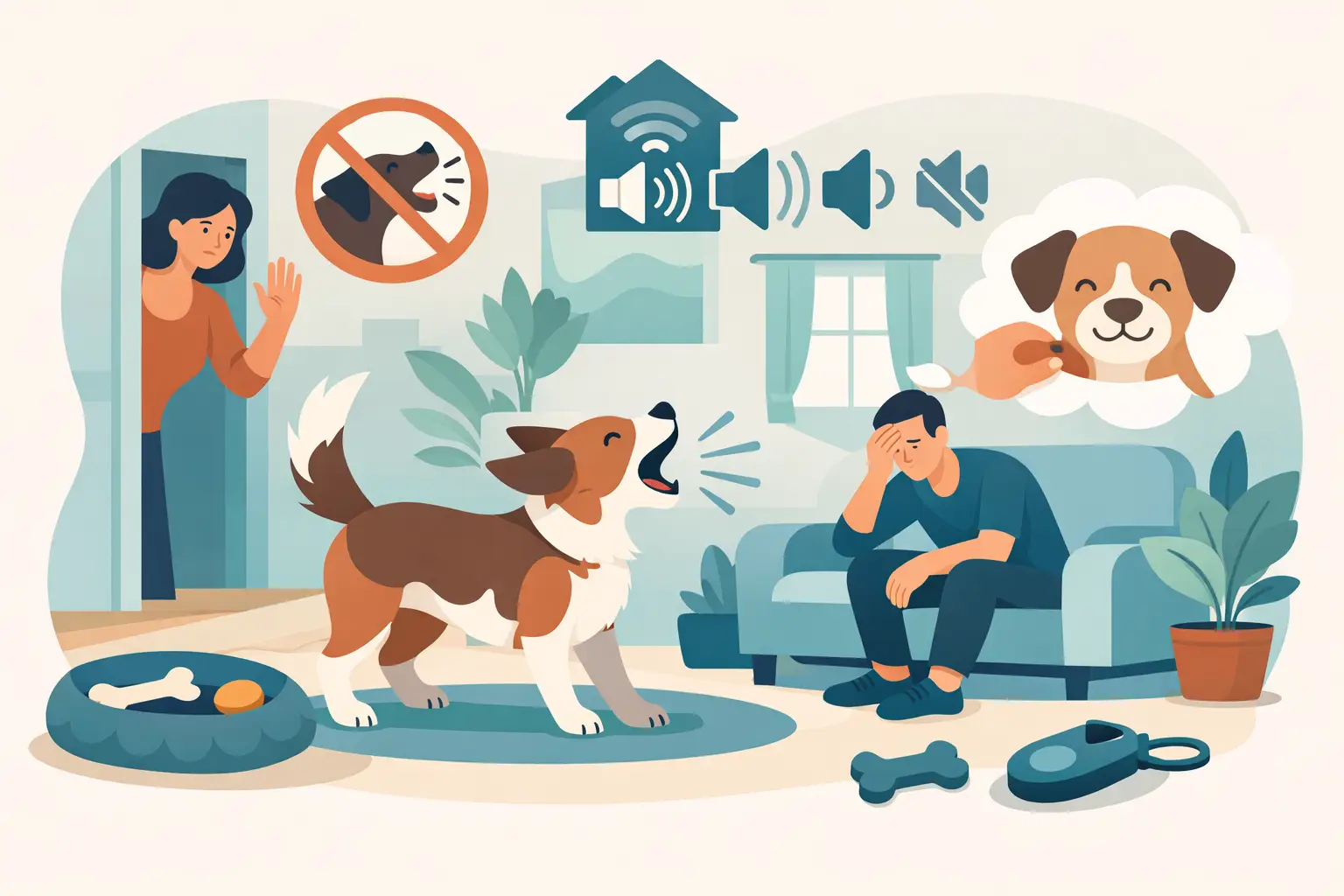
A dog barking at the front window while you are on a work call is not a small inconvenience. It can disrupt sleep, strain relationships with neighbors, and make home feel stressful for everyone. Learning how to stop dog barking indoors starts with one key idea: barking is communication. Your dog is reacting to something, and lasting improvement comes from changing the reaction, not simply trying to silence the noise.
A trained dog is a happy dog, and a calm home is one of the most practical results of consistent training. Whether you have a new puppy, a vocal rescue dog, or a dog who has started barking at every hallway sound in your apartment, the right system can produce real change.
Why Dogs Bark Inside the House
Indoor barking usually falls into a few predictable categories. Dogs may bark because they hear people passing outside, see movement through a window, want attention, feel anxious when left alone, or become overstimulated by visitors. Some dogs bark when they are bored and looking for an outlet. Others have learned that barking makes something happen, such as a person talking to them, opening a door, or giving them a treat.
The trigger matters. A dog that barks at delivery drivers needs a different plan than a dog that barks when left in another room. Watch for patterns for several days. Note what happens immediately before the barking begins, where your dog is standing, and what usually happens next. This gives you a useful starting point instead of guessing.
If barking appears suddenly, especially in an older dog, schedule a veterinary checkup. Pain, hearing changes, cognitive decline, and other medical issues can affect behavior. Training works best when you know your dog is physically comfortable.
How to Stop Dog Barking Indoors: Start With Management
Before asking your dog to make better choices, make the unwanted behavior harder to practice. Every repeated barking episode strengthens the habit. Management is not a shortcut or a substitute for training. It creates enough calm for training to work.
If your dog patrols windows and barks at people, block the view with curtains, privacy film, or furniture placement. Use white noise, a fan, or calm background audio to soften sounds from busy streets, neighbors, and apartment hallways. In Los Angeles neighborhoods, where delivery traffic and outdoor activity can be constant, reducing visual and sound triggers can make an immediate difference.
For dogs that bark when guests arrive, set up a designated resting area before the doorbell rings. A crate, place bed, or gated room can work well when it has been introduced positively. Give your dog a safe chew or food-stuffed toy before visitors enter. The goal is not to isolate your dog as punishment. It is to prevent chaos while building a better arrival routine.
Management also includes meeting daily needs. A dog with no physical exercise, mental work, or structured interaction is more likely to create its own entertainment. Age, breed, health, and personality all matter, but most dogs benefit from a predictable mix of walks, sniffing opportunities, play, obedience practice, and quiet rest.
Teach a Calm Replacement Behavior
Telling a dog “quiet” repeatedly rarely teaches the skill you want. Instead, teach a clear replacement behavior your dog can perform when a trigger appears. For many households, that behavior is going to a place bed, looking at the owner, or lying down calmly away from the window or door.
Build a Reliable Place Command
Start when the house is quiet. Lead your dog onto a bed or mat, mark the moment all four paws are on it with praise or a reward marker, and give a treat. Repeat until your dog readily moves to the bed. Then add a simple command such as “place.”
Gradually reward your dog for staying there longer. At first, one or two seconds of calm is enough. Build duration before adding distractions. Once your dog understands the command, practice when someone walks past a window, a family member opens a door, or a low-level sound plays in the background.
If your dog gets up to bark, do not turn it into a scolding match. Calmly guide the dog back to place, reduce the difficulty, and reward success. Training progresses faster when your dog can win repeatedly.
Reward the Pause, Not the Noise
You may not be able to prevent every bark, particularly early in training. When barking happens, wait for even a brief pause. The instant your dog is quiet, mark it with calm praise and reward. Over time, your dog learns that silence gets attention and barking does not.
Avoid shouting across the room. From your dog’s perspective, loud yelling can sound like you are joining the alarm. It may increase arousal instead of reducing it. A steady voice and a practiced command are far more effective.
Practice With Triggers at a Low Level
Dogs improve when they can notice a trigger without going over threshold. For example, if your dog barks explosively at the doorbell, begin with a very quiet doorbell recording or have a helper tap lightly on the door. Ask for place, reward calm behavior, and stop before your dog becomes overwhelmed.
Increase the challenge slowly. Louder sounds, a real knock, and then a visitor can be added over several training sessions. Moving too fast is a common reason owners feel stuck. If your dog cannot respond to a known command, the situation is currently too difficult.
Do Not Accidentally Reward Barking
Many indoor barking habits continue because they work. If your dog barks for attention and you respond with eye contact, conversation, petting, or play, the barking has earned a payoff. Even saying “stop it” can feel rewarding to a dog that wants interaction.
For attention barking, provide attention before your dog demands it. Schedule short training sessions, walks, play, and calm affection throughout the day. When barking begins solely to get your attention, avoid engaging with it. The moment your dog becomes quiet, ask for a simple behavior such as sit or down, then reward that calm choice.
Consistency matters across the household. If one person ignores attention barking but another gives in after two minutes, the dog learns to bark longer. Decide on the household response in advance so everyone follows the same plan.
Address Separation-Related Barking Differently
Barking that starts when you leave the house is not always a basic obedience issue. Some dogs are uncomfortable being alone and may bark, howl, pace, scratch doors, drool, or have accidents. Punishing this behavior after the fact will not resolve the underlying distress.
Begin by using a camera or recording device to see what happens after you leave. Does your dog settle after a minute, or remain distressed for an extended period? Dogs with mild frustration may improve through gradual alone-time practice, enrichment, and a predictable departure routine. Dogs showing significant anxiety often need a more individualized behavior plan and veterinary support.
For gradual practice, leave for only a few seconds and return before your dog starts barking. Repeat until your dog stays relaxed, then extend the time in small increments. This process requires patience. Leaving a worried dog alone for hours while hoping they will get used to it can make the problem worse.
Know When Professional Training Helps
A professional trainer can help you identify whether barking is driven by excitement, territorial behavior, fear, poor impulse control, or separation distress. That distinction saves time and prevents well-intended mistakes. It is especially useful when barking includes lunging at windows, growling at visitors, conflict between household dogs, or complaints from neighbors.
At Smart Dogs, training focuses on functional commands that work in real homes, not just during a lesson. A dog should be able to settle while a package arrives, respond when a child moves through the room, and relax while you take a meeting. Positive reinforcement and motivation-based training create clarity, while consistent structure gives dogs the confidence to make better decisions.
Make Calm Part of the Daily Routine
Indoor quiet is not created in one long training session. It is built through many small repetitions: asking for a down before dinner, rewarding a dog for choosing the bed instead of the window, practicing place before guests arrive, and giving your dog appropriate exercise before a busy evening at home.
Expect progress rather than perfection. Some dogs will improve quickly once window access and attention rewards are managed. Others need more time, particularly dogs with a long history of barking or anxiety. Stay calm, keep your expectations clear, and reward the behavior you want to live with. Each quiet choice is a step toward a home where your dog can relax and you can, too.
