
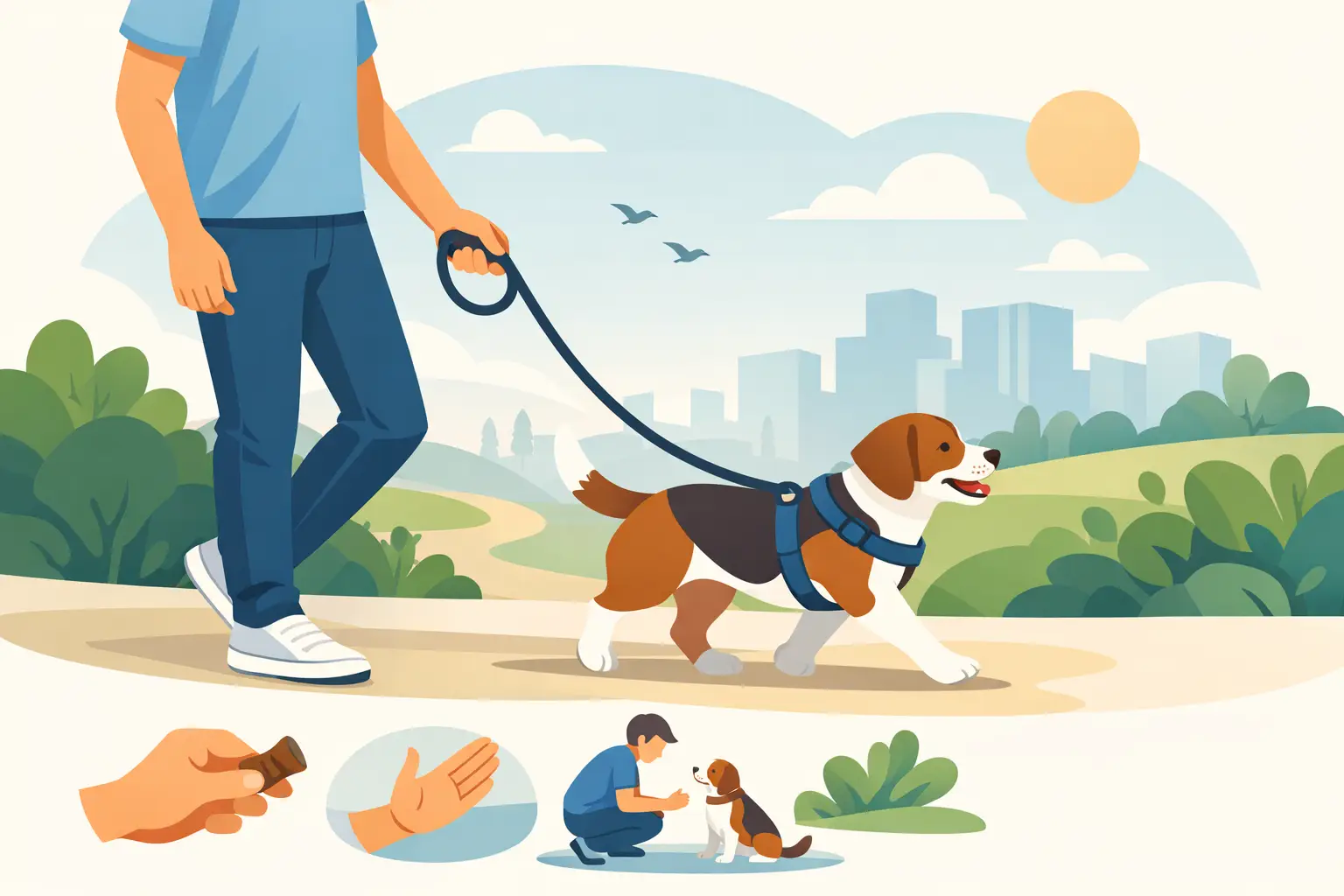
A walk can unravel before you reach the end of the block. Your dog spots a squirrel, another dog, or an interesting smell, the leash goes tight, and suddenly you are being pulled down the sidewalk. To reduce leash pulling, you need more than a stronger grip or a longer walk. You need to teach your dog that staying connected to you is what makes the walk continue.
Leash pulling is common, especially for energetic puppies, adolescent dogs, and newly adopted rescues. It does not mean your dog is stubborn or trying to be in charge. More often, it means pulling has worked. Each time a tight leash gets your dog closer to a smell, a person, or the park, that behavior is rewarded. The solution is a clear, consistent system that makes a loose leash more valuable than forging ahead.
Why Dogs Pull in the First Place
Dogs naturally move faster than people, and the outside world is full of rewards. A dog that pulls toward a tree may be trying to sniff. A dog that lunges toward another dog may be excited, frustrated, nervous, or simply under-practiced around distractions. The behavior can look similar, but the reason behind it affects how you train.
A young dog with plenty of energy may need structured exercise and more practice settling before asking for a polished heel. A fearful dog needs distance from triggers and confidence-building work, not repeated corrections near something that worries them. If your dog is barking, lunging, or panicking at people or dogs, address that behavior directly rather than treating it as ordinary pulling.
The goal is not to make every walk a formal obedience drill. The goal is to teach your dog a useful life skill: when the leash is loose, good things happen.
Start With Equipment That Supports Training
No collar, harness, or leash can train a dog by itself, but the right equipment gives you better control while you build the behavior you want. Use a standard fixed-length leash, usually 4 to 6 feet. Retractable leashes often teach dogs that steady pressure means they can keep moving forward, which works against loose-leash training.
For many dogs, a well-fitted front-clip harness can reduce forward momentum and provide more control without putting pressure on the neck. Some dogs do well on a flat collar when pulling is mild and the dog responds reliably. Fit matters. A loose harness can twist, rub, or allow a dog to slip free, while a collar that is too tight is uncomfortable.
Avoid relying on harsh equipment to solve a training problem. Tools may interrupt behavior in the moment, but they do not automatically teach your dog where to walk, how to check in, or what earns access to the environment. Proven results come from clear communication, timing, and repetition.
Teach Your Dog That a Loose Leash Moves Forward
Begin in a low-distraction location, such as your living room, driveway, or a quiet section of your neighborhood. Bring small, high-value treats your dog can eat quickly. Start walking with the leash loose enough to form a visible J shape between your hand and your dog.
The moment your dog is beside you or walking without tightening the leash, calmly mark the choice with a word such as “yes” and deliver a treat near your leg. Then keep moving. You are teaching your dog that staying close and checking in is rewarding.
When your dog reaches the end of the leash, stop. Do not jerk the leash, lecture, or keep walking while bracing against the pull. Simply become still. The instant your dog shifts back, turns toward you, or puts slack in the leash, mark it and move forward again. Forward movement is the reward.
At first, this can feel slow. That is normal. If your dog pulls every few steps, you are not failing. You are showing your dog a new rule that may be very different from what they have practiced for months or years.
Use Turns When Stopping Is Not Enough
Some dogs quickly learn to pause but immediately surge forward again. For these dogs, add calm direction changes. When the leash tightens, say your dog’s name once or use a cue such as “this way,” then turn and walk in the opposite direction. Reward your dog for following with a loose leash.
Keep the turn smooth and matter-of-fact. The purpose is not to drag your dog away from something they want. It is to make attention to you part of the walk. Frequent, cheerful turns also teach your dog that the best place to be is within your range, not at the end of the leash.
Reward the Real World, Not Just Treats
Food is useful because it lets you reward many correct choices quickly. But the biggest rewards on a walk are often the things your dog already wants: sniffing a fire hydrant, greeting a familiar neighbor, exploring a patch of grass, or moving toward the park.
Use those rewards strategically. Ask for a loose leash before releasing your dog to sniff. If your dog pulls toward a tree, stop a few feet away. When the leash softens, say “go sniff” and walk with them to the tree. Your dog learns that patience and leash slack get them access to what they want.
This approach is especially effective for dogs that are less interested in treats outdoors. It also makes training practical for busy owners. You do not need to carry a treat pouch forever, but you do need to stay consistent about what behavior moves the walk forward.
Build Focus Before You Need It
A dog cannot offer calm leash skills around a major distraction if they have never practiced attention around minor ones. Start by rewarding your dog for looking at you voluntarily during easy walks. You can also say their name once, reward eye contact, and continue walking.
Practice simple cues at home and in quiet outdoor spaces. A reliable “come,” “sit,” and “let’s go” create communication you can use when the environment gets busy. Keep sessions short enough that your dog succeeds. Five focused minutes can be more productive than a 30-minute walk filled with repeated pulling.
As your dog improves, gradually add challenges. Practice near a busier intersection, at a distance from dogs, or near a park entrance. If pulling returns, the environment may be too difficult too soon. Increase distance, use better rewards, and return to a level where your dog can think and respond.
Common Mistakes That Keep Pulling Going
The most common problem is inconsistency. If your dog pulls to the grass ten times and succeeds once, that one success can be enough to keep the behavior alive. Everyone who walks the dog should follow the same basic rule: tight leash means the walk pauses, loose leash means the walk continues.
Another mistake is expecting a tired dog to become trained. Exercise helps, but a dog can be physically tired and still pull because pulling is a learned habit. Likewise, constant commands can lose meaning. Rather than repeating “heel” while your dog is already pulling, create the situation where the dog can make a better choice, then reward it.
Finally, do not make every outdoor moment restrictive. Dogs need opportunities to sniff, investigate, and move naturally. A balanced walk includes structured loose-leash time and permission to explore. The difference is that you decide when the leash is relaxed enough for that freedom.
When to Get Professional Help to Reduce Leash Pulling
Basic pulling often improves quickly when owners practice consistently. More serious cases need a more individualized plan. Seek professional guidance if your dog is large enough to pull you off balance, if pulling includes barking or lunging, or if walks have become stressful enough that you avoid taking your dog out.
A qualified trainer can identify whether the behavior is driven by excitement, fear, frustration, reactivity, or gaps in obedience. They can also coach your timing and leash handling in real situations, which is often where owners see the fastest improvement. At Smart Dogs, training is built around practical commands and real-world behavior, because a trained dog is a happy dog and a calmer walk benefits everyone at the other end of the leash.
Your dog does not need perfect manners tomorrow. Start with one block, one quiet path, and a few rewarded moments of leash slack. Those small choices add up, and soon the walk becomes something you enjoy together instead of something you have to manage.
