
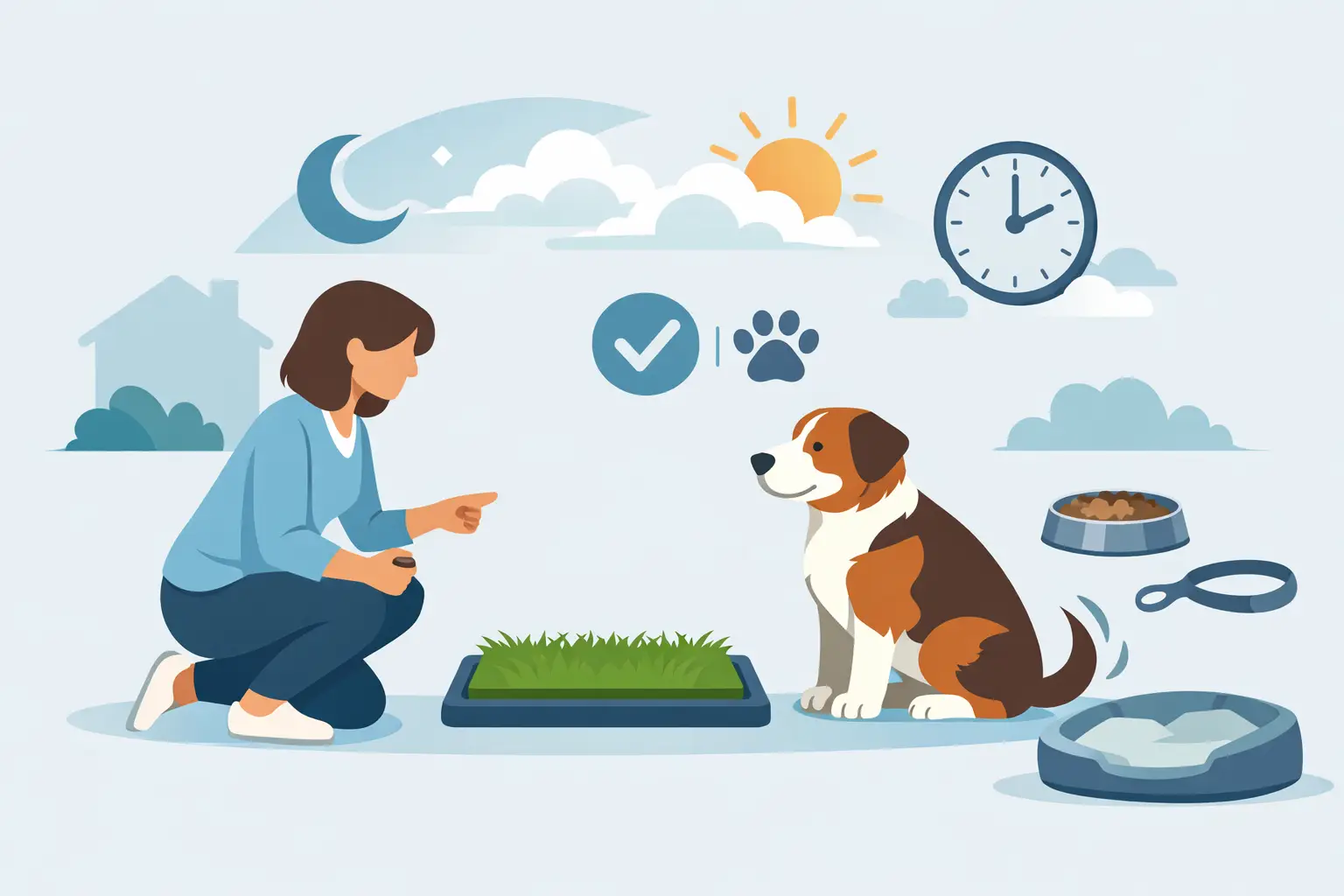
A house-trained dog who suddenly starts having accidents can make even a patient owner feel defeated. The good news is that learning how to potty train an older dog is usually less about starting from scratch and more about creating a clear routine your dog can trust. With consistent management, timely rewards, and the right medical checks, older dogs can learn reliable bathroom habits.
At Smart Dogs, we see this often with rescues, newly adopted adult dogs, and dogs whose routines changed after a move, new baby, work schedule shift, or health issue. Age is not the obstacle. Mixed signals, too much freedom, and missed opportunities to reward the right choice are usually the real problems.
Start by Ruling Out a Medical Cause
Before treating accidents as a training issue, schedule a veterinary exam if the behavior is new, frequent, or accompanied by changes in thirst, appetite, mobility, or stool quality. Urinary tract infections, gastrointestinal upset, diabetes, kidney disease, cognitive changes, pain, and incontinence can all affect a dog’s ability to make it outside in time.
This matters especially for senior dogs. A dog with arthritis may understand the house rule perfectly but hesitate to use stairs or walk across a slick floor to reach the door. A dog with a bladder issue is not being stubborn. Training works best when your dog is physically comfortable and medically supported.
If your veterinarian finds no medical cause, treat the situation as a training reset. Do not assume your dog “should know better.” Clear, repeated practice is what turns a house rule into a dependable habit.
How to Potty Train an Older Dog With a Reset Routine
For the first two to three weeks, manage your older dog as carefully as you would a young puppy. This is not punishment or a loss of privilege. It is a short, proven period of structure that prevents mistakes while building success.
Take your dog to the same designated potty area on leash. A leash keeps the trip focused. Many dogs would rather sniff, watch squirrels, or wait for a walk than relieve themselves, especially in busy Los Angeles neighborhoods with plenty of distractions.
Offer potty breaks at predictable times: first thing in the morning, after meals, after naps, after play, before and after confinement, and right before bed. Most adult dogs need at least four outdoor opportunities each day during retraining. Some will need more, particularly seniors, small dogs, dogs eating multiple meals, or dogs with a history of accidents.
Stand quietly in the potty area for several minutes. Avoid turning every bathroom break into a long walk before your dog goes. If your dog eliminates, calmly mark the moment with praise such as “good potty,” then immediately deliver a high-value treat. The reward needs to happen outside, within a second or two of finishing, so your dog connects it to the correct behavior.
After a successful potty break, your dog can earn supervised freedom, a walk, or playtime. That sequence is powerful: bathroom first, good things next.
Supervision Prevents Rehearsal of Accidents
Every indoor accident gives a dog another chance to practice the wrong location. During the reset period, do not allow your dog to wander from room to room unsupervised. Keep them with you on a lightweight leash, behind a baby gate, in a small dog-safe area, or in an appropriately sized crate if they are already comfortable being crated.
A crate should never be used to force a dog to hold it for unreasonable lengths of time. It is simply a management tool that can help a dog rest safely when direct supervision is impossible. If your older dog dislikes a crate or has mobility limitations, use a gated kitchen, exercise pen, or easy-clean room instead.
Watch for subtle signs that your dog needs to go out. These can include sniffing, circling, walking away from the family, suddenly stopping play, pacing, whining, or heading toward a previous accident area. When you see the signs, move calmly and quickly outside. There is no need to lecture or rush in a way that makes your dog anxious.
Build a Clear Way to Ask to Go Outside
Many adult dogs have accidents because they do not know how to communicate their need in a new home. Teach a simple signal that fits your household. Your dog might sit by the door, touch a hanging bell, or nudge a button. The specific signal matters less than everyone responding to it every time.
Begin by using the signal immediately before every scheduled trip outside. For example, ring the bell yourself, say “outside,” and open the door. Soon, encourage your dog to touch the bell before you open it. Reward the signal with access to the potty area, not a treat at the door. The real payoff is getting outside, followed by praise and a treat after your dog eliminates.
Families need one shared plan. If one person ignores the bell, another takes the dog for a walk instead of a bathroom break, and someone else rewards indoor excitement at the door, the message becomes unclear. Consistency is what makes training efficient.
Respond to Accidents Without Creating Fear
If you catch your dog in the act, interrupt gently with a neutral sound and take them outside. If they finish outdoors, praise and reward them. If you find an accident later, simply clean it. Your dog will not connect a delayed correction with something they did minutes or hours earlier.
Scolding, rubbing a dog’s nose in the mess, or using harsh corrections can make house-training worse. Dogs often learn to hide when they need to eliminate, which means accidents move behind furniture or into another room instead of stopping. A trained dog is a happy dog, and training should create clarity rather than fear.
Use an enzymatic pet cleaner on every accident area. Standard household cleaners may remove the visible mess while leaving odor traces your dog can still detect. If a dog repeatedly returns to one spot, restrict access to it temporarily and clean it thoroughly.
Adjust the Plan for Rescue Dogs and Senior Dogs
A rescue dog may have lived in a shelter, kennel, foster home, or several different homes. They may never have learned the same indoor rules you expect. Some were trained to use concrete, pads, gravel, or a balcony area rather than grass. In those cases, the surface itself can matter.
If your dog refuses grass but has accidents on hard flooring, start with a potty area that is closer to the surface they understand, then gradually transition to your preferred spot. This is not giving in. It is using your dog’s existing experience to make the new lesson easier.
Senior dogs may need practical accommodations. Add a ramp if stairs slow them down, place non-slip rugs along the route, increase the number of outings, and keep the path to the door clear. For dogs that cannot safely hold it overnight, speak with your veterinarian and trainer about a realistic schedule rather than expecting an impossible standard.
Know When to Give More Freedom
Do not expand access to the whole house after one good day. Wait until your dog has had at least one to two weeks of consistent success in their current space. Then add one room at a time while maintaining scheduled breaks and supervision.
If an accident happens after you increase freedom, reduce the space again without frustration. That is useful information, not failure. Your dog simply needs more practice before handling the next level of responsibility.
Progress is rarely perfectly linear. Weather, visitors, travel, stress, and changes in household schedules can cause a temporary setback. Return to the routine quickly, reward outdoor success generously, and avoid turning a short regression into a long-term habit.
Get Help When the Pattern Is Not Improving
If you have followed a consistent plan for several weeks and accidents continue, professional support can identify what is being missed. The issue may be separation distress, scent marking, fear of the outdoor environment, a schedule that does not match your dog’s needs, or inconsistent handling between family members.
Marking deserves special attention. Small amounts of urine on vertical surfaces, especially near doors, furniture, or new items, can be territorial or stress-related rather than a simple house-training gap. A different behavior plan may be needed, along with careful cleaning and management.
Reliable house-training gives your dog more freedom and gives your household more peace. Keep the routine simple, reward the right choice at the right moment, and make the path outside easy to follow. With patient, consistent practice, an older dog can learn that the home is for resting and family time, while the outdoors is the right place to go.
