
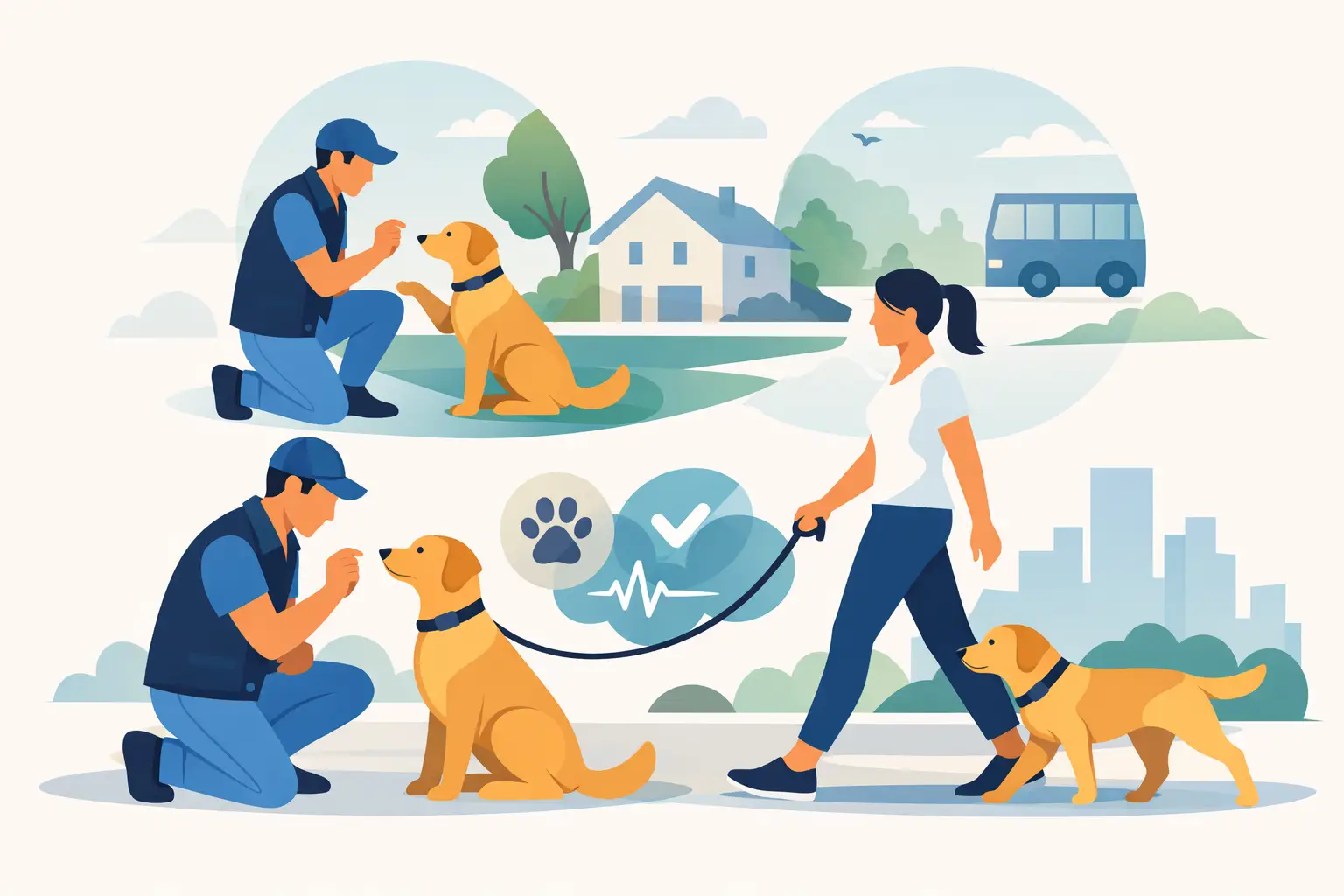
A dog that listens in the living room but ignores you at the front door is not fully trained yet. That gap is where experienced dog trainers make the biggest difference. Real training is not about getting a dog to perform for treats in a quiet room. It is about building reliable behavior when the delivery person arrives, when another dog passes on the sidewalk, or when your family needs a calm evening at home.
For Los Angeles dog owners, those situations are part of daily life. Apartments, busy streets, visitors, parks, children, and packed schedules all test a dog’s ability to focus. The right training gives your dog clear expectations and gives you a practical system you can use long after the lesson ends.
What Dog Trainers Should Help You Achieve
Good training creates a dog that fits comfortably into your lifestyle. That looks different for every household, but the outcomes should be useful and measurable. A new puppy may need a dependable housebreaking routine, confidence around new environments, and a foundation for leash walking. A recently adopted rescue may need structure, boundaries, and time to learn that its new home is safe.
For an adult dog, the priority may be stopping jumping, pulling, barking, counter surfing, or door rushing. Some families need a dog that can settle calmly around kids. Busy professionals may need reliable commands that make walks, guests, and daily routines easier to manage.
The goal is not a robotic dog. A trained dog can still be playful, social, and full of personality. Training simply gives that dog the ability to respond when it matters. A trained dog is a happy dog because it understands how to succeed in the world around it.
Obedience is more than a sit command
Basic commands are valuable, but they are only the starting point. Sit, down, come, stay, heel, place, and leave it need to work beyond the training session. A dog should be able to respond with distractions present and when the reward is not immediately visible.
That reliability comes from repetition, proper timing, gradual exposure to more challenging settings, and clear follow-through from the owner. If a trainer can get results only by holding a treat directly in front of your dog’s nose, you have a trick, not a dependable behavior.
How Professional Dog Trainers Build Results
Effective training is structured. The trainer first identifies what is driving the behavior, then teaches the dog a clearer alternative. A dog that jumps on guests, for example, may be excited, seeking attention, or lacking impulse control. The solution is not simply telling the dog “no” after the jump. It is teaching a calm greeting routine and making that routine consistent for everyone in the home.
Positive reinforcement and motivation-based methods are powerful because they show dogs what earns success. Food, praise, play, access to something the dog wants, and calm attention can all be useful rewards. The right motivator depends on the individual dog and the situation.
At the same time, training needs boundaries. Dogs learn best when cues are clear, rules are consistent, and unwanted behavior does not keep paying off. If barking at the window brings attention, or pulling on the leash gets the dog to the park faster, the dog is learning a lesson even if no one intended to teach it.
Professional training changes those patterns. It teaches the dog what to do instead: settle on a place bed, walk on a loose leash, wait at the door, or check in with the owner when something exciting happens. The method should be fair, understandable, and matched to the dog’s temperament, age, history, and environment.
Why the owner is part of the program
The best trainer cannot create lasting change without owner participation. Dogs do not separate “training time” from regular life the way people do. Every walk, meal, greeting, and trip to the door reinforces something.
That does not mean you need hours of practice each day. It means practicing the right habits in the moments you already have. Ask for a brief sit before clipping on the leash. Reinforce calm behavior before setting down the food bowl. Use a consistent release word. Have your dog go to place while you answer the door.
Small repetitions add up quickly. A good program gives owners simple instructions that fit real schedules, not a complicated routine that falls apart after one busy week.
Choosing the Right Training Format
Private lessons, board-and-train programs, puppy classes, and online training can all be effective. The best choice depends on your goals, your dog’s needs, and how much hands-on support your household needs.
Private lessons are ideal when a behavior is happening in your home or neighborhood. The trainer can see the environment, coach each family member, and address the problem where it actually occurs. This is especially helpful for issues such as housebreaking setbacks, jumping on visitors, leash reactivity, and resource guarding concerns.
A boarding-based training program can give dogs a concentrated start with daily structure and guided practice. It is often a strong option for owners who want to establish core obedience quickly or whose schedules make frequent lessons difficult. The trade-off is that the transition home matters greatly. Owners need follow-up instruction so the dog understands the same rules with the people and routines that matter most.
Online training can work well for motivated owners who need flexibility, especially for puppy foundations, basic obedience, and routine-building. It is less appropriate when a dog has serious behavior concerns that require in-person assessment, close handling, or a controlled training setup.
No format is magic. The right program should explain what is included, what results are realistic, how the owner will be coached, and what practice is expected at home.
Questions to Ask Before Hiring a Trainer
Experience matters, but it should come with a clear process. Ask how the trainer evaluates behavior, how they tailor training to different dogs, and what they expect from you between sessions. A qualified professional should be able to explain the plan in plain language without promising an overnight personality change.
It is also reasonable to ask how the trainer handles fear, aggression, reactivity, and anxiety. These cases are not all the same. A dog barking at other dogs because it is overexcited needs a different plan than a dog barking because it feels threatened. For safety-related behavior, responsible trainers prioritize management, accurate assessment, and gradual progress rather than risky shortcuts.
Look for training that prepares your dog for your real life. If you live in a busy neighborhood, practice should eventually include sidewalks, sounds, people, and distractions. If your dog will be around children, the program should address calm boundaries and supervision. If reliable recall is a priority, it should be trained in stages before being tested in an open, distracting area.
At Smart Dogs, the focus is on practical commands and behavior that hold up in everyday life. That approach matters because dog owners do not need a polished performance for five minutes. They need calm walks, smoother mornings, safer greetings, and confidence that their dog will listen when it counts.
The First Weeks After Training Matter Most
Training is not finished when the lesson or program ends. The first few weeks at home are where new habits become part of the dog’s normal routine. Keep expectations simple and consistent. Use the same command words, reward good choices promptly, and avoid giving the dog freedom it has not learned to handle yet.
If your dog is learning not to rush the door, manage the doorway until the behavior is reliable. If your dog is working on housebreaking, keep a predictable schedule rather than assuming one successful week means accidents cannot happen. If your dog is practicing calm greetings, do not allow excited guests to undo the routine because they “love dogs.”
Progress is rarely a perfectly straight line. Dogs can struggle when they are tired, overstimulated, in a new place, or facing a bigger distraction than they have practiced around. That is normal. The answer is usually to make the exercise easier, rebuild success, and increase difficulty gradually.
The right trainer gives you more than commands. They give you a way to communicate clearly with your dog and handle the moments that once felt stressful. With consistency, patience, and a proven plan, the dog you have can become the dependable companion you wanted to bring home.
