
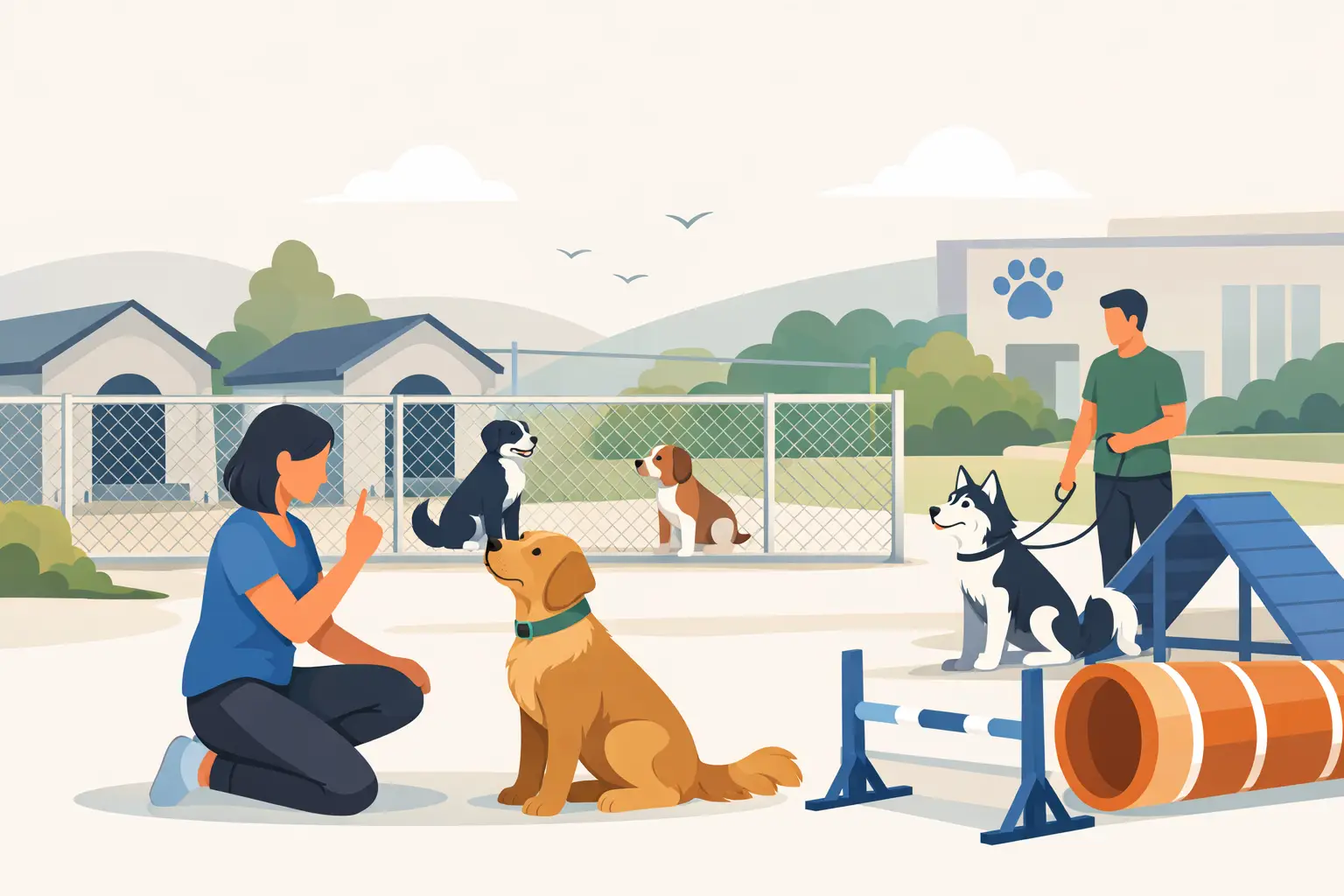
Your dog pulls toward every passing dog, ignores recall at the park, or turns a simple visitor arrival into chaos. You need progress, but your schedule is already full. This guide to boarding dog training explains when a board-and-train program makes sense, what good training should include, and how to make sure the lessons carry into your home.
Boarding training is not a shortcut that replaces your role as your dog’s owner. It is an intensive head start led by a professional trainer. The best programs create a clear foundation of obedience, structure, and calm behavior, then show you how to maintain it in the situations that matter most.
What Boarding Dog Training Actually Does
In a boarding dog training program, your dog stays with a trainer or at a professional training facility for a defined period. During that time, the trainer works with your dog every day on specific skills, behavior patterns, and routines. This consistency can be especially valuable for busy Los Angeles owners whose work, school, family, and commute schedules make daily training difficult to maintain.
A quality program is built around more than teaching a dog to sit on command. It addresses practical life skills: walking without pulling, coming when called, settling in the home, waiting at doors, responding around distractions, and listening the first time. For puppies, training may focus on housebreaking, crate comfort, socialization, and early manners. For adult dogs, the work may include reactivity, jumping, leash frustration, anxiety-related behaviors, or weak obedience.
The goal is not to produce a dog that performs perfectly only for a trainer. The goal is a dog that understands clear expectations and can function calmly with the people who matter most.
When a Board-and-Train Program Is a Good Fit
Boarding-based training can be a strong choice when your dog needs concentrated work and your household needs a reliable starting point. It often helps owners who have tried group classes or online videos but struggled to practice consistently enough to create lasting change.
It can also be useful after a major life change. A new rescue dog may arrive with unknown habits. A growing puppy may have outgrown the loose rules that seemed harmless a few months ago. A family may be preparing for a baby, a move, frequent visitors, or a return to busier work schedules. In these situations, professional structure can reduce stress quickly while giving everyone a workable plan.
That said, boarding training is not the answer to every problem. Dogs with severe separation distress, significant aggression, or medical issues may need a more specialized assessment and a customized behavior plan. Honest trainers will explain what is realistic, what requires ongoing work, and whether a different service is a better fit.
What Your Dog Should Learn During Boarding Training
Every program should be tailored to the dog, but the core commands should support real life rather than tricks for show. A functional obedience foundation usually includes sit, down, stay, place, heel, come, leave it, and a clear release command.
Just as important is the behavior between commands. Can your dog relax on a designated bed while you make dinner? Can they walk through a busy neighborhood without dragging you toward every smell, squirrel, or dog? Can they greet guests without jumping? Can they wait calmly at the front door instead of rushing into the street?
A good trainer also works in gradually more challenging environments. A dog may first learn a command in a quiet space, then practice it around people, other dogs, traffic, and new locations. This process is called proofing. Without it, many dogs appear trained in a low-distraction setting but lose focus the moment everyday life gets interesting.
How to Choose the Right Boarding Dog Training Program
The facility, trainer, methods, and follow-through all matter. Do not choose solely based on a fast promise or the lowest price. Ask direct questions about the program and expect direct answers.
First, find out who will train your dog and how much hands-on work your dog receives each day. Some programs are highly individualized, while others rotate dogs through larger groups. Group exposure can be useful when managed well, but your dog still needs focused instruction that matches their behavior and learning pace.
Ask what methods the trainer uses and how they motivate dogs. Effective training should be fair, clear, and suited to the individual dog. Positive reinforcement and motivation-based training build engagement and confidence, while structure and consistency teach dogs which choices are expected. The right balance depends on the dog, the behavior, and the environment.
You should also ask how the facility handles safety, exercise, rest, feeding, medications, and veterinary emergencies. Training is demanding mental work. Dogs need appropriate downtime, clean accommodations, and a routine that supports their well-being.
Finally, ask exactly what happens at go-home. A handoff without owner instruction is a warning sign. Your dog may understand the new commands, but you need to learn the language, timing, rewards, and boundaries that keep those commands reliable.
Your Role Starts Before Drop-Off
Set clear goals before your dog enters the program. “I want better behavior” is understandable, but it is too broad for a trainer to measure. Think about the moments that create stress at home.
Perhaps you want your dog to stop pulling on walks, settle when guests arrive, stay off the furniture, stop barking at the window, or come inside when called. Give the trainer examples of what happens, where it happens, and what you have already tried. Videos can be useful because behavior often looks different in a consultation than it does during a rushed weekday morning.
Be honest about your dog’s history. Share veterinary information, bite history, fear triggers, previous training, living arrangements, and household rules. A trainer cannot build the right plan with missing information, and the details help protect your dog, the training team, and the public.
The Go-Home Lesson Is Where Results Become Real
The most important part of boarding dog training may happen when your dog comes home. Your trainer should demonstrate the commands, coach every family member who handles the dog, and let you practice under guidance. It is normal if the process feels awkward at first. You are learning new habits too.
For the first few weeks, keep the routine simple and consistent. Use the same command words. Follow through calmly. Reward the behavior you want. Avoid repeating a command five times, then getting frustrated when your dog does not respond. Say it once, give your dog a moment to comply, and use the system your trainer has shown you.
Consistency among family members matters. If one person asks for a calm wait at the door while another allows rushing, the dog receives mixed information. Decide on the household rules before your dog returns and make sure everyone can apply them.
How to Keep Training Strong at Home
A trained dog is a happy dog, but training is maintained through daily life. You do not need hour-long drills. Short, purposeful practice sessions are more effective for most households. Ask for a sit before the food bowl goes down. Practice place while you answer emails. Work on heel during part of the evening walk. Call your dog to you in the yard, reward them, and release them back to play.
Expect some testing, especially during the first week home. Dogs are excellent at noticing changed environments and old patterns. A dog who was calm and responsive at training may try jumping on the couch or pulling toward another dog because they are back in familiar territory. That does not mean the program failed. It means your dog needs you to apply the same expectations consistently.
Keep practicing around distractions gradually. Start where your dog can succeed, then build toward harder settings. If your dog can hold a down-stay in the living room but not at a crowded outdoor patio, that is useful information. Reduce the difficulty, reinforce the skill, and work up in stages.
At Smart Dogs, the focus is on proven, practical obedience that helps dogs fit into real family routines. The strongest results come from a program that trains the dog and prepares the owner to lead with confidence.
Questions to Ask Before You Enroll
Before committing, make sure you understand the length of stay, the specific skills included, how behavior concerns are handled, and whether follow-up lessons are part of the program. Ask how progress is measured and what support is available after pickup. You should leave with a clear picture of what your dog will learn and what you will need to do next.
Be cautious of guarantees that promise every dog will be permanently “fixed” in a few days. Dogs are individuals, and behavior changes through repetition, management, and clear communication. A professional program can create major progress, but lasting reliability is a partnership.
The right boarding program should give you more than a better-behaved dog at pickup. It should give your household a calmer routine, clearer expectations, and the confidence to enjoy more of life together.
