
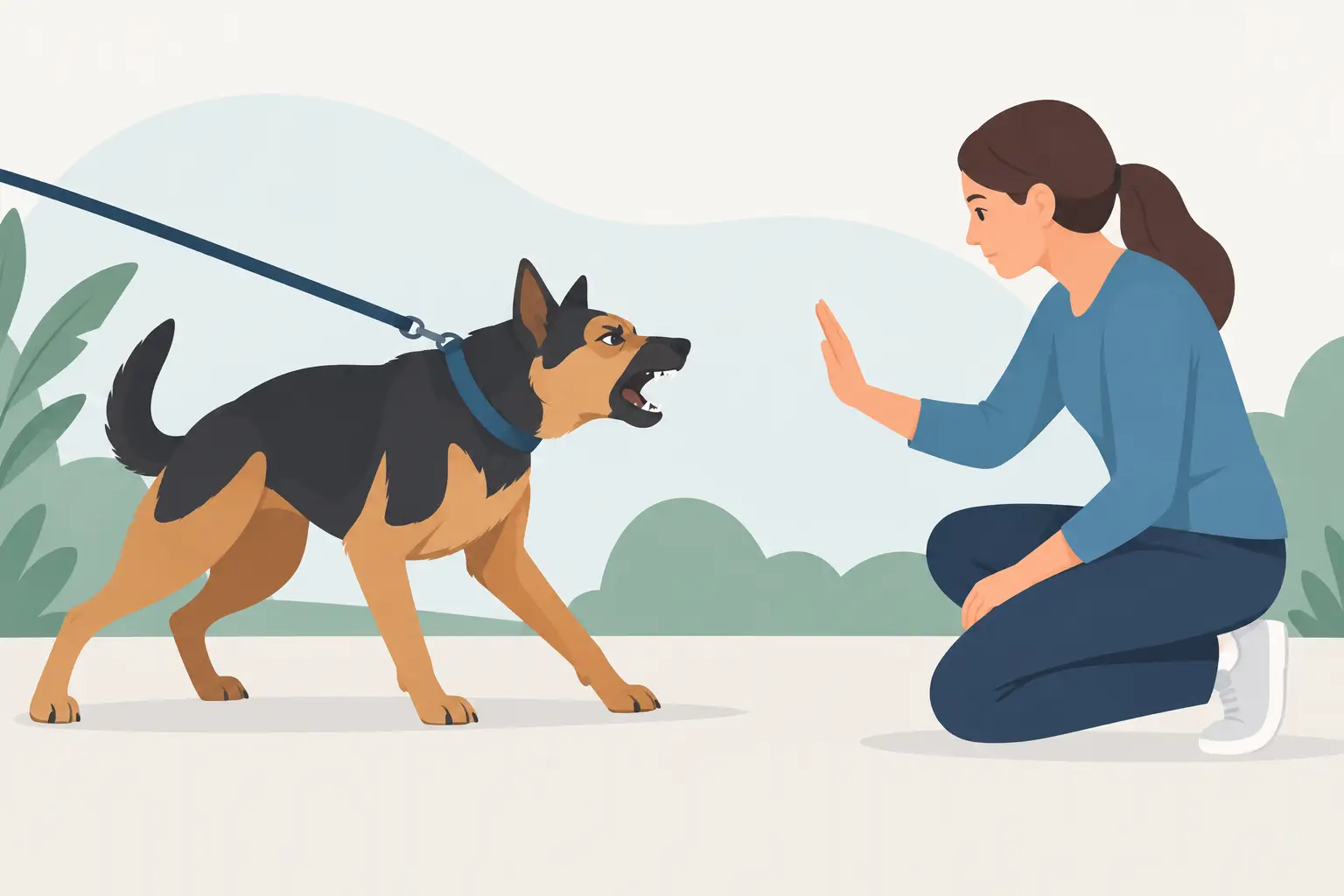
A dog that growls when someone reaches for its food, barks and lunges at another dog, or snaps when handled is communicating that it is not comfortable. Dog aggression is serious, but it is not a label that tells you everything about your dog or their future. With the right plan, many dogs can learn safer responses, and owners can regain control of daily life.
The first priority is safety. The second is understanding what triggers the behavior. From there, proven training, consistent handling, and realistic management can make a meaningful difference. A trained dog is a happy dog, and a safer dog is one that can participate more comfortably in the home and community.
What Dog Aggression Actually Looks Like
Aggression is behavior intended to create distance, stop an interaction, or protect something the dog values. It can include hard staring, freezing, growling, showing teeth, snapping, biting, lunging, or charging. Not every bark is aggression, and not every growl means a bite will follow. Still, these signals should never be ignored.
Many owners miss the earlier warnings because they happen quickly or seem subtle. A dog may turn its head away, stiffen its body, lick its lips, tuck its tail, or become very still before escalating. Those signs matter. When people continue to pressure a dog after it has signaled discomfort, the dog may learn that stronger behavior is the only thing that works.
A growl is not bad behavior to punish. It is useful information. If you punish the warning without addressing the reason behind it, you may end up with a dog that skips the growl and goes straight to a snap or bite. The goal is not to silence communication. The goal is to change the dog’s emotional response and teach a reliable alternative behavior.
Why Dogs Become Aggressive
There is no single cause of dog aggression. The same behavior can come from fear, frustration, pain, guarding, lack of social experience, or a learned history of getting results through threatening behavior. Good training begins by identifying the pattern instead of assuming the dog is being stubborn or trying to be dominant.
Fear-based aggression is common, especially in rescue dogs or dogs that have had limited positive exposure to people, children, dogs, grooming, traffic, or unfamiliar environments. A fearful dog may lunge because it wants the scary thing to go away. If the person or dog moves away, the behavior can become stronger over time because it worked.
Resource guarding happens when a dog feels pressure around food, toys, beds, a favorite person, or a resting space. Some dogs guard only high-value items. Others become tense around nearly anything they believe could be taken. This is manageable, but it requires a careful approach. Reaching in, grabbing items, or repeatedly testing the dog can increase risk.
Pain and medical discomfort can also change behavior. A dog with dental pain, arthritis, an ear infection, reduced vision, or another health issue may react defensively when touched or approached. A sudden behavior change, especially in an adult or senior dog, deserves a veterinary evaluation before assuming it is strictly a training problem.
Frustration can look aggressive too. A dog that explodes at the end of a leash may be fearful, overly excited, unable to greet, or reacting to repeated restraint. The difference matters because the training plan must match the reason for the behavior. One-size-fits-all advice often fails because it treats every lunge or bark as the same issue.
Start With Safety and Management
Before training can improve behavior, prevent situations where your dog can rehearse aggression. Every time a dog successfully drives someone away with a lunge, snap, or bite, that response becomes more familiar. Management is not giving up. It is the practical foundation that gives training a chance to work.
Use physical distance from known triggers. Choose quieter walking routes, cross the street early, and avoid crowded dog areas if your dog is reactive. At home, use doors, gates, crates, and separate rooms to prevent surprise interactions. If visitors make your dog uncomfortable, set up a calm, secure space before the doorbell rings rather than trying to manage the dog in the middle of the excitement.
A properly introduced basket muzzle can be an excellent safety tool for some dogs. It should allow the dog to pant, drink water, and take treats. A muzzle is not punishment, and it is not permission to place a dog in situations they cannot handle. It adds a layer of protection while you work on behavior under professional guidance.
Avoid dog parks, forced greetings, and crowded patios if your dog has a history of reacting to dogs or people. Your dog does not need to greet everyone to have a full life. Calm walks, structured exercise, training games, and appropriate social exposure are often much more valuable than chaotic interactions.
Training Builds a Different Response
Effective behavior work teaches your dog what to do instead of reacting. That may mean looking at you when another dog appears, moving behind you when a stranger approaches, going to a place bed when guests arrive, or willingly trading a toy for something better. These skills create options when your dog feels stressed.
Start training far enough from the trigger that your dog can still think, eat, and respond to you. If your dog is barking, lunging, refusing food, or unable to take a simple cue, you are too close or the situation is too difficult. Increase distance, lower the pressure, and reward calm attention. Progress comes from many successful repetitions, not from pushing a dog past its limit.
Obedience is especially valuable because it gives owners practical control in real-life moments. Commands such as sit, down, come, heel, place, leave it, and wait are not party tricks when they are taught clearly and practiced around distractions. They help you guide your dog through the front door, on a neighborhood walk, around guests, and in unexpected situations.
Positive reinforcement and motivation-based training should be paired with clear boundaries and consistency. Reward the behavior you want, prevent the behavior you do not want, and make expectations easy for the dog to understand. Family members need to follow the same rules. If one person allows rough greetings, couch guarding, or pulling toward dogs while another person corrects it, the dog receives mixed information.
Common Mistakes That Make Behavior Worse
Trying to overpower an aggressive dog can create more fear, conflict, and risk. Physical confrontations, harsh corrections, yelling, alpha-roll techniques, and grabbing a dog by the collar during a reaction can lead to a redirected bite. They also do not teach the dog how to handle the next stressful situation differently.
Another mistake is waiting for the behavior to become severe. Owners sometimes hope a dog will outgrow growling, guarding, or leash reactivity. Puppies may improve with early, structured guidance, but rehearsal usually strengthens unwanted behavior. The earlier you address the pattern, the more choices you have.
It is also risky to rely on exposure alone. Taking a fearful dog closer and closer to what scares them is not socialization if the dog is overwhelmed. Productive exposure is controlled, gradual, and paired with positive outcomes. The dog should be able to stay under threshold, meaning they can remain responsive rather than escalating.
When to Get Professional Help for Dog Aggression
Professional support is recommended when a dog has bitten, broken skin, snapped near a person’s face, guarded food or objects, targeted children, fought with another household dog, or cannot be safely managed around normal daily triggers. These situations require more than internet tips and good intentions.
Look for a trainer who asks detailed questions about triggers, body language, routines, bite history, health, and the dog’s environment. A strong plan should include management, obedience, behavior modification, and coaching for the people who live with the dog. Training is not just about what happens in a lesson. It is about what your dog practices every day.
For Los Angeles owners, Smart Dogs provides structured training designed for practical home and public-life results. The right program depends on the dog, the severity of the behavior, the household setup, and the owner’s ability to practice consistently. Some dogs need private lessons and hands-on coaching, while others benefit from a more immersive training structure.
If there has been a serious bite or you believe a person or animal is in immediate danger, separate the dog safely and contact qualified local help. Do not attempt to test the dog, recreate the incident, or force an apology interaction. Safety comes first.
Dog aggression can feel isolating, especially when simple outings and visitors become stressful. But clear structure changes the picture. With a safe plan, consistent practice, and experienced guidance when needed, your dog can learn calmer habits and you can move through daily life with more confidence.
