
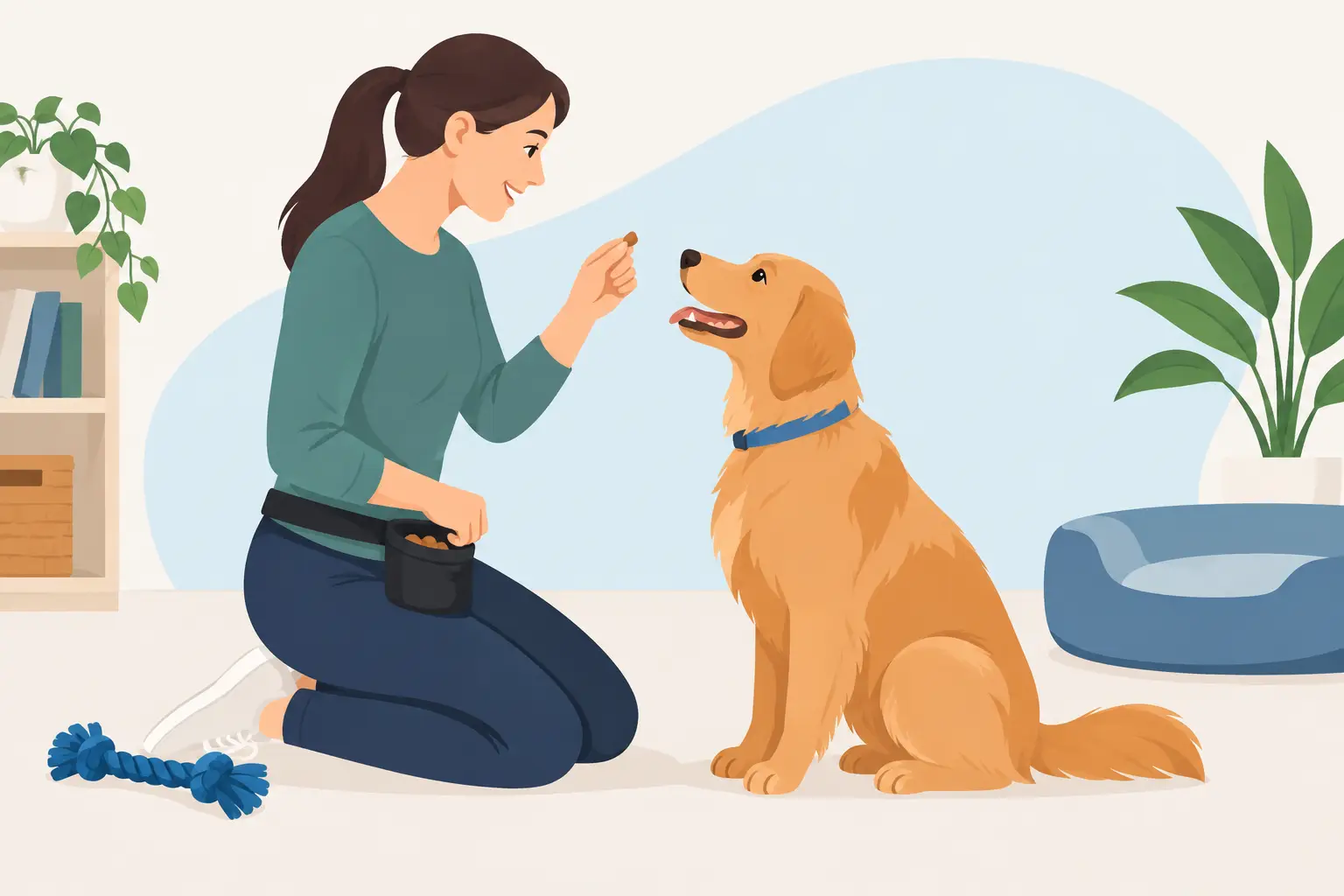
A treat may get your dog to sit once. A proven training system gets your dog to sit when the front door opens, when another dog passes on the sidewalk, and when your hands are full. This positive reinforcement dog training review looks past the slogan to answer the question owners actually care about: can reward-based training create calm, dependable behavior in real life?
For most dogs, the answer is yes, when positive reinforcement is applied with timing, structure, and clear expectations. Rewards are powerful, but they are not a substitute for training. Owners who expect treats alone to solve pulling, barking, jumping, housebreaking accidents, or anxiety-related behavior often get frustrated. The method works best when it teaches the dog exactly what behavior earns access to food, play, attention, freedom, and the things they want in daily life.
What Positive Reinforcement Dog Training Really Means
Positive reinforcement means adding something the dog values immediately after a desired behavior, making that behavior more likely to happen again. Food is the most familiar reward, but it is not the only one. Praise, a tennis ball, permission to sniff, being released to greet someone, or getting on the couch can all reinforce behavior when used at the right time.
The key word is immediate. If your puppy sits at the curb, but receives the treat after standing up and pulling forward, the lesson is unclear. If your dog comes when called and receives praise only after you have clipped on the leash, the reward may arrive too late to strengthen the recall. Good training marks the correct choice at the moment it happens, then follows through with a reward the dog genuinely values.
This is why positive reinforcement is more than carrying a pocket full of treats. It is a communication system. The dog learns that certain choices produce predictable outcomes, while unwanted behavior no longer gets the payoff it once did.
The Biggest Strength: Dogs Want to Participate
A well-run reward-based program creates an engaged dog. Rather than waiting to be corrected, the dog starts looking for the right answer. That matters for puppies, newly adopted rescues, sensitive dogs, and busy households that need training to feel constructive instead of stressful.
For example, a dog that jumps on guests may be seeking attention. Repeatedly saying “off” does not always explain what to do instead. Positive reinforcement gives the dog a clear replacement behavior: four paws on the floor, a sit, or going to a designated place. When that behavior earns attention and access to the guest, the dog has a practical reason to repeat it.
This approach is especially useful for foundational obedience. Sit, down, stay, place, coming when called, loose-leash walking, crate comfort, and housebreaking routines all improve when the dog can identify the correct behavior and receive a meaningful reward for it.
The benefits extend beyond commands. A trained dog is a happy dog because predictability reduces conflict. Dogs do better when they understand household boundaries, know how to settle, and can earn what they want through appropriate behavior.
Where Reward-Based Training Can Fall Short
Positive reinforcement has limits when it is used without accountability or progression. This is not a flaw in the principle. It is usually a flaw in execution.
The most common problem is accidental bribery. A bribe is shown before the behavior as a way to persuade the dog to comply. A reward arrives after the behavior. In early teaching, it is normal to use food to guide a dog into position. But if an owner always waves a treat before saying “come” or “down,” the dog may learn to respond only when it sees the payment.
The fix is simple but requires consistency. Teach the behavior with a lure if needed, add the verbal command, reward the successful response, and gradually make the reward less visible. The dog should learn that listening first makes good things happen.
Another challenge is relying on food for too long. High-value treats are useful in a distracting environment, but everyday obedience should eventually work with a mix of rewards. A dog may earn a treat sometimes, praise at other times, a chance to chase a toy, or the release to go sniff a tree. This keeps the dog responsive without creating a constant negotiation.
Finally, positive reinforcement does not mean ignoring unsafe or disruptive behavior. A dog that rushes the door, drags an owner into traffic, guards food, or bites needs immediate management and professional guidance. Training should prevent rehearsal of dangerous behavior while teaching a safer alternative. The goal is not permissiveness. The goal is clear, fair control.
A Positive Reinforcement Dog Training Review for Real Life
The most useful way to evaluate any training method is not by what happens in the living room. It is by whether the dog can perform when life gets harder.
Can your dog hold a place command while dinner is prepared? Walk past another dog without pulling you across the sidewalk? Settle when children are active? Come when called away from a smell, squirrel, or open gate? These are the situations that determine whether a program is delivering results.
A strong positive reinforcement plan builds behavior in stages. First, the dog learns the command in a low-distraction setting. Next, the trainer increases duration, distance, and distractions. Then the dog practices in the places where the behavior actually matters: the front yard, apartment hallway, park, car, or family room during a busy evening.
Owners should expect the process to take repetition. A dog who performs perfectly in a lesson has not necessarily mastered the command. Reliability comes from practicing the same expectation across different settings until the dog understands that “place” means place whether guests are over or the doorbell rings.
This is also where professional coaching can save time. Experienced trainers identify the exact point where communication breaks down. Is the reward too weak? Is the command repeated too often? Is the dog overexcited, under-exercised, confused, or being rewarded for the wrong behavior? Fixing the right issue is far more productive than trying five random tips from social media.
What Owners Need to Do for Results
A trainer can establish the system, but owners make it part of the dog’s life. The best results come from short, focused practice sessions paired with consistent rules throughout the day. Five minutes of intentional training can be more productive than 30 minutes of distracted repetition.
Start by deciding what success looks like in your home. For one family, that may mean a puppy who sleeps through the night in a crate and signals to go outside. For another, it may mean a large rescue dog who can greet visitors calmly without jumping. A Los Angeles apartment owner may prioritize quiet hallway behavior and an easy elevator ride, while a family with a yard may need a recall that holds up around neighborhood distractions.
Use rewards that match the difficulty of the task. Kibble may be enough for a familiar sit in the kitchen. A reliable recall outside may deserve chicken, cheese, or a favorite toy. As your dog improves, vary the reward while continuing to praise and reinforce correct decisions.
Just as important, avoid repeating commands. Saying “come, come, come” teaches the dog that the first request is optional. Give the command once, help the dog succeed if necessary, and reward the completed behavior. Calm follow-through builds a clearer dog than frustration ever will.
Is It the Right Approach for Your Dog?
For most pet dogs, positive reinforcement should be a central part of training. It is effective, humane, and practical when it is paired with structure. It helps owners build cooperation rather than constantly managing conflict.
Still, every dog is an individual. A food-motivated puppy may learn quickly with treats, while a toy-driven adolescent may work harder for a ball or game of tug. A fearful rescue may need slower exposure and confidence-building before obedience can progress. Dogs with serious aggression, guarding, or bite history need an individualized behavior plan, careful safety management, and professional support.
At Smart Dogs, the focus is not on making training look impressive for five minutes. It is on proven results that help dogs fit smoothly into everyday life. That means rewarding the right choices, setting clear boundaries, and teaching commands that remain useful when the environment becomes distracting.
Your dog does not need endless treats or harsh handling to become well behaved. They need clear communication, meaningful motivation, and consistent practice from the people they trust. Start with one behavior that would make life calmer this week, reward it well, and give your dog a real chance to succeed.
