
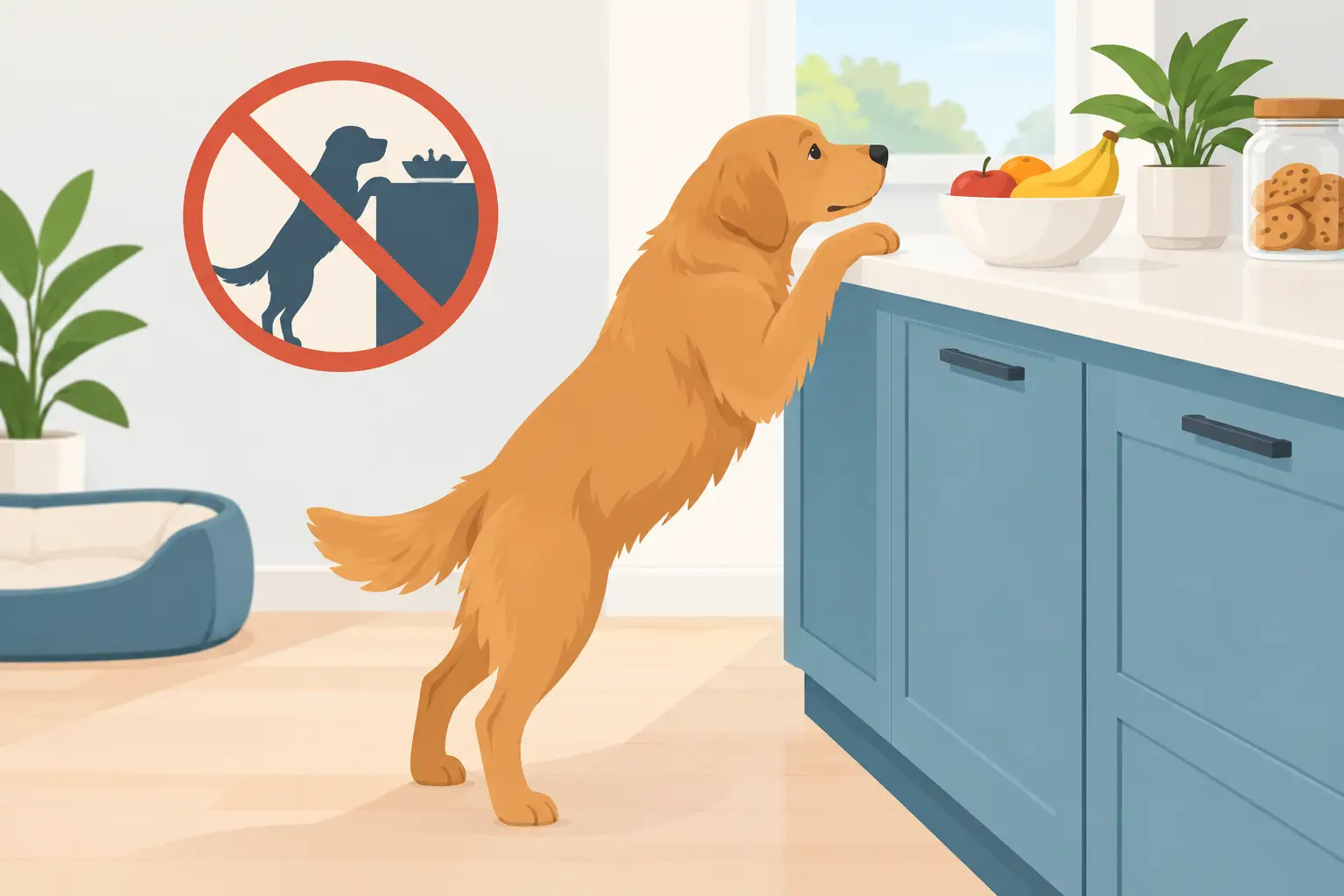
A chicken breast disappears from the edge of the counter in two seconds. Your dog looks thrilled, your dinner is ruined, and you are left wondering why they ignore you only in the kitchen. The best ways to stop counter surfing do not rely on yelling after the fact. They combine smart prevention, clear training, and enough repetition that your dog learns what does pay.
Counter surfing is a self-rewarding behavior. A dog jumps up, finds food, and gets an instant payoff. Even one successful grab can make the behavior stronger, especially for a food-motivated puppy, rescue dog, or clever adult dog. The good news is that this is a trainable problem. With a consistent system, your kitchen can become calmer and your dog can learn reliable boundaries.
Why Counter Surfing Keeps Happening
Dogs do not counter surf because they are trying to be disrespectful. They do it because counters sometimes produce valuable rewards: food, crumbs, wrappers, dirty dishes, or even an exciting smell. From your dog’s perspective, checking the counter is a practical choice.
That is why correction alone rarely solves the problem. If your dog is corrected when you are present but steals food when you leave the room, they have not learned to stay off counters. They have learned to wait until no one is watching. Effective training teaches a better behavior and removes the reward for the unwanted one.
Some dogs are also more likely to surf when life is busy. Dinner preparation, children moving through the kitchen, guests, and an open trash can all raise the level of temptation. A good plan accounts for the real environment, not just a quiet training session.
Best Ways to Stop Counter Surfing: Start With Management
Management is not a shortcut or a sign that training has failed. It is how you prevent your dog from rehearsing the behavior while training takes hold. Every successful counter raid makes the next attempt more likely.
Keep food pushed well back from counter edges, wipe crumbs promptly, and put dishes into the dishwasher or sink rather than leaving them out. Secure trash cans and do not leave grocery bags, bread, or takeout containers within reach. If your dog has a habit of investigating counters after meals, close the kitchen off or use a gate while you clean up.
For large or athletic dogs, management may need to be more deliberate. A dog that can reach the counter with all four paws on the floor is not technically surfing, but the solution is similar: keep tempting items inaccessible and teach them where to go instead.
Crating, a gated room, or a properly introduced place bed can be useful during high-risk moments. Use these tools thoughtfully. Your dog should not feel punished for being near the kitchen. The goal is to prevent mistakes while giving them a clear, comfortable job.
Teach a Strong Place Command
A reliable place command is one of the most practical household skills a dog can learn. It gives your dog a specific destination, such as a raised bed or mat outside the kitchen work zone, and teaches them to remain there until released.
Start away from meal prep. Lead your dog to the bed, reward them when they step onto it, and use a consistent cue such as “place.” Reward calm behavior on the bed, then release them after a few seconds. Build duration gradually. Your dog should first succeed with you standing nearby, then with you taking steps away, opening cabinets, and moving around the room.
Once your dog understands the command, practice while you prepare low-value food. Keep rewards ready and pay your dog for remaining on the bed. If they get up, calmly guide them back without a lecture. The message should be simple: staying on the place bed earns good things, while leaving it does not get them access to the counter.
Do not expect an untrained dog to hold place through a full family dinner on day one. Duration and distractions must be built in layers. Consistent, short practice sessions create proven results faster than asking for too much too soon.
Reward Four Paws on the Floor
Your dog needs to know what behavior replaces counter surfing. For many homes, that behavior is four paws on the floor. For others, it is lying on a mat or settling just outside the kitchen. Pick one standard and reward it consistently.
When your dog enters the kitchen and stays grounded, quietly mark the choice with praise and give a reward at floor level. Do not reward them after they have jumped up and come back down. Wait for a few seconds of calm behavior so the timing is clear.
It also helps to reward your dog away from the counter. If all treats appear near the food-prep area, you may accidentally teach your dog to hover there. Deliver rewards on their bed, toss one into an adjacent room, or use their meal in a puzzle feeder while you cook.
Practice With Controlled Temptations
Once management and basic commands are in place, set up training exercises that are safe and controlled. Put a low-value item on the counter, keep your dog on leash if needed, and ask for place or four paws on the floor. Reward the correct response generously.
Gradually increase the challenge. You might begin with an empty plate, then move to a piece of kibble in a bowl, then a more tempting food placed farther from the edge. If your dog jumps up, the setup was too difficult. Remove the temptation, reset, and make the next repetition easier.
Avoid setting traps. Leaving a steak unattended to see whether your dog fails does not teach a skill, and it can reward the exact behavior you are trying to stop. Training should give your dog a fair opportunity to make the right choice.
Be Consistent With Every Family Member
Counter surfing often continues because the rules change from person to person. One family member allows the dog to lick a plate, another feeds scraps while cooking, and someone else scolds the dog for standing nearby. That creates confusion.
Decide on the household rule: no food from counters, no jumping, and a designated spot during meal preparation. Then make sure everyone follows it. If children are involved, give them an easy role, such as tossing a treat to the dog’s bed when the dog settles calmly.
Guests can be another challenge. Before company arrives, set your dog up for success with a walk, a chew, a place bed, or a quiet room. It is easier to maintain good behavior than to train through a crowded kitchen full of dropped appetizers.
What Not to Do
Avoid chasing your dog after they steal food. Chasing can turn the situation into a game, and trying to grab an item from their mouth may create guarding behavior. Instead, use a practiced trade: offer something better, calmly retrieve the item, and review your management plan.
Do not use harsh punishment for a behavior that occurs when you are not present. Your dog may become anxious around you in the kitchen without understanding the rule. A trained dog is a happy dog, and clear guidance is more useful than unpredictable consequences.
Spray bottles, noise devices, and other surprise corrections may stop some dogs temporarily, but they do not teach an alternative behavior. They can also make sensitive dogs nervous around food preparation, visitors, or household movement. Focus on prevention and skills that work when you are not standing over your dog.
When Professional Training Helps
Professional support is valuable if counter surfing is paired with food guarding, anxiety, impulsivity, or a dog that cannot settle around household activity. It can also speed progress for busy families who need a practical routine they can use right away.
At Smart Dogs, training focuses on functional commands that fit real life, including calm behavior around meals, guests, and daily distractions. A trainer can help you identify why the behavior persists, build the right place routine, and coach every member of the household on consistent follow-through.
Your goal is not to make the kitchen a stressful no-go zone. It is to teach your dog that calm choices are rewarding and that counters never pay. Keep food managed, practice the behavior you want, and give your dog a clear job while you cook. Before long, dinner prep can feel ordinary again – which is exactly the result most families want.
