
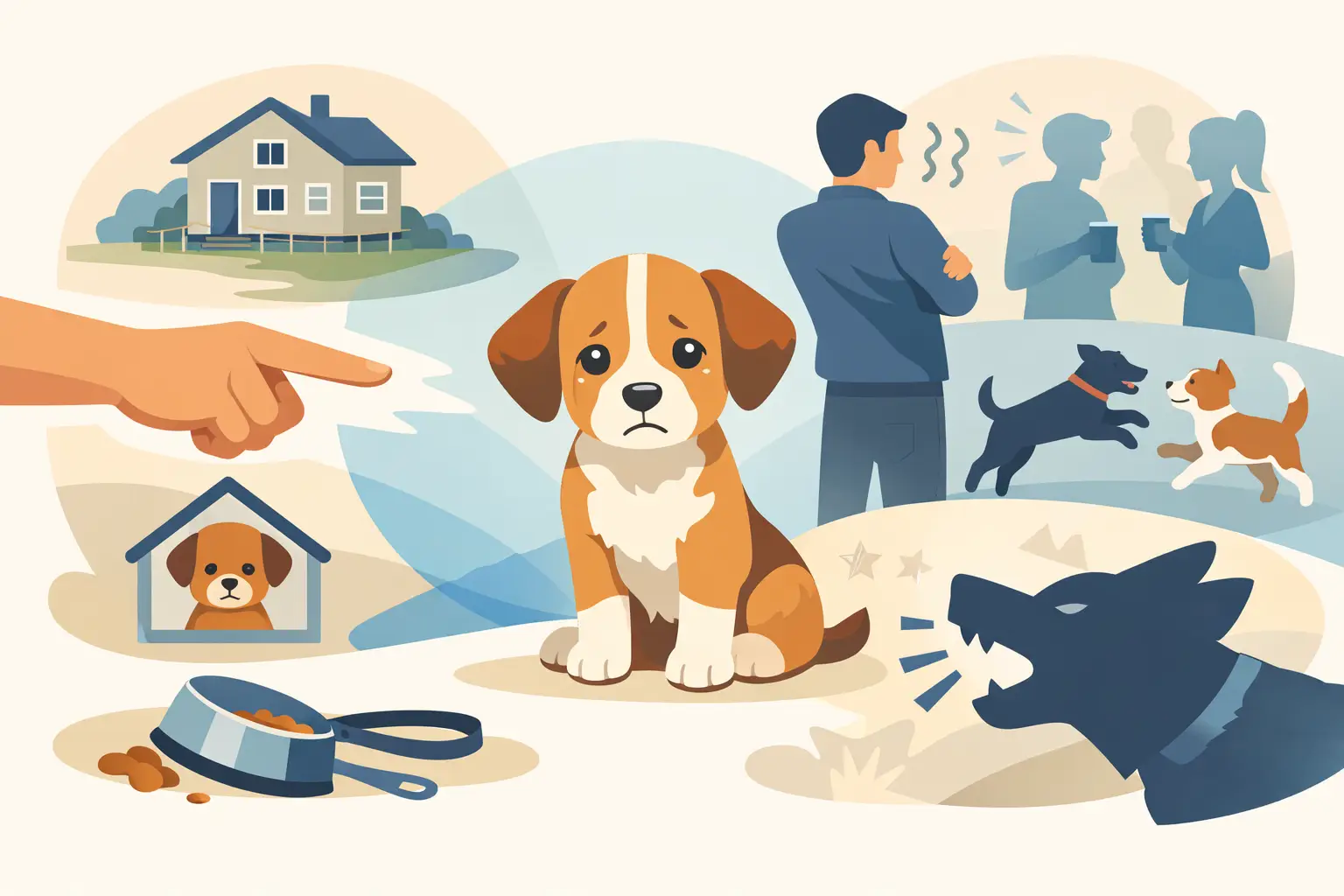
A puppy who freezes when a skateboard rolls past, panics at the vet, or barks at every dog on a neighborhood walk did not necessarily miss “socialization.” More often, they had too much of the wrong kind. The top puppy socialization mistakes happen when well-meaning owners focus on exposing a puppy to everything instead of teaching the puppy how to feel safe, calm, and responsive around everyday life.
Socialization is not a race to collect greetings from strangers or playdates with every dog in the park. It is a structured learning process that helps a puppy move through the world with confidence. Done well, it supports obedience, housebreaking routines, calm behavior at home, and reliable responsiveness when life gets busy.
Mistake 1: Forcing the Puppy to “Get Used To It”
A puppy that is scared does not become confident simply because they cannot escape the situation. Carrying a reluctant puppy into a crowd, insisting they be petted by a stranger, or pulling them closer to a barking dog can teach one damaging lesson: people, dogs, noises, and new places are overwhelming.
Watch the puppy in front of you. Crouching low, tucked tail, lip licking, yawning when tired is not the issue, turning away, refusing treats, trembling, or trying to leave are signs that the situation is too difficult. Create distance before your puppy reaches that point. Let them observe from a safe location, reward calm attention, and leave while they are still successful.
Confidence grows when puppies learn they can look at something new without being pressured to engage. Your job is not to make every interaction happen. Your job is to make good decisions that teach your puppy the world is manageable.
Mistake 2: Treating Every Person and Dog as a Greeting Opportunity
Friendly puppies often attract attention, especially on walks. But a puppy does not need to meet everyone to be well socialized. In fact, constant on-leash greetings can create a dog that expects access to every person and dog they see. When that expectation is denied later, frustration can turn into pulling, barking, and reactivity.
Teach neutrality early. A calm puppy who notices a jogger, child, delivery cart, or another dog and then checks in with their owner is showing a far more useful skill than a puppy who races forward to say hello. Reward your puppy for walking with you, looking at a distraction, and returning their attention to you.
Dog-to-dog interactions also need to be selective. One calm, socially appropriate adult dog can teach more than a chaotic hour with a dozen unfamiliar dogs. Size, play style, health status, and temperament all matter. A large adolescent dog that body-slams, corners, or relentlessly chases a small puppy is not providing healthy socialization.
Mistake 3: Using the Dog Park as Puppy School
Dog parks can be convenient, but they are unpredictable. You cannot control the other dogs, their training, their health, or whether an owner will intervene when play becomes inappropriate. For a young puppy still learning communication and boundaries, that is a significant trade-off.
Some puppies leave a dog park excited and apparently happy, then become increasingly over-aroused around dogs. Others have one frightening encounter that changes how they respond to dogs for months. The goal is not to avoid dogs forever. It is to choose safe, controlled experiences before asking your puppy to handle an unstructured environment.
A well-run puppy class, a private lesson, or a carefully planned meeting with a known healthy dog gives you room to guide the experience. Short sessions are often best. Call puppies apart for breaks, reward them for coming when called, and end before either dog becomes exhausted or overstimulated.
Mistake 4: Waiting Until Vaccines Are Complete to Start
Owners naturally want to protect their puppy from illness, and that caution is reasonable. But complete isolation during the early developmental period can create another problem: a puppy with little experience of cars, surfaces, household sounds, people, grooming, and the outside world.
The answer is not to take unnecessary health risks. Talk with your veterinarian about safe options based on your puppy’s vaccine schedule and the disease risk in your area. In many cases, you can safely introduce new experiences by carrying your puppy, using a clean blanket, visiting controlled environments, inviting healthy visitors over, or observing activity from your car.
A puppy can hear traffic from a distance, watch school pickup from your arms, step on a rubber mat at home, or receive treats while the vacuum runs in another room. Socialization includes far more than public ground and direct contact with unknown dogs.
Mistake 5: Forgetting That Handling Is Socialization Too
Many behavior problems begin when a dog reaches adolescence and suddenly resists nail trims, ear cleaning, brushing, a harness, or veterinary handling. Puppies need to learn that calm, gentle handling predicts good things.
Start in brief sessions when your puppy is relaxed. Touch a paw, give a treat, and release. Lift an ear, reward, and stop. Rest a brush against their coat before doing one easy stroke. Practice opening the mouth, touching the collar, and standing on a nonslip surface. Keep the training light and successful rather than trying to complete a full grooming routine on day one.
This work has practical value for every household. A dog that accepts handling is easier to groom, safer to examine, and less stressed when care is necessary. It also strengthens the puppy’s trust that you will listen when they need a break.
Mistake 6: Exposing the Puppy Without Teaching a Response
Exposure alone is incomplete training. If your puppy sees a bus, hears a siren, or notices a stranger, give them something productive to do. Their name, eye contact, a hand target, sitting calmly beside you, or walking on a loose leash can turn a distracting moment into an obedience win.
Bring high-value rewards and use them strategically. When your puppy notices something unfamiliar at a comfortable distance, mark the calm behavior with praise and reward. If they can no longer take food or respond to an easy cue, increase distance. They are telling you the environment is currently too challenging.
This approach builds a habit that matters throughout your dog’s life: when something changes, look to the owner for direction. That is how socialization supports real-world obedience rather than becoming a collection of random outings.
Mistake 7: Overlooking Life at Home
A puppy can appear confident in public but still struggle with normal household life. Doorbells, guests, children running through the hall, pots dropping in the kitchen, being alone in a crate, and settling while you work are all socialization opportunities.
Do not wait for a problem to practice. Reward your puppy for relaxing on a bed while family members move around. Pair the doorbell sound with treats and a simple place command. Teach guests to ignore an excited puppy until all four paws are on the floor. Build short, positive periods of independence so your puppy learns that being alone is safe and temporary.
For busy Los Angeles households, this is often where training makes the biggest difference. A puppy who can settle while deliveries arrive, visitors come over, or the household gets loud is easier to live with and less likely to rehearse unwanted behavior.
Mistake 8: Moving Too Fast and Skipping Recovery Time
A full weekend of parks, visitors, car rides, stores, and playdates may sound productive, but puppies need sleep and recovery. Overstimulated puppies often become mouthy, wild, vocal, and unable to listen. Owners may mistake that behavior for energy when the puppy is actually overtired.
Choose quality over quantity. One short, calm outing followed by a nap can be more valuable than several intense experiences packed into a day. Keep a simple record of what your puppy has encountered and how they responded. This makes it easier to spot patterns and gradually increase difficulty without overwhelming them.
A Better Standard for Puppy Socialization
The best socialization does not produce a puppy that wants to greet everything. It produces a dog that can handle ordinary life with calm curiosity, recover from surprises, and respond to their owner when it counts. That outcome takes patience, structure, and consistency from everyone in the home.
If your puppy is showing fear, avoidance, intense barking, or overexcitement, do not wait for them to outgrow it. Early guidance can prevent small habits from becoming larger behavior problems. A trained dog is a happy dog, and every calm, well-managed experience you create today gives your puppy a better foundation for tomorrow.
