
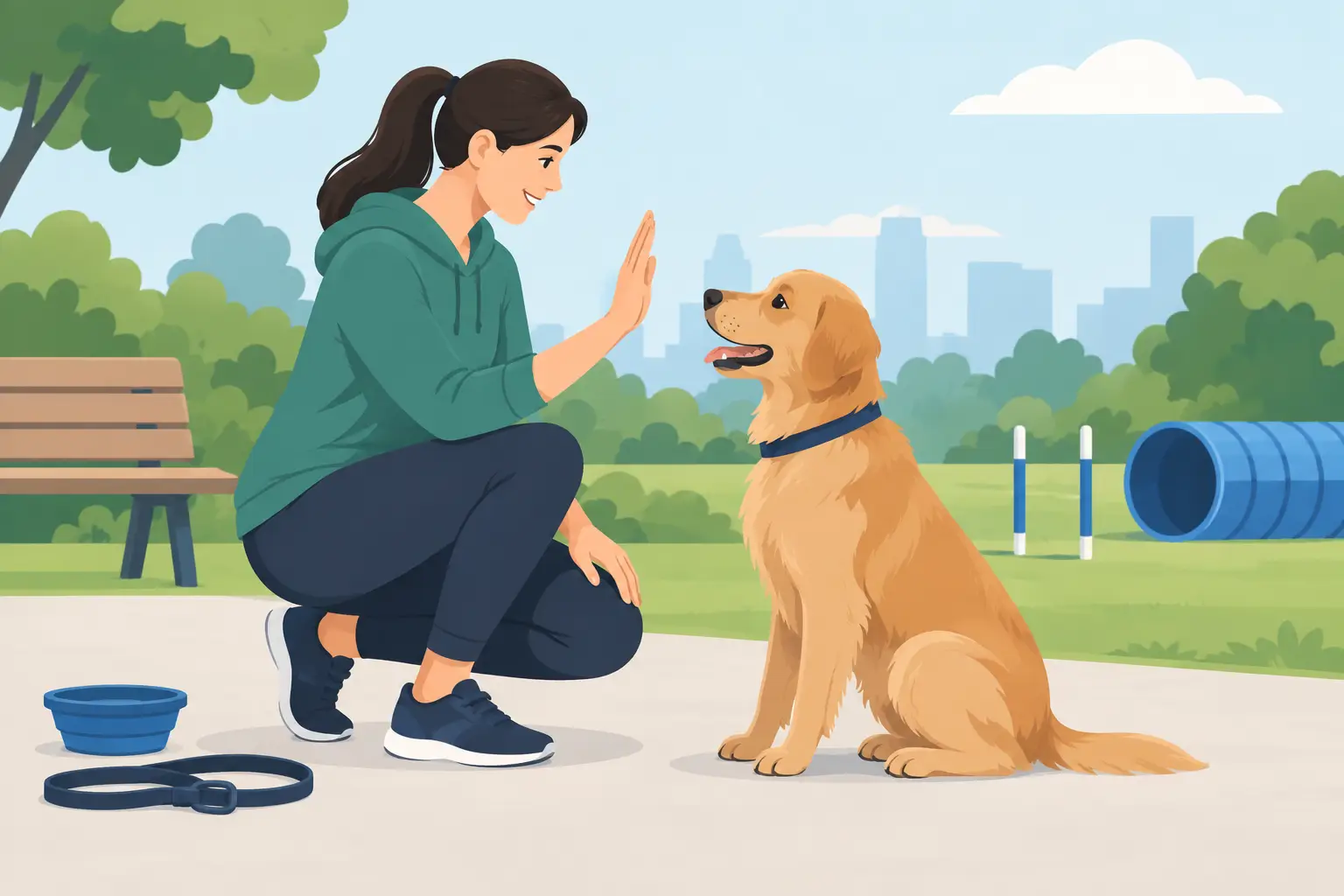
A dog who once came when called, walked politely, and settled at home can start testing the rules again without warning. An adult dog obedience refresher gives you a practical way to rebuild those everyday skills before small frustrations become established habits. The goal is not a performance routine. It is a dog that responds reliably when the doorbell rings, another dog passes on the sidewalk, or your family needs a calm evening at home.
Adult dogs do not lose their ability to learn. More often, they have learned that commands are optional because the reward, timing, or follow-through became inconsistent. With a clear plan, short practice sessions, and motivation your dog values, reliable obedience can return quickly.
Why Adult Dogs Need a Refresher
Life changes. A move, a new baby, a different work schedule, visitors, adolescence, or fewer walks can all affect a dog’s behavior. Dogs also generalize poorly without practice. A dog that knows “sit” in the kitchen may not immediately respond at a busy Los Angeles park, outside a coffee shop, or when the delivery driver arrives.
Sometimes the issue is not that your dog forgot a command. The dog may understand it perfectly but have found the distraction more rewarding than listening. Pulling toward another dog, jumping on a guest, or ignoring a recall can work for the dog if it leads to attention, access, or freedom. A refresher changes that pattern by making the right choice clear and worthwhile.
This process is also useful for adopted dogs. A rescue may arrive with some training, but the commands may use different words, hand signals, expectations, or rewards. Rather than assuming the dog knows what you mean, teach the skills in your home and routines from the beginning.
Start With the Commands That Matter Most
Do not try to polish every trick at once. Start with the behaviors that make daily life safer, calmer, and easier to manage. For most households, that means a reliable response to their name, sit, down, stay, come, leave it, place, and loose-leash walking.
Choose the two or three skills creating the biggest problem right now. If your dog bolts toward the front door, practice place and stay before working on a perfect heel. If walks are exhausting, prioritize attention around distractions and loose-leash skills. If guests cannot enter without chaos, focus on a greeting routine with a defined spot for your dog to settle.
This approach produces visible results sooner, which helps owners stay consistent. A trained dog is a happy dog, but a training plan also has to work for the humans who live with that dog every day.
Rebuild Each Cue From an Easy Starting Point
Begin in a quiet area with low distractions. Say the command once, give your dog a moment to respond, then reward the correct behavior immediately. Use food, praise, a toy, or access to something your dog genuinely wants. The reward should match the difficulty. A simple sit in the living room may earn verbal praise. Coming away from a squirrel may require a much better payoff.
Avoid repeating a command five times. Saying “come, come, come” teaches the dog that the first few words do not matter. Give one clear cue, help your dog succeed if needed, and reward the completed behavior. If your dog cannot respond, the task is too difficult at that moment. Reduce the distraction, shorten the distance, or use a long line for safe practice.
Keep sessions brief. Five focused minutes before breakfast, during a walk, or before the evening meal can be more effective than one long session after everyone is already tired. Daily repetition is what turns a skill into a habit.
Add Distractions Gradually
A command is not reliable until your dog can perform it in different locations, around different people, and with real-life distractions. That does not mean jumping from the living room to the busiest trail in town. Build difficulty in small steps.
Practice a stay while you take one step away, then several steps. Work on loose-leash walking in a quiet block before attempting a crowded shopping area. Ask for a place command while one family member moves around the room before adding a visitor at the door.
Pay attention to your dog’s threshold. If the dog is staring, whining, pulling hard, refusing treats, or unable to hear you, the situation is likely too intense for productive learning. Create more distance from the trigger and work where your dog can still think. This is not lowering the standard. It is setting the dog up to meet the standard successfully.
Make Home Rules Consistent
Dogs notice exceptions. If one person allows jumping because it is cute and another scolds the dog for it, the dog receives mixed information. The same is true for furniture access, door manners, feeding routines, and barking at windows.
Talk through the rules with everyone in the household. Decide what behavior you want, what command you will use, and how you will respond when the dog makes the wrong choice. Consistency does not require harshness. It means the dog receives the same clear direction each time.
For example, if your dog rushes the front door, ask for place before opening it. Reward calm waiting. If the dog breaks position, close the door and calmly reset. Repeating this routine teaches that calm behavior opens opportunities, while pushing forward does not.
Common Refresher Problems and What to Do
Owners often assume a dog is being stubborn when the real issue is unclear training. A dog may fail to come because the recall has repeatedly ended fun. If calling your dog always means leash on, play over, or bath time, the dog has a reason to hesitate. Practice recall during enjoyable moments, reward generously, and sometimes release your dog back to play.
Leash pulling is another common challenge. Do not expect a dog to understand a loose leash if pulling still gets the dog to every interesting smell. When the leash tightens, stop or change direction. When your dog returns to position or creates slack, continue forward and reward. Progress can feel slow at first, especially with a strong or highly social dog, but repetition changes the pattern.
Barking, jumping, and overexcitement usually need management alongside training. Preventing repeated rehearsals matters. Use a leash, gate, crate, or place command during high-energy moments so your dog cannot practice the unwanted behavior while learning a better option. Management is not a shortcut. It gives training room to work.
When Professional Help Makes Sense
A refresher can be straightforward when the dog needs better consistency. It may require professional guidance when pulling creates a safety concern, recall is unreliable near traffic, greetings become overwhelming, or behavior includes growling, snapping, guarding, or fear. These situations benefit from an experienced trainer who can assess what is driving the behavior and build a plan around your dog’s needs.
Private lessons can be especially helpful because training happens where the problems occur: your doorway, neighborhood walk, family routine, or local park. For owners who need a more concentrated reset, a structured board-and-train program can establish core skills and then transfer them back to home through clear owner coaching. The best format depends on the dog, the behavior, and how much time your household can commit to daily follow-through.
Smart Dogs has trained more than 20,000 dogs using practical, motivation-based systems designed for everyday life. The focus is not simply getting a dog to obey in a controlled setting. It is helping owners build dependable behavior they can use at home, on walks, and around the distractions that matter most.
Turn Training Into Part of the Day
The strongest obedience refresher does not live in a separate training window. Ask for a sit before meals, a stay before the leash goes on, a place command while you prepare dinner, and a recall from room to room. Those small repetitions teach your dog that listening is part of normal life, not something that happens only when treats appear.
Celebrate progress, but do not rush the process. Reliable obedience is built through hundreds of successful repetitions, fair expectations, and calm follow-through. Every time your adult dog chooses to listen in a real moment, you are building the quieter, safer, more enjoyable life you both want.
