
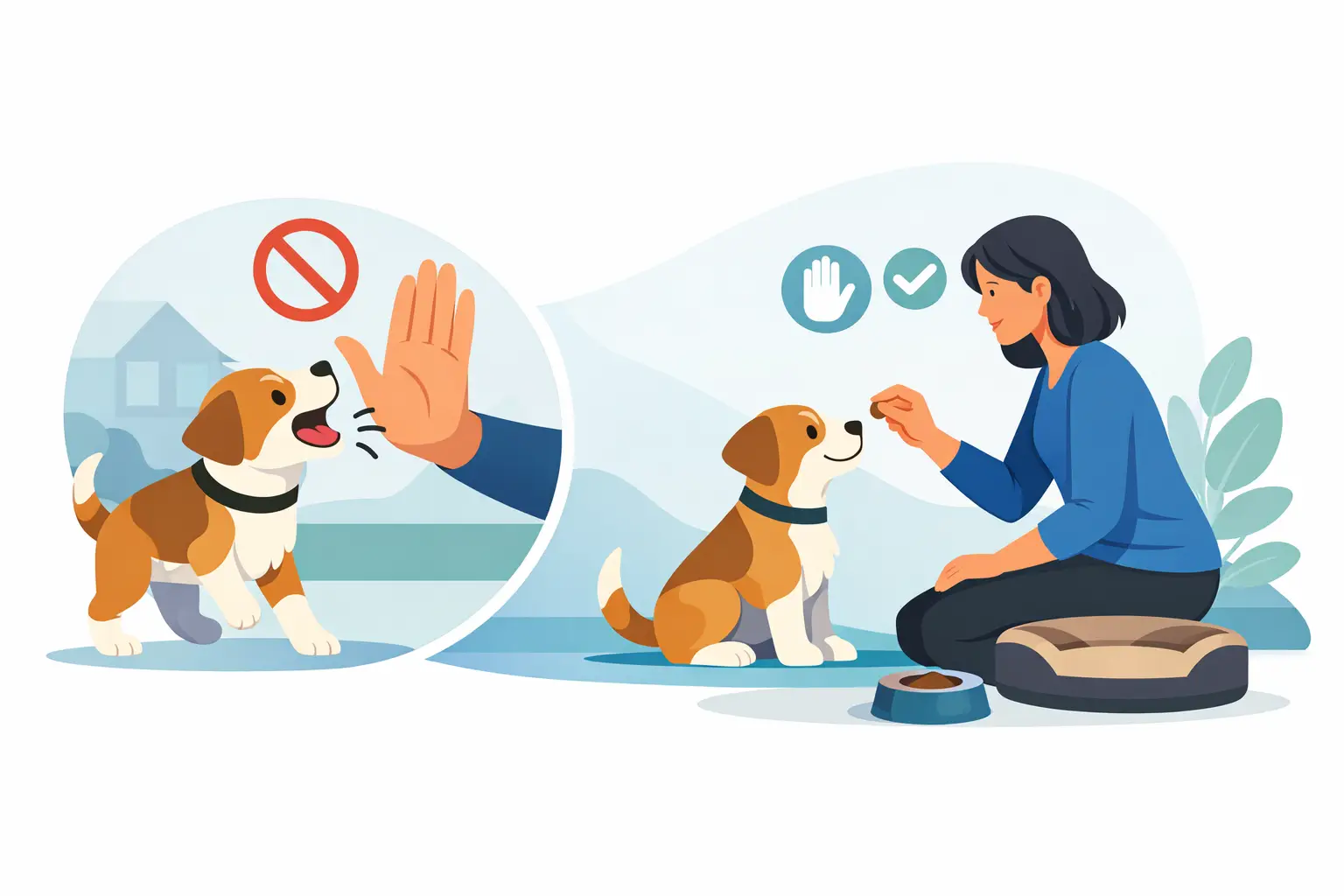
A puppy grabs your sleeve when you walk through the door. A rescue dog mouths your hand during play. Your child reaches for a toy, and the dog rushes in with teeth first. The behavior may look similar, but the right response depends on why it is happening. Knowing how to stop nipping starts with treating it as a training issue, not a personality flaw.
Nipping is common, especially in puppies, but it should not be ignored or laughed off. Dogs need clear rules about what they may put their mouths on, how to ask for attention, and what happens when they become too excited. With consistent practice, most dogs can learn calmer, safer ways to interact. A trained dog is a happy dog, and a household that understands the rules is a less stressful one.
Why Dogs Nip in the First Place
Puppies explore with their mouths. They also nip during play, while teething, and when they are overtired or overstimulated. Herding breeds may be especially likely to chase moving feet or grab at pant legs because movement triggers an instinctive response.
Adult dogs can nip for different reasons. Some have learned that mouthing gets attention. Others become overexcited during greetings or rough play. Fear, pain, resource guarding, and poor socialization can also contribute. A quick, loose-bodied play nip is not the same as a stiff, hard bite from a dog protecting a resource. Do not assume every mouthy dog has the same motivation.
If your dog suddenly starts nipping after previously being gentle, schedule a veterinary exam. Dental pain, injury, and other medical issues can lower a dog’s tolerance. If nipping includes growling, freezing, guarding food or objects, puncture wounds, or repeated attempts to bite, get professional help promptly. Safety comes before do-it-yourself training.
How to Stop Nipping: The Rules Your Dog Needs
The goal is simple: teeth on people make attention and play stop, while calm behavior makes good things happen. Dogs learn through consequences they can understand in the moment. Everyone in the home needs to follow the same rules, including children when appropriate and supervised.
End the interaction immediately
The moment teeth touch skin or clothing, calmly stop moving and remove your attention. You can say a brief marker such as “too bad” or “nope,” but avoid yelling, repeated scolding, or high-pitched reactions. Big reactions often make an excited puppy more excited.
Stand up, turn away, and step behind a gate or out of reach for 10 to 20 seconds. This is not punishment in the emotional sense. It is clear information: nipping ends access to people. Return calmly and give your dog another chance to make a better choice.
Timing matters. If you wait until several minutes after the nip, your dog will not connect the consequence to the behavior. Be immediate, boring, and consistent.
Redirect before your dog gets too excited
Keep appropriate toys within reach in the rooms where your dog spends time. When your dog approaches with an open mouth, present a tug toy, chew, or stuffed food toy before teeth land on your hand. Praise the choice to grab the toy.
Redirection is useful, but it cannot mean that nipping people earns a fun game every time. First stop the interaction. Then, once your dog is calm, offer a legal outlet. This small difference prevents the dog from learning that biting hands starts tug-of-war.
For teething puppies, provide several safe chew options with different textures. Rotate them so they stay interesting. Cold puppy-safe chews can be especially helpful for sore gums. Supervise closely and choose items suited to your dog’s size and chewing style.
Reward calm behavior you want repeated
Many owners spend all their energy reacting to bad moments and miss the quiet ones. Catch your dog lying near your feet, greeting with four paws on the floor, or choosing a toy instead of a hand. Calmly deliver praise, a treat, or a chance to continue play.
This is how reliable manners are built. Your dog should learn that self-control works. Before petting, opening a door, tossing a toy, or putting down food, ask for a simple behavior such as sit. If your dog can sit calmly, life moves forward. If teeth come out, the activity pauses.
Prevent the Situations That Create Nipping
Training works faster when you stop rehearsing the problem. A puppy who spends every evening racing through the house, grabbing ankles, and getting chased is practicing nipping dozens of times a week.
Start by looking for patterns. Is your dog mouthiest when you arrive home, when children are running, before dinner, or after a long day without exercise? The answer tells you where management is needed.
For many puppies, the “crazy hour” is actually an overtired hour. Puppies need substantial sleep, often far more than owners expect. A quiet nap in a crate, pen, or calm puppy-proofed space can prevent the frantic behavior that appears when they are exhausted.
Use baby gates, a leash indoors when supervised, and designated rest areas to keep your dog from practicing ankle biting or chaotic greetings. Management is not a substitute for training, but it protects your progress while your dog is learning.
Exercise also matters, but more activity is not always the answer. A dog who only gets intense fetch may become fitter and more frantic. Balance physical activity with sniff walks, food puzzles, short obedience sessions, and calm chewing. Mental work and structured rest often do more for impulse control than another round of high-speed play.
Teach Better Skills Than Nipping
A dog cannot simply be told what not to do. Give your dog practical alternatives that fit daily life.
“Sit” is valuable for greetings and before access to anything exciting. “Place” or “bed” gives your dog a defined spot to settle when guests arrive or children are active. “Leave it” helps create control around hands, clothing, dropped items, and toys. A reliable recall can move a dog away from brewing trouble before the behavior escalates.
Keep lessons short. Three to five minutes of focused practice, repeated throughout the day, is more useful than one long session when your dog is already worn out. Begin in a quiet room, reward success generously, then gradually practice around normal household distractions.
For play, teach rules. Start with a toy, not your hands. Pause the game periodically and ask for a sit before restarting. If teeth touch skin, the game ends. If your dog releases the toy, reorients to you, and stays calm, play continues. These simple repetitions teach that self-control keeps the fun going.
Children and Nipping: Put Safety First
Children often move quickly, squeal, hug, reach over dogs, and leave toys on the floor. None of this makes a dog “bad,” but it can make nipping more likely. Young children and dogs should always be actively supervised, not simply placed in the same room.
Teach children to avoid rough play, chasing games, face-to-face contact, and taking items from the dog. They should call an adult rather than correct the dog themselves. Give the dog a protected rest space where children do not follow.
If a dog nips a child, separate them calmly and assess what happened. Consider the context, the intensity, body language, and whether skin was broken. Any bite that breaks skin, any repeated nipping toward children, or any sign of fear or guarding deserves prompt guidance from an experienced professional.
When Professional Training Is the Best Next Step
Basic puppy mouthing often improves quickly with consistent household rules. But some cases need more than general advice. A dog with a bite history, escalating intensity, anxiety around handling, resource guarding, or reactivity needs an individualized plan.
Professional training can identify the triggers owners may miss and create safe practice sessions around real-life situations. The right program should address management, obedience, motivation, and the dog’s emotional response, rather than relying on a single correction or a promise of instant results. Proven results come from clear communication and consistent follow-through.
At Smart Dogs, training is built around functional commands and behavior that works in everyday homes. Whether you have a mouthy new puppy or an adult dog whose nipping has become a safety concern, the priority is the same: create calm habits your family can rely on.
Your dog does not need to be perfect overnight. Start with one clear rule today: teeth on people end the interaction, calm choices earn access to what your dog wants. Repeated with patience, structure, and good timing, that rule can change the feel of your entire home.
